
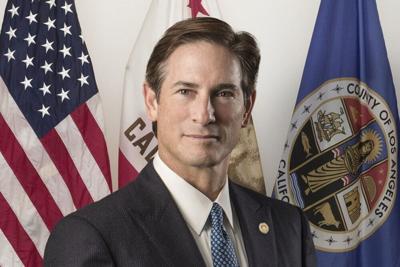


Los Angeles County District Attorney Nathan Hochman
LOS ANGELES — A Los Angeles Superior Court judge has rejected a request from District Attorney Nathan Hochman to delay payouts of the county’s $4 billion child sexual abuse settlement for six months, despite Hochman’s conclusion that up to 81% of claims may be fraudulent.
Judge Lawrence Riff sided with plaintiff attorneys on June 25 when he denied a proposal to freeze the first round of payouts in the settlement for six months while the District Attorney’s Office continues to investigate evidence of fraud by plaintiffs as well as attorneys, recruiters and medical personnel.
Last year’s multibillion-dollar settlement of so-called Group A claims came after the passage of a California Assembly bill that expanded the statute of limitations for filing child sexual abuse claims, creating a “lookback window” for victims.
In a statement emailed to the Southern California Record, Hochman said Riff’s ruling was disappointing but that it would not keep his office from advancing the fraud investigation.
“Our investigation into whether widespread fraud permeated this $4 billion settlement will continue, and we will prosecute those who are illegitimately gaming the system,” he said. “Our office's efforts to pause these payments were never about delaying justice for true victims. Rather it was about preserving the integrity of an ongoing criminal investigation and ensuring legitimate sexual abuse survivors receive the justice and compensation they deserve.”
The district attorney stressed that the office’s efforts were blocked by “a team of attorneys, who stand to personally profit from these settlements.”
“Our office continues to scrutinize every stage of the process to determine what may have contributed to these fraudulent claims and to hold accountable those who may have broken the law,” Hochman said.
In his application to intervene in the settlement and delay payouts, Hochman said a preliminary fraud probe indicated more than four-fifths of the settlement claims involving past child sexual abuse allegations at the county’s juvenile probation camps and juvenile halls may be fraudulent.
Among the plaintiff law firms responding to his application, nine were against it and seven were in agreement, according to the district attorney.
Plaintiff attorneys did not immediately respond to a request for comment, but they have stressed that the victims have already suffered decades of hardships and delays.
“These are not active civil cases awaiting trial on contested liability issues," the law firm Peiffer Wolf Carr Kane Conway & Wise said in court papers. "The county chose to settle. Individual plaintiffs executed individual settlement agreements. The parties adopted a master settlement agreement and allocation protocol. The county agreed to fund the settlement.”
The District Attorney’s Office emphasized in its application to the Superior Court that the release of payments over the next six months will complicate the office’s continuing fraud probe.
“... This will complicate obtaining cooperation from witnesses to fraudulent activity, obscure financial trails as the funds disbursed to plaintiffs who filed fraudulent lawsuits will then have to be tracked through whichever financial channels the funds are sent, increase the time, effort and complexity of having to claw back or recover funds fraudulently obtained, and unjustly enrich those engaged in fraud at the expense of true victims,” the application said.