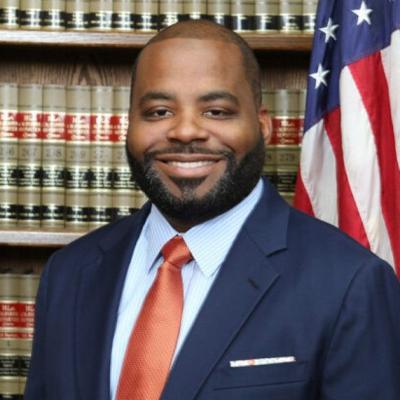



San Diego County Counsel Damon Brown
SAN DIEGO — San Diego County's top lawyer has broadened the county's gun control legal agenda, launching a lawsuit in the name of "consumer fairness and public protection" against a company that makes 3-D printer filaments that the county asserts can be used to make firearms.
In the lawsuit, filed in partnership with gun control activist group Giffords Law Center to Prevent Gun Violence, San Diego County Counsel Damon Brown asserts Texas-based Polymaker can be sued under California state law because the company allegedly markets its filaments specifically to people who may want to use 3-D printers to create "ghost guns," described as "untraceable, unserialized guns" made by people who have not been licensed by the government to manufacture firearms.
The state of California has passed laws banning the manufacture and possession of such weapons. And San Diego County noted police in California yearly seize thousands of such weapons, which they say are used to commit violent crimes.
The lawsuit doesn't accuse Polymaker of making the weapons.
Rather, the lawsuit takes aim at the company for allegedly intentionally marketing its products to encourage its 3-D printer filaments to be used to make "ghost guns."
In the lawsuit, Brown and the county said the legal action is intended to "hold Polymaker liable to its strategic business choice to design and market its filaments in order to profit from the illegal manufacture of 3D printed ghost guns in California" and "to stop Polymaker from continuing to fuel the proliferation of illegal 3D printed firearm accessories in California."
The lawsuit particularly asserts Polymaker has a "collaboration" with online "gun influencer" Sean Aranda, who they say has been nicknamed the "3D Print General."
Packaging for spools of Polymaker filament, for instance, bear Aranda's image.
And Aranda has published videos discussing his use of Polymaker's filament to manufacture 3D printed weapons.
"By recruiting, compensating, and retaining Aranda as its Head of Customer
Experience, Polymaker specifically targeted the 3D gun printing market," the county wrote in its complaint. "Polymaker’s decision to hire Aranda was premised on the commercial value of Aranda’s influence.
"Aranda, acting within his agency relationship with Polymaker, directs his followers to purchase Polymaker filaments to 3D print ghost guns and generates profits for Polymaker."
Further, the county noted that Polymaker has played off the popular pro-Second Amendment slogan "Come and take it" to promote their products, using the slogan "Come and make it."
While 3-D printer filaments can be used to manufacture a broad range of printed products, San Diego County asserts it can still pursue Polymaker in court because its marketing of the product for use in making "ghost guns" converts their otherwise innocuous products into a regulated "firearm precursor part," as defined under California law.
San Diego County seeks a potentially huge and crippling financial penalty against Polymaker, including civil penalties of "up to $2,500 for each violation" of California law, for "each day on which Polymaker has marketed its filament for 3D printed guns in a manner accessible to California audiences."
They also seek a court order directing Polymaker to "disgorge all revenue acquired by means of" the alleged illegal marketing of its filaments to make guns.
Polymaker has not yet responded to the San Diego County lawsuit.
However, Second Amendments rights advocates and others have said in articles and social media posts discussing the aciton that the lawsuit marks a stark escalation of efforts by California officials to further a gun control agenda.
They further warn the lawsuit, if allowed to succeed, would open a new avenue for California and potentially other anti-gun, Democratic-controlled jurisdictions to assail gun owners and manufacturers, by allowing them to declare nearly any raw components as "firearm precursor parts" subject to government regulation, bans, and potential lawsuits.
And they have warned that the lawsuit, based on Polymaker's marketing, amounts to an action regulating speech, not firearms, meaning the company could be expected to mount a defense under the First Amendment.