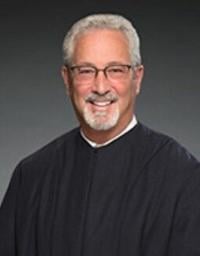

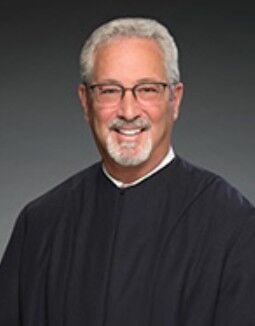
Justice Gary Traynor
WILMINGTON, Del. - Family members who tried to reclaim a dead man’s home from his widow came up empty-handed after Delaware’s highest court validated the marriage even though there wasn’t the required number of witnesses at their nighttime ceremony.
Delaware law requires two adult witnesses to be present at a wedding ceremony, along with other requirements including a valid marriage license. Russell LaFon Jr. and Jacqueline Marie Felmlee were married on a dock on a cold and dark February night in 2023 by a minister.
They had been dating for five years and had a marriage license, but the only other person on the dock was LaFon’s minor son, while other guests watched from their vehicles in the parking lot.
LaFon died suddenly a few months later and his father, Russell LaFon Sr., was appointed administrator of his estate. The elder LaFon then sought a declaratory judgment that the marriage was invalid due to the lack of two witnesses so he could move Felmlee out of his son’s home. In a court filing, he referred to the widow as a “guest of the property.”
A lower court rejected his challenge to the marriage and the Delaware Supreme Court upheld in a Jan. 27 decision, citing a long line of cases in which courts refused to annul marriages for failing to meet technical requirements.
“A minor defect in the solemnization of a marriage does not necessarily invalidate a marriage,” Justice Gary Traynor said.
While Delaware law requires two witnesses to a marriage, the law also limits who can challenge it after one spouse dies. Only the surviving party can seek an annulment, meaning LaFon Sr. lacked standing, the court said.
There were other problems. The lower court found LaFon Sr. had acted with unclean hands, attempting to “pull a bit of a fast one” on a recent widow and misrepresenting the nature of his son’s relationship. LaFon Sr. had fashioned a wedding ring for his new daughter-in-law out of copper and later bought her a diamond ring to replace it.
The closest example in Delaware was a 1948 decision where the court accepted a marriage existed even though the widow couldn’t produce a marriage certificate and had forgotten the names of witnesses and the minister. The U.S. Supreme Court also ruled in 1877 that solemnization requirements are “directory rather than mandatory.” And a Louisiana appellate court rejected a challenge to a marriage because there were only two witnesses, not three as required by statute.
In yet another case, a court said: “The only conceivable purpose of the requirement that there be two witnesses to the marriage ceremony, therefore, is to prove that the marriage occurred, in the event that there is a claim by either party that it did not take place.”
LaFon Sr. was represented by Reger Rizzo & Darnall, while Felmlee was represented by The Powell Firm.