


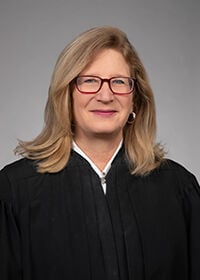
Boyle
CLEVELAND - An Ohio appeals court upheld a jury’s award of $5.4 million in damages over the COVID-era death of an 87-year-old woman that was captured on video by her daughter who pounded on a window as she watched helplessly from outside the nursing home.
Marianne Andrews was admitted to Avon Place after gallbladder surgery, unable to feed herself and dependent upon a tracheotomy tube to breath. Her daughter Karen McCoy came to see her in August 2020, when family members were still restricted to looking in from outside due to COVID.
McCoy testified that nurse Onieda Marrero came into the room to open the window blinds. McCoy noticed her mother was blue and there was a “big wad of gauze on her neck.” She said she asked Marrero “what’s with the rags,” but the nurse turned and walked away. McCoy began filming the scene with her cellphone as respiratory therapist Brian Baum came in to treat Andrews.
The jury saw video showing Andrews kicking her feet and gasping for air as McCoy bangs on the window and McCoy says “I don’t understand what’s on her neck,” and “I’m shaking so hard, ‘cause I don’t know what to do …they need to get that thing uncovered.” Andrews died as McCoy was filming and emergency medical technicians were unable to revive her.
The jury ordered Avon Place to pay $5.4 million, including $1.15 million for wrongful death, $300,000 for pain and suffering, $400,000 in punitive damages and almost $3 million in post-judgment interest and attorney fees.
Avon Place appealed, but the Ohio Court of Appeals, Eighth District, affirmed in a Jan. 8 decision by Judge Mary J. Boyle. The plaintiffs offered to settle the case for as little as $650,000 on the first day of trial but the nursing home countered with only $350,000.
“Avon Place failed to rationally evaluate their potential liability,” Judge Boyle wrote.
The nursing home argued Andrews’ death was unfortunate but not due to negligence. Even the plaintiffs’ medical expert acknowledged the elderly woman probably had a mucus plug in her airway that contributed to her breathing difficulty.
Avon Place’s lawyers also tried to convince jurors it was absurd to think Marerro ignored McCoy’s concern about the gauze on her mother’s throat and walked out of the room, evidence central to the claim the nurse acted with malice, or complete disregard for her patient’s safety. But the trial judge ruled it was up to the jury to decide who was telling the truth.
The jury heard of an earlier incident, also filmed by McCoy, in which Andrews was left slumped over in a chair and it took an hour-and-a-half for nursing home staff to respond. The appeals court said the jury could conclude the home approved of Marrero’s conduct and thus was on the hook for punitive damages.
Avon Place’s lawyer argued at trial, “we didn’t discipline or terminate her because she is a good nurse, because we don’t believe she did anything wrong,” which the appeals court took as evidence management approved of her conduct.
The appeals court contrasted this with another case in which a resident fell from her wheelchair “after being towed by her husband,” who was also in a wheelchair. In that case, the nursing home wasn’t liable because staff testified they’d previously caught the husband towing his wife and told him to stop.
McCoy’s attorneys at Dworken & Bernstein were awarded $1.1 million in fees, a 2.7 multiple on the 840 hours they said they worked on the case. The court rejected arguments the jury award violated the state’s $250,000 cap on pain and suffering, saying there were separate awards of that amount based on separate incidents.
Avon Place was represented by Rolf Martin Lang.