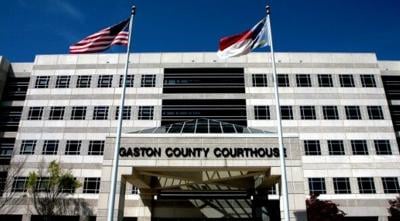


Gaston County Courthouse
RALEIGH, N.C. – North Carolina courts will let a Confederate monument remain in front of a Gaston County courthouse, where it has been standing since 1912.
Groups like the National Association for the Advancement of Colored People have gone to court to seek its removal, but a lower court refused and the state Court of Appeals did the same on March 4.
The 35-foot statue commemorates Tar Heels who fought in the Civil War and includes the initials of the Confederacy, CSA. It was originally located at the county’s old courthouse but moved in 1998 when a new court building opened.
The NAACP failed to show its presence violates the state and U.S. constitutions and that removal under the Monument Protection Law was proper. Though they offered data showing Black residents have more negative feelings about Confederate monuments than white residents, they didn’t show the monument “has caused disparate results in judicial outcomes,” Judge Donna Stroud wrote.
“Plaintiffs’ claims rest on negative feelings about historical symbols – feelings that, however deeply felt, cannot support a legal remedy without evidence of ‘a meaningful disparate impact along racial lines’ on how the judicial system operates,’” she added.
To the plaintiffs, the statute is a monument to slavery and white supremacy. At its dedication ceremony, one speaker criticized allowing Black men to vote, the NAACP noted.
And it is a source of ongoing harm, it argued. Quotes from media reports about the statue included a Black Army veteran who says it sends a message “and it’s not a message of justice.”
It was also alleged the monument poses a public safety threat that has caused Gaston County to spend more than $50,000 on fencing and security thanks to protests and counter protests. In fact, a 6-1 vote by the County Board of Commissioners approved transfer of it to the Sons of Confederate Veterans so it could be moved to private property.
That vote happened in 2020 in response to the killing of George Floyd in Minneapolis. The Sons of Confederate Veterans, however, refused to accept legal ownership of the monument.
So it’s continued placement in front of a courthouse served as a psychological barrier to the idea of “open courts,” the NAACP argued.
“But physical and psychological barriers are not the same under the Open Courts Clause,” Judge Stroud wrote.
“Again, that provision protects against actual denial of access to functioning courts, not subjective beliefs or feelings that might discourage some hypothetical person’s entry. Plaintiffs’ theory would expand the Open Courts Clause from a guarantee of operation access into a mandate over government speech, facilities, and their potential psychological effects on how residents perceive the judiciary.”