


KANSAS CITY — A federal judge has ruled the City of Liberty must honor a decades-old agreement requiring it to indemnify Norfolk Southern Railway Company for losses arising from a private railroad crossing where a 2018 accident killed one city employee and injured another.
U.S. District Judge Greg Kays issued the ruling Sept. 21, granting Norfolk Southern’s motion for partial summary judgment and denying the city of Liberty’s motion for summary judgment.
The court found that a 1964 agreement between the city and Norfolk Southern’s predecessor, the Wabash Railroad, was valid and enforceable and that the city breached its indemnification obligations under the agreement.
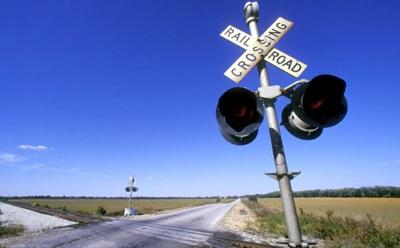
The dispute centers on a private grade crossing known as the Liberty Bend Crossing. The crossing was created to provide Liberty access to a sewage treatment lagoon.
Under the 1964 agreement, the city agreed to assume the risk of and indemnify the railroad for losses, damages, costs and expenses resulting from injury or death arising from the construction, use, existence, operation or maintenance of the roadway and private crossing, including when caused by railroad negligence.
The accident occurred Sept. 26, 2018, when Liberty employee Cameron Leeds drove a city truck into the path of an approaching train at the crossing. Leeds died, while another city employee riding in the truck, Thomas Shadid, was injured. The city subsequently stopped using the crossing and barricaded access to it.
The accident resulted in two lawsuits. Alexandra Leeds filed a wrongful-death lawsuit against Norfolk Southern and two of its employees in 2019.
In 2023, Shadid filed a separate lawsuit against Norfolk Southern and two of its employees seeking damages for injuries sustained in the accident. Norfolk Southern tendered both cases to the city and its insurer, Midwest Public Risk of Missouri, under the 1964 crossing agreement.
The insurer initially accepted the tenders and assumed Norfolk Southern’s defense in both cases.
The city later sought to terminate the crossing agreement. In an October 2023 letter, an attorney representing Liberty told Norfolk Southern that the city no longer needed the crossing because it had other access to its property and said the city had concluded that terminating the crossing was in the public interest and best for public safety.
The dispute over the city’s indemnification obligation intensified in late 2024 as trial in the Leeds case approached. Norfolk Southern notified Liberty that its potential liability under the indemnity provision could exceed the limits of the city’s available insurance.
The city then began examining whether the 1964 agreement was invalid or unenforceable. In December 2024, the city’s attorneys told Norfolk Southern that the original contract had not been properly authorized by a city ordinance or resolution and therefore had not been properly executed by the mayor.
The city said it would not voluntarily contribute city resources beyond workers’ compensation benefits previously paid in connection with the claims.
Norfolk Southern ultimately settled both underlying lawsuits. The court document does not disclose the settlement amounts or the resulting damages figures because those amounts are redacted in the document.
The order states that Norfolk Southern paid portions of the settlements and legal fees after the city’s insurance coverage was exhausted, while Midwest Public Risk paid the remaining amounts within the available insurance limits. The court found the settlements reasonable and the legal expenses reasonably and necessarily incurred.
Liberty argued that the crossing agreement was invalid for several reasons, including that no city official had been properly authorized to enter it, that the authorization was not contained in a separate written document, and that Missouri law required the agreement to be approved through a separate ordinance.
The city also argued that Norfolk Southern had materially altered the agreement by constructing a second railroad track at the crossing.
Kays rejected those arguments. The court found that the Liberty City Council unanimously approved the agreement at a Feb. 7, 1964, meeting by a vote of five to zero. The council minutes recorded a motion to approve a contract with Wabash Railroad for a crossing to the lagoon site. Mayor Arthur Preston signed the agreement that same day on behalf of the city, and City Clerk Shelby Morrow attested to his signature.
The judge also rejected the city’s reliance on the absence of additional historical records. A declaration from current Deputy City Clerk Sarah Ranes stated that she could not find records authorizing the agreement beyond the council minutes.
However, the court noted that Ranes had previously testified that she did not know how the city’s recordkeeping system operated in 1964. The court also cited the city’s discovery of historical documents in a box of unrelated records and concluded that the city’s handling of historical records was sufficiently flawed that no inference could be drawn against Norfolk Southern from the absence of additional authorization records.
The court further ruled that Missouri statutes requiring certain municipal “cooperation” agreements involving public improvements to be approved by ordinance did not apply.
The crossing, roadway and underground pipe covered by the agreement were for Liberty’s private and exclusive use and were not themselves public improvements, even though they provided access to the city’s sewage lagoon.
Kays also rejected the city’s argument concerning the second set of railroad tracks. The court said the city’s argument depended on evidence from a witness whose declaration had been stricken because the city failed to disclose him as a witness as required by federal rules.
As a result, the court found no admissible evidence that Norfolk Southern had materially altered the agreement or that the additional track caused the accident or materially increased the risk of such an accident.
The court concluded that Norfolk Southern had fulfilled its own obligations under the agreement by constructing and maintaining the crossing and allowing Liberty to use it for more than 50 years.
The city, meanwhile, breached its indemnification obligation when it initially accepted responsibility for the underlying lawsuits and later refused to pay indemnity after the available insurance coverage was exhausted.
The ruling grants Norfolk Southern summary judgment on both of its breach-of-contract claims and denies Liberty’s request for judgment in its favor.
U.S. District Court for the Western District of Missouri, Western Division case number: 4:25-cv-00064