


A Union Pacific locomotive
ST. LOUIS — A federal judge has granted summary judgment in favor of Union Pacific Railroad Company, dismissing claims of race discrimination and retaliation brought by a longtime employee, concluding that the evidence does not support an inference of unlawful discrimination or a viable retaliation claim.
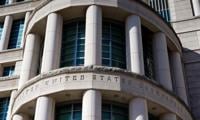
In an order dated March 25, the U.S. District Court for the Western District of Missouri ruled that Collins failed to establish a submissible case after the case was remanded for further consideration following a partial appellate reversal.
The court determined that, even under a revised legal standard articulated by the U.S. Supreme Court, Collins could not demonstrate that the circumstances of her employment gave rise to an inference of race-based discrimination or that she suffered a materially adverse action linked to protected activity.
Collins, a Black woman, worked for Union Pacific and its predecessor companies for more than four decades, holding over 20 positions during her tenure.
She alleged that while working in the company’s Kansas City Supply Department and later in its Transportation Department, she was subjected to discriminatory treatment, harassment and retaliation based on her race.
The court had previously granted summary judgment to Union Pacific in 2023, but the Eighth Circuit Court of Appeals later affirmed dismissal of Collins’ hostile work environment claim while remanding her discrimination and retaliation claims for reconsideration in light of the Supreme Court’s decision in Muldrow vs. City of St. Louis.
That decision clarified that a plaintiff need not show a “materially significant” disadvantage to establish an adverse employment action in discrimination claims.
On remand, the district court again found in favor of Union Pacific, concluding Collins could not meet the necessary legal standards.
While the court acknowledged that one allegation, an increased workload under a supervisor, could constitute an adverse employment action under the more lenient standard, it found no evidence tying that action to racial discrimination.
Instead, the court found that the supervisor in question treated multiple employees poorly regardless of race.
Collins herself reported that the supervisor’s conduct affected “90% of the employees,” including white coworkers, and did not initially attribute the behavior to race in internal complaints.
The court also noted that other employees, including Caucasian workers, filed similar complaints about the same supervisor.
Additionally, the court found that several of Collins’ other allegations, such as being yelled at, receiving an attendance warning and experiencing temporary issues with vacation scheduling, were too minor to qualify as adverse employment actions, even under the revised legal framework.
The court also rejected claims related to alleged underpayment, ruling those disputes were governed by a collective bargaining agreement and therefore preempted by federal labor law, making them unsuitable for litigation in this case.
With respect to retaliation, the court held that Collins failed to establish a prima facie case.
Even assuming she engaged in protected activity by reporting alleged discrimination, the court found no evidence that she suffered a materially adverse action that would deter a reasonable employee from making such a complaint.
The court further found no causal connection between Collins’ complaints and any alleged adverse actions.
It noted that many of the incidents she cited occurred before she reported management concerns, and there was no evidence that decision-makers in other departments were aware of her complaints.
Collins retired from Union Pacific in April 2021 and filed suit later that year. In granting summary judgment, the court concluded that no reasonable jury could find in her favor based on the evidence presented.
“As a result,” the court wrote, “Union Pacific is entitled to summary judgment” on both the discrimination and retaliation claims.
U.S. District Court for the Western District of Missouri, Western Division case number: 4:21-cv-0634