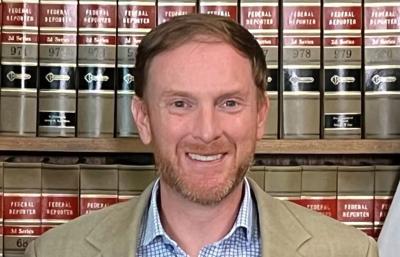



West Virginia Attorney General J.B. McCuskey
A federal judge has struck down New York’s “Climate Superfund” law, ruling the state’s attempt to charge oil, natural gas and coal companies $75 billion for damages associated with greenhouse gas emissions was preempted by federal law.
Saying there was no functional difference between charging companies for their worldwide CO2 emissions and regulating them, U.S. District Judge Brenda K. Sannes ruled the New York statute illegally intrudes on federal authority over interstate air pollution and foreign affairs.
“The Climate Act is an unusual and sweeping statute, designed to address the effects of climate change – a ‘uniquely international problem of national concern,’” Sannes wrote in the Aug. 31 decision.
The ruling threatens to halt a movement among left-leaning states to tax energy companies over their global emissions with statutes modeled on the federal Superfund law, which charges companies for the cost of cleaning up toxic waste sites.
In this case, New York, Vermont and several other states have proposed imposing similar strict liability on oil, gas and coal companies to pay for the environmental effects of human-induced global warming.
West Virginia led a coalition of 22 mostly coal- and oil-producing states as well as industry associations and the U.S. Chamber of Commerce in attacking the New York law, which they said was preempted by federal law and represented an attempt to tax oil companies over their worldwide activities.
“This is a major victory in the fight against liberal states, trying to balance their budgets on the backs of our hard-working men and women in the coal, oil and gas industries,” West Virginia Attorney General J.B. McCuskey said. “Thankfully, New York politicians can’t put their hands in West Virginia families’ pocketbooks now.”
A spokesperson for New York Gov. Kathy Hochul said her office is reviewing the decision for possible appeal.
Sannes based her ruling largely upon a 2021 decision by the Second Circuit Court of Appeals dismissing the City of New York’s public nuisance lawsuit against the oil industry. In that case, the federal appeals court ruled the Clean Air Act regulated greenhouse gas emissions and therefore prohibited New York from suing oil companies over their emissions. The court also said foreign-policy considerations prevented the state from suing over global emissions.
Federal courts are split on whether Chevron was properly decided and the U.S. Supreme Court is scheduled to hear arguments in October in a Colorado climate lawsuit that may settle the argument.
New York argued the 2nd Circuit decision involved a lawsuit, not a statute. But Sannnes said the superfund law was “not distinguishable” from the public nuisance claims the Second Circuit dismissed in Chevron.
New York also argued it wasn’t attempting to regulate emissions, but only to collect money for the damage they caused. But the Second Circuit rejected that characterization, ruling damage payments are the equivalent of regulation that would work beyond state borders. The Supreme Court has ruled that states may regulate air pollution within their borders as they see fit, but cannot extend that authority beyond their borders.
The oil industry still faces a profusion of lawsuits by state and local governments, many of them promoted by private law firms seeking fees from what could be hundreds of billions of dollars in judgments and settlements. If the Supreme Court agrees it has jurisdiction in the Colorado case – a question it asked the parties for arguments on – it may go on to decide all such litigation is preempted by the Clean Air Act.
McCuskey’s office called the ruling “victorious” and the first on this issue, noting West Virginia also currently is challenging a similar Superfund law in Vermont and that legislation also is pending in several other states.
U.S. District Court for the Northern District of New York case number 1:25-cv-00168