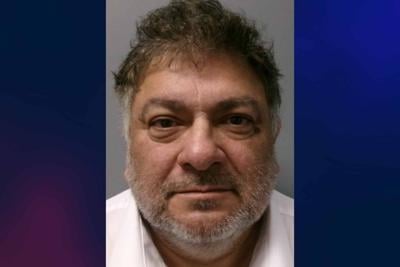


Joseph de Soto
CHARLESTON – The West Virginia Supreme Court heard oral arguments about whether a House of Delegates seat actually was vacant and properly filled after the elected delegate failed to take office because he was on home confinement after making terroristic threats to lawmakers.
The court heard arguments September 22 in the dispute that happened after the 2024 general election before the 2025 legislative session began.
Delegate-elect Joseph DeSoto, who won the 91st House District seat in the Martinsburg area as a Republican in November 2024, then changed his party registration to Democrat the day before his December 2024 arrest on allegations that he made threats against lawmakers. DeSoto did not appear to take the oath when the Legislature convened in January 2025.
After DeSoto did not take office, the House adopted a resolution declaring the seat vacant. The resolution cited his failure to take the required oath and his inability to appear at the Capitol because he was under home confinement in Berkeley County. The House acted under a constitutional provision stating that a member who refuses to take the prescribed oath forfeits the seat.
Lawyers for the state Democratic Party, its chairman Mike Pushkin and voters in the district argued the House used the wrong constitutional process. They contend the House effectively removed DeSoto and therefore should have pursued expulsion, which requires a two-thirds vote, rather than declaring a vacancy by a simple majority resolution.
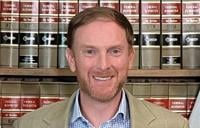
“The petitioners have never disputed that the House of Delegates didn't have grounds for expelling him or didn't have good reason for taking action against him,” attorney Robert M. Bastress Jr. told the court Tuesday. “It was the procedures used that it proceeded by majority vote on an exclusion, as opposed to proceeding to an expulsion procedure where he has to have a two-thirds supermajority.”
Bastress argued the constitutional question is not whether DeSoto’s circumstances justified legislative action, but whether the House followed the procedure required to take it. He also cited the U.S. Supreme Court’s 1969 ruling in Powell v. McCormack, which reviewed Congress’ refusal to seat an elected member.
Solicitor General Michael Williams, representing Morrisey and House Speaker Roger Hanshaw, argued the state Constitution gives each chamber authority to judge the qualifications of its members and that taking the oath is a necessary qualification.
“The House is the sole judge of its members’ qualifications, and this court cannot second guess that judgment,” Williams told the justices.
Williams maintained DeSoto never became a qualified delegate because he was never sworn in. Under that interpretation, the person holding the seat immediately before the vacancy was the prior Republican officeholder, meaning the Berkeley County Republican Executive Committee – not the Democratic Party – was entitled to submit nominees to Morrisey.
The governor appointed Republican Ian Masters, who has served most of the two-year term and is not seeking another term.
Democrats say DeSoto’s term began December 1, 2024, and that he was a Democrat when the House declared the vacancy. They say Democratic officials should have been permitted to recommend replacement candidates under the vacancy statute then in effect.
The justices pressed both sides during Tuesday’s arguments on whether the court may review a legislative chamber’s decision concerning its membership.
Retired Justice Beth Walker, sitting in the case after Justice Bill Flanigan recused himself because of his recent House service, questioned whether the petitioners were asking the court to interfere in the legislative process.
The court also raised questions about whether the case has become moot because the term is nearly over and another election is approaching. Chief Justice Haley Bunn noted the state is “on the precipice of another election here in a little more than a month” and asked whether that timing would make the dispute moot.
Bastress said the case remains live because part of the disputed term remains and because the constitutional issue is capable of recurring. Williams argued that the case is moot, pointing to the filled seat, the approaching election and changes to the law governing legislative vacancies.
In July, a criminal trial for DeSoto was delayed. A status hearing took place instead of the previously scheduled pretrial hearing for a trial that was going to begin the following week.
De Soto was arrested in December 2025 on a felony charge for making terroristic threats to lawmakers. Earlier this year, the 62-year-old de Soto was charged by a Berkeley County grand jury with unlicensed practice of medicine, misrepresentation of authorization to practice medicine, false indication or inducement of authorization to practice medicine, misrepresentation of past military status or military award, threats of terrorist acts and grossly inaccurate campaign finance statement. The indictment by the Grand Jury comes after a Dec. 12, 2025 arrest.
In the evidence presented to the grand jury, de Soto allegedly made threats to kill at least five members of the West Virginia Legislature. He has been out on bond and on home confinement since December.
In July, de Soto’s attorney Andrew Arnold told the judge he is awaiting an expert to do an evaluation in the case. Arnold also asked for an extension and requested a status hearing in 90 days, which is now set for October 13.
Filings show the defense wanted to “explore having the Defendant (de Soto) evaluated for criminal responsibility at the time of the allegation(s).”
Last year, de Soto sued the wife of a now-deceased lawmaker, accusing her of defamation, extortion, sexual misconduct, political retaliation and more.
In the civil complaint, de Soto blamed Cheryl Kump, the wife of former Delegate Larry Kump (R-Berkeley), for a chain of events that led to his arrest and ouster from office as well as other damages. He seeks more than $1 million in compensatory and punitive damages.