
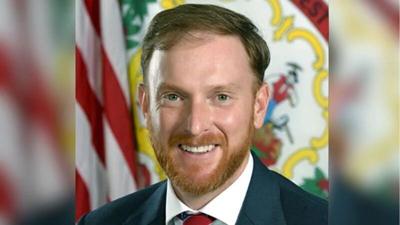



West Virginia Attorney General J.B. McCuskey
CHARLESTON – West Virginia Attorney General J.B. McCuskey is leading a coalition of 26 states backing a proposed Federal Energy Regulatory Commission’s rule he says would get West Virginia natural gas to market sooner and would safeguard prices for consumers.
The move in question is to a rule that would revise the Blanket Certificate Program (Docket No. RM25-12-001).
“Updating the pipeline rules is good for West Virginia jobs, energy prices and economic growth,” McCuskey said. “This proposed rule would benefit everyone, including gas producers who will be able to avoid red tape and consumers who will have greater access to affordable energy when they need it most.
Beyond that, our state’s 70,000-plus natural gas jobs would be protected, and we could possibly build on that. This is a win-win for everybody and it’s just common sense to cut out bureaucracy to make this process more efficient.”
The Blanket Certificate Program was created in 1982 and was intended to streamline authorization for a class of routine activities. The proposed rule would raise the dollar limits for fast-track projects to $30 million to account for increased costs, making it easier for interstate natural gas pipeline companies to modify and maintain facilities without a months-long project-by-project federal review.
The states argue that more pipeline capacity helps hold down gas and electricity prices nationwide. The coalition asserts that residents still have notice and protest rights; a serious protest will trigger a full review.
The Clean Air Act, Clean Water Act and Endangered Species Act will still apply. In West Virginia, water and air permits still will be required.
The attorneys general from Alabama, Alaska, Arkansas, Florida, Georgia, Idaho, Iowa, Indiana, Kansas, Kentucky, Louisiana, Mississippi, Missouri, Montana, Nebraska, North Dakota, Ohio, Oklahoma, Pennsylvania, South Carolina, South Dakota, Tennessee, Texas, Utah and Wyoming joined West Virginia’s comment letter to FERC.
* * *
McCuskey also has joined a multi-state coalition of 21 state AGs in raising concerns to the Federal Communications Commission over a Wi-Fi company’s close ties to the Chinese Communist Party.
A letter from the AGs claims use of TP-Link routers creates unnecessary national security risks.
TP-Link controls at least 60 percent of the U.S. retail market for Wi-Fi systems and small office/home-office routers. The company is now requesting conditional approval to sell new router models in the United States.
As the FCC’s March 23, 2026, public notice explained: “Routers are the key networking device that enable American homes, schools, businesses, critical infrastructure providers, and emergency services to connect to the internet every day. … Compromised routers can enable in-depth network surveillance, data exfiltration, botnet attacks, and unauthorized access to U.S. Government or American businesses’ networks.”
The AGs’ letter addresses concerns that TP-Link has ongoing ties to the Chinese military and relies on major research and development and manufacturing operations in China. Although TP-Link recently constructed a manufacturing plant in Vietnam, a vast majority of the components used at the plant are imported from or through China, and the plant was constructed by a contractor with ties to the Chinese military. These ongoing relationships create serious security concerns that must be addressed before a decision is made on TP-Link’s request for conditional approval.
“As the state’s attorney general, I have a duty to do all I can to protect consumers – and consumers need to be aware of this risk,” McCuskey said. “Additionally, cyber-attacks pose a grave threat to our national security so we are asking the FCC to address these concerns before allowing this company to expand in this country.”
TP-Link routers have been implicated in a number of serious cyber attacks by Russian intelligence and Chinese state actors. The attacks involved unauthorized access to TP-Link routers, which enabled hackers to gain administrator access and conscript the routers into an illegal botnet. Hackers can use botnets to gain access to targeted systems, or to steal consumers’ sensitive information, including private communications, usage data, passwords, financial records and more.
In addition to West Virginia, the letter was signed by attorneys general from the following states: Alabama, Alaska, Arkansas, Georgia, Idaho, Indiana, Iowa, Kansas, Kentucky, Louisiana, Nebraska, Montana, North Dakota, Ohio, Pennsylvania, South Carolina, South Dakota, Tennessee, Texas, and Utah.
