
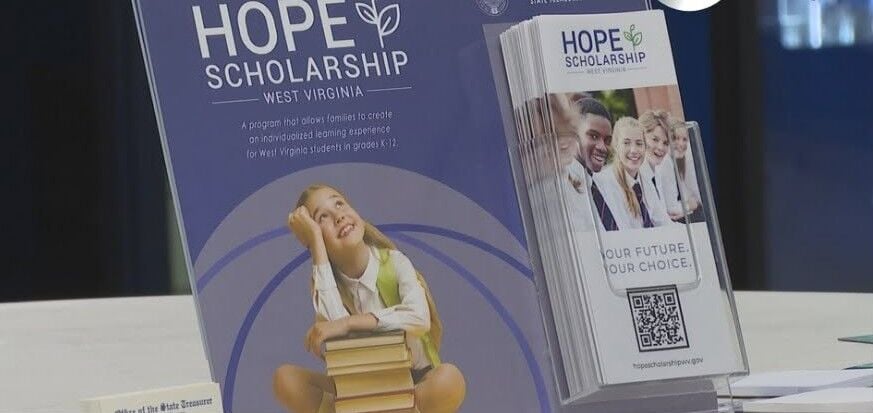
CHARLESTON – A group of Mingo County parents has filed a lawsuit seeking to halt new payments under West Virginia’s expanded Hope Scholarship Program.
In the complaint, filed September 4 in Kanawha Circuit Court, the parents claim the universal-eligibility expansion threatens constitutionally required funding for public schools and leaves rural families without a practical school choice option.
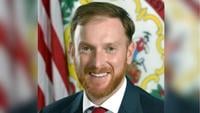
The defendants are state Treasurer Larry Pack, the West Virginia Hope Scholarship Board and state Superintendent of Schools Michele Blatt. As treasurer, Pack is chairman and presiding officer of the Hope Scholarship board.
The parents ask the court to issue a temporary restraining order and preliminary injunction preventing Hope Scholarship disbursements to first-time applicants who became eligible solely because of the program’s 2026-27 universal expansion.
The lawsuit does not seek to shut down the entire program, recover money already disbursed or interrupt accounts held by students eligible under the program’s prior rules.

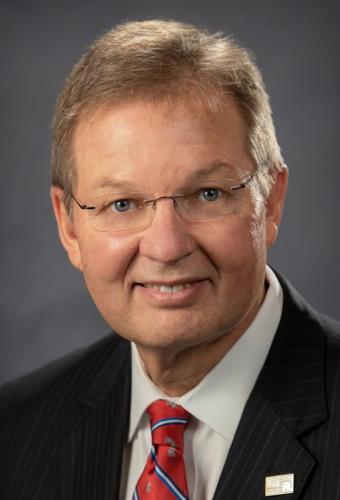
Pack
“It is unfortunate that the Hope Scholarship is still being used as a political football, distracting from the urgent issues facing our public schools,” Pack said in a September 8 statement about the lawsuit. “While parents in Mingo County are right to demand solutions for public education, their anger is misdirected.
“We will aggressively oppose any attempt to reverse the universal expansion approved by the Legislature and signed by the governor. As chairman of the Hope Scholarship Board, I am committed to ensuring every student in the program receives the unique educational opportunities they deserve.”
The Hope Scholarship program provides education savings accounts that families may use for eligible expenses, including private school tuition, home school curricula and tutoring. The 2026-27 school year is the first in which the program is open to all West Virginia K-12 students regardless of whether they previously attended public school, according to the complaint.
In the complaint, the plaintiffs contend the expansion, coupled with continued enrollment declines and what they characterize as insufficient support through the state school aid formula, violates the West Virginia Constitution’s requirement that the Legislature maintain “a thorough and efficient system of free schools.”
Their case is structured as an as-applied challenge rather than a renewed facial challenge to the 2021 Hope Scholarship Act. The West Virginia Supreme Court of Appeals upheld the law against a facial constitutional challenge in 2022 in State v. Beaver.
The plaintiffs cite language from that ruling saying challengers could bring a case if the Legislature later failed to sufficiently fund public schools after enrollment declines. They argue that the future contingencies identified in Beaver have now occurred: enrollment has dropped, the scholarship program has expanded, Mingo County Schools has been placed under state control and Dingess Elementary School is proposed for closure.
“The contingencies Beaver treated as speculative have occurred and are now measurable,” the complaint says.
The suit alleges the program’s cost has increased substantially since the earlier litigation, when about 3,000 students had applied and the state described the cost as roughly $12.9 million. The complaint says the 2025-26 appropriation was about $100 million and alleges, on information and belief, that the 2026-27 appropriation is in the “several hundred million dollars” range. Those figures will require proof in the case.
In his Tuesday statement, Pack also asked the state Legislature to “act quickly and confront the urgent challenges in our public schools.”
“Our schools are demanding help, and the time for action is long overdue,” Pack said. “We must cut burdensome regulations so teachers can focus on teaching. But let’s be clear: improving public schools does not require sacrificing educational freedom. We can – and must – strengthen public education and uphold school choice at the same time.
“We are ready to partner with policymakers to deliver real change. The future of our students depends on it. Let’s get to work.”
The complaint also relies heavily on a RAND Corp. review commissioned by the House of Delegates. According to the filing, RAND recommended increased state-aid-formula funding, found West Virginia under-allocates resources for districts serving higher-cost students and recommended against the planned universal eligibility expansion for 2026-27.
RAND estimated that about 36,000 additional school-age children would become newly eligible through the expansion, according to the complaint. It estimated that if half participated, the expansion could add about $105 million in annual costs. The report concluded that many newly eligible students were already in private school or being homeschooled and would be more likely to use the scholarship to replace education spending their families would have undertaken without the program, the complaint says.
The plaintiffs’ arguments extend beyond public school funding.
They also ask the court to declare that the program’s disbursements for religious educational instruction violate a provision of the West Virginia Constitution barring compelled support for religious worship, a church or ministry. The plaintiffs say they are not asking the court to exclude religious schools from a generally available program, acknowledging federal court precedent protecting religious schools’ eligibility for public benefits. Instead, they contend the constitutional issue concerns the structure and scale of the overall appropriation.
A separate claim alleges that the program’s geographic operation violates the state constitution’s equal protection guarantee because families in areas with nearby participating private schools can use the benefit, while residents of rural communities such as Dingess cannot realistically do so.
“Families in counties with a supply of nearby participating private schools have practical access to the choice the Program provides,” the lawsuit says. “Families in rural communities such as Dingess, where no participating provider offers a full-time school program within reasonable commuting distance, have no such access.”
The plaintiffs say that despite the lack of accessible alternatives, rural public-school systems still bear the effects of enrollment-based funding and competition for state general revenue.
Dingess Elementary is central to the lawsuit’s claims.
The complaint says Mingo County has proposed closing the school after the 2026-27 school year because of declining enrollment and financial pressures. It alleges no Hope Scholarship provider offering a full-time school program is within a reasonable commute of the plaintiffs’ homes.
Several affidavits attached to the filing describe the potential effects on individual children and families.
Katie Baisden said her two children attended Dingess Elementary and have individualized education programs. She said the Special Education Department told her Dingess would no longer provide for special needs students and that her children would have to attend Lenore Elementary. She said she was also told that, if she chose to keep them at Dingess, they would no longer have individualized education programs.
Christina Hager said her 8-year-old son has ADHD and had an individualized education plan at Dingess. She said school staff know her son’s needs, that he does not handle changes well and that a move to Lenore would mean a substantially longer bus ride.
Candice Perry said her two children attend Dingess and that the trip to Lenore Elementary would require bus travel of about an hour or more each way. She said one child has bowel issues and cannot spend more than two hours a day on a school bus.
The plaintiffs seek an accounting of Hope Scholarship disbursements by county and recipient type, including public, private religious, private nonreligious and home school recipients. They argue the accounting is needed to evaluate the program’s operation and to develop their claim that the state has improperly extended public credit or aid to private entities without adequate public purpose findings and oversight.
In seeking emergency relief, the plaintiffs argue that the harm cannot be remedied after the fact because scholarship funds placed in individual accounts may be spent and cannot practically be recouped. They also argue that public school systems may make irreversible decisions – including a school closure – while the litigation is pending.
The plaintiffs are being represented by Steve New and Emilee Wooldridge of Stephen New & Associates in Beckley. The case has been assigned to Circuit Judge Carrie Webster.
Kanawha Circuit Court case number 26-C-1103