
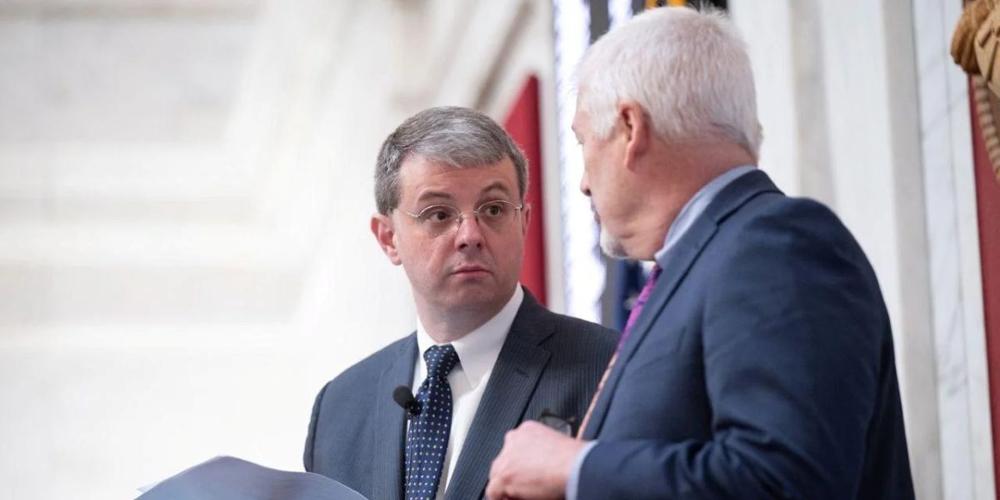



House Speaker Roger Hanshaw (R-Clay).
WHEELING – Even if you don’t like the idea of one being built, you understand why a developer of a controversial data center project still needs an attorney to represent its interests in court.
But when that attorney is the Speaker of the West Virginia House of Delegates, there’s a problem.
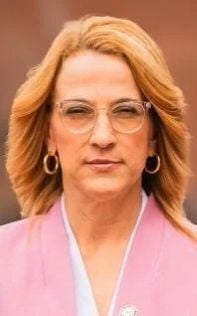
Toriseva
And with data centers and legislation about data centers being such a big issue in the state right now, that problem is magnified.
Roger Hanshaw (R-Clay), who works for the Charleston law firm of Bowles Rice, is one of three attorneys from the firm representing Fundamental Data in a case before the state Intermediate Court of Appeals regarding the construction of a data center in Tucker County.
During the 2025 session, Hanshaw played a key role in enacting legislation deregulating data centers in the state. During this year’s session, lawmakers also passed legislation specifying how data center laws will be implemented.
It’s clear to see that Hanshaw’s actions raise a lot of questions. Using his position as Speaker of the House to benefit one of his legal clients is a blatant abuse of power. This is the type of self-dealing that citizens universally reject as corrupt by elected officials.
Whether you are Republican, Democrat or Independent, I hope your red flags are raised. One big obvious question: Why would this data center choose to hire the speaker of the house as counsel? Is he the best or only lawyer available to them statewide?
Some have tried to dismiss the criticisms of Hanshaw, claiming he should be treated no differently than any other lawmaker.
In theory, that’s great. But in reality, it isn’t that simple.
Hanshaw is blurring the line between public duty and private gain and, he’s acting as if the rules don’t apply to him. Remember, as speaker, Hanshaw controls the legislative agenda, appoints committee chairs and members and wields authority over the powerful Rules Committee. He isn’t just a regular legislator. He could KILL or INTRODUCE any bill. He’s the ONE in charge of the people’s house.
If you still need further proof of the problem, let’s go back to 2012.
House Speaker Rick Thompson, a Democrat from Wayne County, asked the West Virginia Ethics Commission if he could work as general counsel for the West Virginia Education Association. He wanted clarification because he knew his role as speaker would bring additional scrutiny.
Rightfully so, the Ethics Commission said Thompson could not work for the teacher’s union while he was speaker.
But, let’s be honest. Unfortunately, this type of behavior isn’t anything we haven’t seen before. Our current president is a master of using public office for personal gain. Hanshaw himself has a long history of representing oil and gas entities in legal proceedings.
The optics of Hanshaw’s actions are bad enough, but the timing couldn’t be worse. So many West Virginians are struggling with rising costs coming at them from every angle. And they need to look no further than their busted roads or dirty tap water to already feel disenfranchised with and embarrassed by state government.
It isn’t just West Virginia Democrats like me who see the error of Hanshaw’s ways.
Craig Holman, a government ethics expert with the national watchdog group Public Citizen, said Hanshaw “is dancing dangerously close to the line separating public interest from his own private interests.”
Holman also called the situation “an obvious conflict of interest.”
“As Speaker of the West Virginia House, he is expected to represent the public's interest,” Holman recently told this newspaper. “But as a key lawyer and representative of private data center projects generally, and the private firm Fundamental Data in specific, it would appear that a larger share of his income and duties come from representing private business interests.
“When the two interests come into conflict — as is the case with government policies and tax dollars used to develop costly data centers — one can legitimately ask: who's interest is Hanshaw now representing?”
But, as Holman also noted, Hanshaw’s decision to work for a company while he could shape policies that benefit the company might be unethical, but it technically isn’t illegal under current West Virginia law.
“While there is a conflict of interest code on the books, legislative rules of the House undermine the intent of the code — specifically, the rule that voids the conflict of interest code if the final impact of official actions affects five or more parties,” he said.
That needs to change, and it needs to happen soon because without specific laws limiting this bad behavior, we are going to continue to see elected officials abusing their power in this way. West Virginians expect and want their leaders to serve the people rather than seek profit from their elected position.
Toriseva is a Wheeling trial attorney and Vice Chair of the West Virginia Democratic Party.