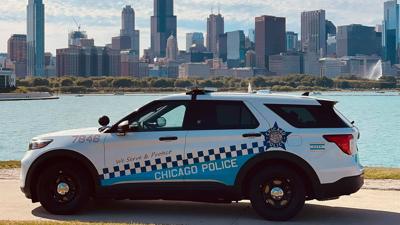


Chicago Police
CHICAGO — A federal judge won’t curb a class action from Black and Latino drivers who say Chicago police are disproportionately stopping and penalizing people based on race.
In an opinion filed July 27, U.S. District Judge Mary Rowland granted class certification to five named plaintiffs who allege Fourteenth Amendment and Illinois Civil Rights Act violations.
Rowland traced a four-decade history of lawsuits alleging Chicago Police discriminated in their stops of pedestrians. And she noted several successful legal challenges, including the 1999 U.S. Supreme Court opinion, Chicago v. Morales, that neutralized a Chicago “gang loitering” ordinance as unconstitutionally vague.
“CPD nonetheless continued to conduct high volume stops of Black and Latino Chicagoans,” Rowland wrote, including an expansion of its “stop and frisk” approach, with data showing that “by 2014, CPD officers were stopping, interrogating and sometimes frisking more than 718,000 people a year. More than 90% of those stopped were Black or Latino.”
Again, litigation proved effective, with the number of such interactions dropping to around 100,000 in 2017, Rowland said. But plaintiffs alleged the department in 2016 shifted to traffic stops, going from 83,000 in 2014 to almost 600,000 in 2019. The new complaint essentially alleges the pattern of discrimination that once applied to pedestrian interactions was merely shifted to vehicle stops. The lawsuit alleges police have used traffic stop quotas, citing emails and internal memos, along with public statements they say point to a formal strategy behind a “mass traffic stop program.”
“Plaintiffs allege that as a part of this plan, CPD officers pull over Black or Latino drivers at disproportionately high rates for alleged minor traffic violations such as an expired registration sticker,” Rowland wrote. “CPD officers’ true purpose in pulling over these drivers is not to enforce traffic laws or issue citations, but rather to question and harass drivers about whether they have guns or drugs in the car. Pursuant to the plan, CPD targets both individual Black and Latino drivers as well as predominantly Black and Latino neighborhoods on the south and west sides of Chicago. Prior to the onset of the plan, around 65% of traffic stops resulted in citations. After its inception, that number ranges between 3%-5%.”
The plaintiffs are seeking a court order that, among other demands, stops the CPD from targeting Black or Latino neighborhoods with traffic stops, bars pretextual traffic stops and quotas and “transfers authority for enforcement of non-moving violations of the Illinois Vehicle Code and/or the City of Chicago Traffic Code by drivers in Chicago to a non-law enforcement authority,” Rowland wrote.
In opposing what it called unnecessary certification, the city said the proposed class definition is too broad, that the plaintiffs didn’t show common circumstances and that the requested relief “is improperly tailored to the proposed class,” Rowland wrote.
She rejected those arguments, noting expert testimony that not only does CPD stop Black and Latino drivers disproportionately to white drivers, but also plaintiffs have “evidence that shows that searches of Black and Latino drivers are less likely to result in a finding of contraband.” Rather than contest that, she continued, the city argued its practices don’t violate federal or state law. But whether the stops “are unlawful is the common question to which the proposed class seeks a common answer,” Rowland wrote.
While the city may yet prevail on its argument there is no race-based discrimination, Rowland implied, the threshold for certification is only the existence of a mass stop program. She further noted the plaintiffs’ expert “identified the race of at-fault drivers in vehicular collisions as a proxy variable to control for dangerous driving practices,” not traffic stops specifically requiring reasonable suspicion of criminal activity, then found “Black and Latino drivers were twice as likely to be stopped by CPD compared to white drivers committing similarly dangerous moving violations.”
Rowland did agree “the proposed class is undoubtedly massive — it includes every Black and Latino driver in Chicago who has been or will be subjected to traffic stops since June 26, 2021." But the judge also noted the city doesn’t explain how such a class is indefinite. Chicago also argued the class is overbroad, but Rowland said precedent established under rulings from the U.S. Seventh Circuit Court of Appeals has established certification can be proper even when most potential members haven’t suffered legal harm.
“Plaintiffs do not seek any monetary damages, and the city does not otherwise argue that class certification would exert any undue pressure to settle,” Rowland wrote. “That some members of the class will have suffered no injury thus does not preclude certification in this case.”
Finally, Rowland said she shared some of the city’s concerns about the plaintiffs’ extensive relief request. She particularly noted she believed some of their demands may be beyond her power to grant. She didn't specify which ones among the long list of demands may be problematic. But the judge said that isn’t enough to defeat certification because she would retain the ability to limit a final injunction to only that which she finds within her authority to grant.
The plaintiffs are represented in the action by attorneys from the American Civil Liberties Union, of Chicago, and the firm of Arnold & Porter Kaye Scholer, of Chicago, San Francisco, New York, Denver and Washington, D.C.