




CHICAGO - Illinois should be able to enforce its new limits on so-called "swipe fees," or the fees charged each time someone uses a credit or debit card, a federal judge has ruled.
In the Feb. 10 decision, U.S. District Judge Virginia Kendall sided with the state of Illinois on the heart of the state law known as the Interchange Fee Prohibition Act, namely, a provision banning banks, card issuers or any other entity involved in such electronic financial transactions from tacking fees onto state or local sales taxes or gratuities that may be added onto a purchase.
Banks and credit unions, along with other financial service providers, had argued that provision should be preempted by federal laws governing and providing protections to financial institutions against such state regulation of national commerce.
But in her decision, Kendall agreed with Illinois Attorney General Kwame Raoul that those laws should not control in this instance, because the fees that are being regulated are not set by the federally-protected banks, but rather by companies like Visa and Mastercard.
She acknowledged the federal Office of the Comptroller of the Currency - the federal office that regulates and supervises national banks and certain other financial institutions - has called Illinois' law "bad policy."
"That may well be true," she said.
But in this case, the evidence indicates federal law doesn't prevent Illinois from using state law to regulate interchange fees, because those fees are set by entities not protected by relevant federal law.
"The Payment Card Networks built this ecosystem, and the Payment Card Networks set these fees," Kendall wrote. "To claim that the IFPA Interchange Fee Provision impermissibly interferes with the powers set out in (federal law) ... does not add up in the face of that reality.
"The thrust of (the federal law) is not to protect fees centrally established by a third-party company," Kendall said.
Illinois state lawmakers approved the Interchange Fee law in 2024, making the state the first to attempt to regulate such national financial transactions.
The state law triggered immediate legal challenges from banks and others, asserting the state had overreached, stepping into an area of regulation barred by the U.S. Constitution's so-called federal supremacy clause. That provision in the Constitution typically forbids states from making and enforcing laws that contradict federal law.
They further asserted allowing Illinois to enforce the new state law would prove costly, not only for financial services providers, but ultimately for consumers who would pay more to access the services, while enjoying fewer benefits.
The banks won a preliminary injunction against the law blocking it from taking effect in 2025.
The state then pushed the effective date of the law back to July 1, 2026 to allow time for the court challenge to play out.
Following further arguments, Kendall declined to make her preliminary injunction permanent regarding the interchange fees, delivering a potentially landmark win for the state in the court fight.
The ruling was not a complete win for Illinois, however. The judge granted a request from the banks to block the state from enforcing another provision in the state law that would have prevented anyone but the merchant from using data in the transaction for any purpose other than completing the sale.
Violations of the Illinois law could have resulted in statutory damages of $1,000 per violation. This would have opened the door to a potential flood of lawsuits against a host of entities involved in electronic payment transactions.

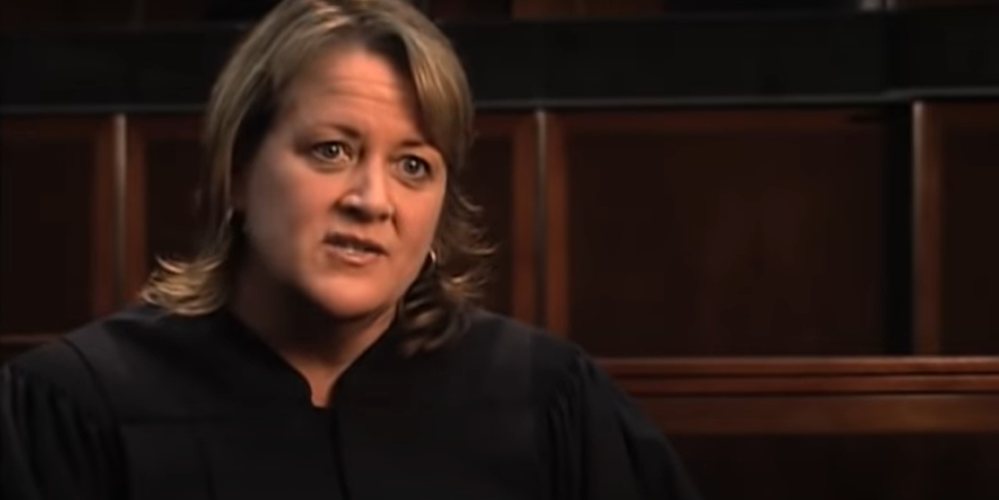
U.S. District Judge Virginia Kendall
Banks and their co-challengers said the data-sharing prohibitions would threaten the ability of financial services companies to monitor for fraud and offer rewards programs to customers, among other services and benefits.
And they warned the increased costs and risks from lawsuits and regulatory actions could also lead a number of financial services providers to simply abandon the Illinois market altogether.
Kendall said the data-sharing prohibitions are blocked by federal law for banks, and those protections extend to card issuers, as well. The judge said they should remain free to use card transaction data for banking-related purposes.
She issued a permanent injunction blocking that section of the law.
The court fight had produced an unusual array of allies, with merchants siding with the state and supporting the new and more stringent regulations.
Following the ruling, the Illinois Retail Merchants Association applauded the ruling, saying they looked forward to working with Illinois Democratic state officials to implement the new law.
“Today’s ruling is a historic win for Main Street over Wall Street and will save businesses and consumers millions of dollars a year. As the first law in the nation to restrict onerous swipe fees, we hope this measure can serve as a model for other states to seek relief for businesses and working families struggling with higher costs,” said Rob Karr, president and CEO of the Illinois Retail Merchants Association in a prepared statement.
The banks and other challengers, however, vowed to continue fighting the law on appeal.
In a joint statement, the American Bankers Association, Illinois Bankers Association, America’s Credit Unions and Illinois Credit Union League said:
"We are deeply disappointed by today’s ruling, and given the July 1 implementation date of the Illinois Interchange Fee Prohibition Act, we will appeal this decision. As the co-plaintiffs demonstrated and the OCC agreed, IFPA is clearly and fully preempted by federal law. The decision not to protect the payment system from this misguided state law is a serious error that will unleash chaos and confusion on Illinois consumers and businesses. We cannot let that stand.
“In light of this outcome, we renew our call for state lawmakers to repeal this flawed law before it can do any more harm to the Illinois economy. The fight over IFPA and any similar proposal will continue."