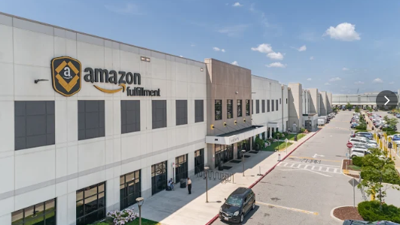



Amazon fulfillment center
SPRINGFIELD — The Illinois Supreme Court has ruled the state’s wage law doesn’t protect employers from lawsuits accusing companies of not paying workers for duties completed before or after assigned shifts.
The issue came to the state’s top court as a question from the U.S. Seventh Circuit Court of Appeals. The federal appeals court is managing a class action lawsuit from Amazon workers who sued their employer for being unpaid for time spent undergoing mandatory medical screenings before punching in, a policy the company implemented in 2020 as a Covid mitigation.
Workers alleged Amazon violated both the federal Fair Labor Standards Act as well as Illinois’ Minimum Wage Law. Amazon removed their Cook County lawsuit to federal court, where a judge dismissed the complaint, holding the FLSA claims could not survive in light of 1947’s Portal-to-Portal Act — which amended the FLSA to exclude certain pre-shift activities from what courts generally consider compensable time — and said the state law claims necessarily failed on the same grounds.
The workers challenged the dismissal of their state law claims to the U.S. Seventh Circuit panel.
Since the case involved an interpretation of Illinois law, the judges opted to ask the the state Supreme Court to answer the question.
Justice David Overstreet wrote the 6-0 opinion, filed March 19.
Justice Sanjay Tailor took no part in the decision.
The Seventh Circuit, according to Overstreet, “concluded that the text of the Wage Law and associated (Illinois Department of Labor) regulations support plaintiffs’ argument that the General Assembly did not incorporate the PPA’s preliminary and postliminary activities exclusion into the Wage Law but that federal case law applying the Wage Law in tandem with the FLSA supported Amazon’s position that the exclusion applied.”
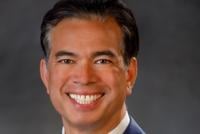
The Illinois Department of Labor (IDOL) and the office of Illinois Attorney General Kwame Raoul filed a joint brief supporting the workers’ position, while several large state and national business associations backed Amazon.
“Notably, IDOL references specific provisions of the FLSA and regulations promulgated by (the U.S.) DOL thereunder in defining some terms, as well as in specifying how ‘hours worked’ is calculated during periods of travel,” Overstreet wrote. “In fact, IDOL specifically references PPA regulations governing the compensability of travel time in determining ‘hours worked.’ … However, there is no reference to the PPA or USDOL regulations that establish a preliminary or postliminary activities exclusion from ‘hours worked.’ To the contrary, IDOL defines ‘hours worked’ to include all time an employee is required to be on the employer’s premises, which contradicts the potential applicability of any such exclusion.”
Overstreet further noted that IDOL regulations do allow the agency director to refer to the federal agency’s interpretations when administering the FLSA for state purposes, but there is no hard requirement to adopt USDOL regulations. Further, the Wage Law has no language allowing any FLSA provision or USDOL regulation “to override the definitions that IDOL has promulgated in accordance with the General Assembly’s mandate.”
In short, he continued, the IDOL’s “hours worked” definition necessarily covers any time a worker is required to be on the employer’s physical site. While acknowledging the Wage Law has many parallels to the FLSA, the PPA’s amendments to the federal law are not among them.
“These provisions are not parallel but rather state the same general rule with marked differences in their respective statements of exceptions,” Overstreet wrote. “In this situation, to accept Amazon’s invitation would be to read exceptions into the statute that depart from its plain language, in violation of our well-established rules of statutory interpretation, which explicitly prohibit this.”
The workers were represented in the complaint by attorneys Maureen A. Salas, Douglas M. Werman and John J. Frawley, of the firm of Werman Salas, of Chicago; and Don J. Foty, of the Hodges & Foty, of Houston.
Amazon has been represented by attorneys Michael E. Kenneally, Sari M. Alamuddin and Kevin F. Gaffney, from the firm of Morgan Lewis & Bockius, of Chicago and Washington, D.C.