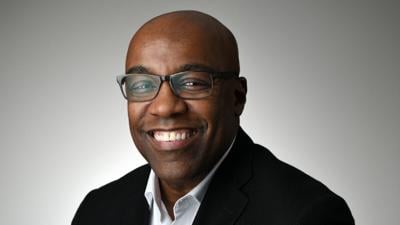



Illinois Attorney General Kwame Raoul
WASHINGTON, D.C. - Six years ago, Illinois lawmakers added the state to the ranks of those legalizing the recreational use of marijuana — in part, using concerns related to racial equity and social justice to justify the decriminalization regime.
Nonetheless, Illinois' attorney general now has told the U.S. Supreme Court that the state should still be allowed to cite "habitual" use of marijuana to justify blocking people from owning guns.
Illinois Attorney General Kwame Raoul staked out that position in a brief filed with the U.S. Supreme Court on Dec. 19. Raoul and other lawyers from his office authored the brief, along with lawyers from the office of the Attorney General of the District of Columbia Brian L. Schwalb.
They were joined in the filing by attorneys general of 18 other states, including 17 of Raoul's fellow Democrats from such states as California, New York, New Jersey, Michigan, Minnesota, Maryland and Massachusetts, and one Republican, Ohio Attorney General Dave Yost.
The filing came amid a flurry of so-called amicus briefs, or "friend of the court" briefs, filed on both sides in a Second Amendment rights dispute over whether courts should strike down laws blocking marijuana users from owning and carrying guns.
The case arose out of the federal prosecution of Ali Danial Hemani. According to court documents, Hemani is a dual citizen of both the U.S. and Pakistan. According to court documents, Hemani and his family are noted sympathizers and supporters of the ruling Islamic regime of Iran, which is considered a leading supporter of international Islamic terrorism and other violence against the interests of the U.S. and its allies.
According to court documents, Hemani's brother is in Iran, attending a school considered to be tied to Islamic terrorism, and U.S. authorities say Hemani was found in possession of "communications suggesting that he was posed to commit fraud at the direction of suspected affiliates of the Iranian Revolutionary Guard Corps, a designated foreign terrorist organization."
He further traveled in 2020 to Iran "to participate in a celebration of the life of Qasem Soleimani, an Iranian general and terrorist who had been killed by an American drone strike the month before" and has told American law enforcement that he would not report terrorist strikes, if he knew of them.
At the same time, the U.S. government has asserted Hemani is a drug dealer who was found by federal agents to be in possession of cocaine and marijuana during a warrant search of his family home.
He was also found in possession of a Glock 9mm pistol.
After admitting he smoked marijuana at least every other day, he was charged by federal authorities with violating a federal law that prohibits "habitual" users of marijuana and other drugs from possessing guns.
In court, Hemani challenged that criminal charge, arguing the federal law violated his Second Amendment rights.
A federal judge in the Eastern District of Texas agreed, declaring the law unconstitutional. And the U.S. Fifth Circuit Court of Appeals upheld the ruling, also finding the federal law unconstitutional.
In the Fifth Circuit ruling, the judges said such bans can only be enforced against people who are found to be carrying firearms while intoxicated or under the influence of such drugs.
The Justice Department under President Donald Trump appealed the ruling to the U.S. Supreme Court in July, asserting the lower courts were wrong and warning the decisions, if upheld, could be used to also invalidate similar laws in 32 states and D.C. also prohibiting "habitual" marijuana users from owning and carrying firearms.
At the Supreme Court, the federal government argued the law should be considered constitutional because they are similar to bans that date back to America's Founding Era blocking "drunkards" from carrying guns.
The Supreme Court agreed in October to accept the case and hear the appeal to resolve the dispute over the legal question.
The case has generated an unusual legal alliance, as Democratic attorneys general and their progressive political allies in the gun control lobby have filed briefs in support of the Trump administration in the case.
In the Illinois brief, Raoul and his fellow attorneys general argue Hemani's arguments should be rejected and the Fifth Circuit's ruling overturned, in part, because the states believe "habitual" marijuana users who carry firearms present "unique dangers" to society.
Raoul and his fellow attorneys general say these include dangers when intoxicated and when otherwise sober.
"Indeed, the public can be endangered by habitual drug users who experience ongoing psychological deficits that cause them to make dangerous decisions while handling firearms, commit dangerous actions that put others at risk, and expose themselves to unsafe environments to obtain drugs," Raoul and his fellow attorneys general wrote in their brief.
They noted studies indicating the use of marijuana and other drugs show "a strong link between drug use and violence," including a greater likelihood "to engage in robbery and violence." They noted "almost 50% of all state and federal prisoners who had committed violent felonies were drug abusers or addicts in the year before their arrest, as compared to only 2% of the general population."
"... Firearm possession by habitual drug users can pose a danger to the public both because of the dangerous choices that users may make, whether or not under the influence at the time, and because obtaining unlawful drugs can expose them to the inherent violence and criminality associated with the drug trade," Raoul and the other attorneys general wrote.
Raoul and Illinois Gov. JB Pritzker were among those who supported decriminalization of marijuana possession and its recreational use when Illinois in 2019 became the 11th state to do so.
The Illinois measure further cleared the criminal record of 800,000 people who had been criminally charged after purchasing or possessing 30 grams or less of marijuana.
At the time he signed the measure into law, Pritzker said the measure demonstrated Illinois Democrats' continuing commitment to social justice and racial equity.
"Legalizing adult-use cannabis brings an important and overdue change to our state, and it's the right thing to do," Pritzker said in 2019 when he signed the law. "This legislation will clear the cannabis-related records of nonviolent offenders through an efficient combination of automatic expungement, gubernatorial pardon and individual court action."
In the filing, Raoul and his fellow attorneys general say state and federal laws prohibiting marijuana users from owning and carrying guns should not be read to support applying the law to "casual users of controlled substances, but rather those who are engaged in habitual use or are addicted to controlled substances."
Each state defines "habitual" marijuana use differently.
Federal law prohibits anyone who uses marijuana from owning guns.
In Illinois, the state police have drafted guidelines that prohibit the state from citing legal marijuana use alone to deny applications for a state Firearms Owner Identification Card (FOID.)
However, the state can still deny FOID cards, which are needed to legally own guns in the state, to anyone the state determines to be "addicted to or a habitual user" of marijuana. The definition of such terms is also nebulous and subject to interpretation.
Some drug treatment organizations have defined "habitual" or "chronic" use of marijuana as "daily or near daily" use of the substance.
“I am urging the Supreme Court to reverse the appellate court’s decision because the mix of habitual drug use and firearms poses recognized public safety risks," Raoul said in a statement announcing the filing of the amicus brief. "Allowing habitual drug users to carry or use firearms significantly increases danger to our communities."