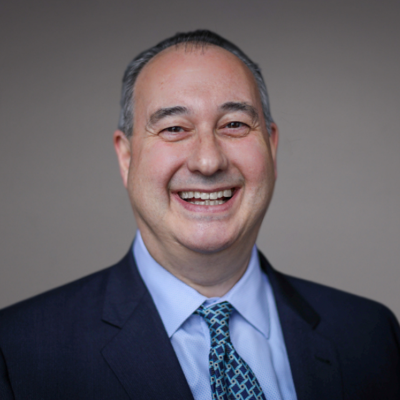


Larry Mason
CHICAGO - Lawyers who defended the Chicago Housing Authority in a case that resulted in more than $32 million in judgments to two families who claimed their children were sickened by lead paint in public housing, will themselves be on the hook for tens of thousands of dollars in sanctions, because they included fake quotes, rulings and legal citations in court filings prepared using ChatGPT.
In the sanctions order, entered Dec. 5, Cook County Circuit Judge Thomas Cushing directed the law firm of Goldberg Segalla, of Chicago, to pay a sanction of $49,500.
And Goldberg Segalla attorney Larry Mason was also ordered to personally pay $10,000 more.
The judge ordered the sums to be paid to the firm of Rapoport Sims Perry & VanOverloop, also of Chicago.
The Rapoport firm had represented plaintiffs Shana Jordan and Mogan Collins in a lawsuit filed in Cook County court against the CHA in 2022.
In that action, Jordan and Collins asserted their children suffered brain injuries as a result of exposure to lead-based paint present in the CHA apartments in which they lived.
At trial, a jury found the CHA wholly responsible and ordered the housing agency to pay the women at least $24 million, collectively.
At trial, Judge Cushing repeatedly refused to allow the CHA's defense team, led by Mason, to combat the women's claims by pointing out that the children could have been exposed to lead contamination in a wide number of places in and around their homes in Chicago.
In his rulings, the judge said the CHA could only present such claims if "it had testimony from an expert that exposure from such sources could or might have been the cause of the minors' elevated blood lead levels..."
In his sanctions order, the judge noted Mason and the CHA continued to raise such possible alternative exposures in presenting their case at trial, including before the jury, despite continued objections from the plaintiffs' counsel and instructions from the judge to stop.
Following the verdict, the CHA filed a motion asking for a new trial or for the judge to toss the verdict, asserting it should not have been blocked from presenting its alternative exposure claims.
However, in their reply to that brief, the plaintiffs asserted that one of the cases cited by the CHA, identified as a 2021 Illinois Supreme Court decision listed as Mack v Anderson, appeared "to have been invented out of thin-air."
About a month later, Goldberg Segalla filed a reply, "conceding in a footnote that 'plaintiffs 'identified an improper case citation..."
The judge then held a hearing, demanding an explanation.
During the hearing, Mason and former Goldberg Segalla attorney Danielle Malaty admitted the citation to "Mack v Anderson" was fictitious, and had been "hallucinated" by the ChatGPT artificial intelligence program, which Malaty had used to help research the brief.
Mason said he then signed the brief in March without checking all of the citations contained in the filing to ensure they were both real and accurate.
During the hearing, Mason asserted the false citation was the only fake citation included in the filing.
However, later research from the plaintiffs' lawyers uncovered at least 14 other instances in which Goldberg Segalla attorneys had also invented quotes from decisions or had committed other errors in representing the outcome of the cases in a bid to support their arguments.
Further, the judge noted Malaty had been fired from the Goldberg Segalla firm in connection with a separate instance of filing legal briefs containing citations "hallucinated" by ChatGPT.
The judge said the errors and lapses in professionalism and judgment should require Mason and the Goldberg Segalla to compensate the Rapoport firm for their time and labor in investigating the fake citations and other references, and in defending against the briefs.
The judge declined to sanction Malaty in this instance, noting she had already suffered professional harm from the prior instances in which she was caught using fake citations and she had been fired from the Goldberg firm.
"Artificial Intelligence is not the cause of bad legal practice," Judge Cushing wrote. "Lawyers performed their obligations well and performed their obligations poorly before A.I., before electronic research platforms, before on-line publications of case law, and before the development of the West Key Number System or Shepard's indexes.
"Submission of false legal citations and demonstrably false factual claims pose a grave threat to the judicial branch. People are skeptical of institutions, and the legal profession is not exempt. We are duty-bound to attend to the integrity the courts so that close scrutiny reveals a model of honesty, accountability, and truth-seeking.
"The authority of the courts relies on public confidence that rulings are just and are grounded in the law, not on the whims of judges... Officers of the court cannot become comfortable with careless or deliberate misrepresentation of facts or the law."
At the same time as he issued the sanctions orders, Cushing also formally rejected the CHA's request to undo the verdicts or for a new trial.
And the judge agreed to tack on attorney fees to the judgments, awarding the Rapoport firm more than $8 million in attorney fees in the case.
With the attorney fees and other costs and awards tacked on, the CHA would now be required to pay nearly $32.2 million to resolve the case.
The CHA could yet appeal the judge's decisions.