
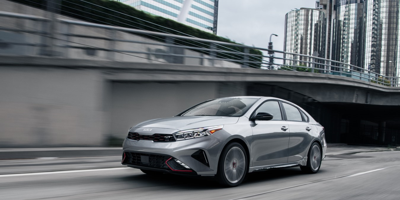


2020 Kia Forte
LOS ANGELES - A coalition of state attorneys general from throughout the U.S. are trumpeting a deal with carmakers Kia and Hyundai, which they said will require the companies to spend about $9 million to install parts that they say will make a wide range of Hyundai and Kia vehicles harder to steal.
The settlement was announced on Dec. 16.
The settlement resolved an action initially brought by the states of Minnesota, Connecticut and New Hampshire. It was later joined by a coalition of 33 other state attorneys general, including from California, Illinois, Florida, New Jersey, New York, Pennsylvania and Ohio, as well as the District of Columbia.
Each of the state attorneys general issued statements claiming credit for securing the settlement.
The legal action mirrored the claims leveled in a host of other lawsuits against Kia and Hyundai in 2023, claiming the automakers failed to install certain anti-theft equipment in certain models of their vehicles, allegedly leading to a scourge of car thefts across the country, and particularly in large cities already plagued by crime, such as Chicago, Milwaukee, Los Angeles, Newark, New Jersey, and many others.
Class action lawsuits have been brought on behalf of thousands of Kia and Hyundai vehicle owners throughout the country whose cars were either stolen or damaged by car thieves, or who said the auto makers' equipment decisions left their cars more prone to such theft and damage.
And at the same time, more than two dozen city governments from throughout the U.S., including Baltimore, Chicago, St. Louis, Milwaukee, Indianapolis, Tacoma, Washington, and many others, have brought their own lawsuits, partnering with prominent trial lawyers to seek billions of dollars from the automakers for allegedly helping to fuel crime waves in their cities.
The lawsuits have been centralized in Los Angeles federal court.
Such lawsuits centered on the surge in car thefts since 2020 driven largely by the so-called “Kia Boyz” phenomenon. So-called “Kia Boyz” car thieves have used viral online TikTok video tutorials to exploit a flaw in a range of Kia and Hyundai vehicle models manufactured from 2011-2022, which ordinarily relied on physical keys to start the vehicle.
Most other vehicles manufactured by other companies in that time frame included so-called engine immobilizer devices, which prevent a car’s engine from being started unless a driver uses a so-called “smart key,” embedded with a chip that sends a signal to deactivate the immobilizer.
However, most Kia and Hyundai models manufactured in that period did not include those immobilizers, which allowed thieves to hotwire the cars quickly and relatively easily, by removing a plastic cowl under the steering column and using a common USB cable to start the car.
Thieves often would then use the stolen vehicles for reckless and criminal behavior, often video recording themselves in the process, to generate views and likes on social media.
In many cities, thefts of those Kia and Hyundai models accounted for as much as half of all car thefts annually.
The lawsuits do not mention other possible causes fueling the sharp increase in car thefts during that same period, including criminal justice reform laws and policies and prosecutorial decisions which critics said all but encouraged criminals to commit a host of crime, including auto theft, with reduced fear of ever incurring any actual punishment.
In court, a federal judge agreed earlier this year to allow Kia and Hyundai to demand police reports from a representative group of five cities to substantiate the cities' claims. Those included Buffalo, New York; Milwaukee; Indianapolis; Tacoma; and St. Louis.
However, those five cities asserted the judge's order was improper and overly burdensome and they refused to turn over the information to Kia and Hyundai.
This summer, the judge ruled those cities were in contempt of court, and again ordered them to do so, subject to financial sanctions.
The cities' lawsuits remain pending.
Meanwhile, in 2023, Kia and Hyundai quickly settled the consumer class actions, agreeing to pay more than $200 million to resolve the claims. Lawyers in those cases, led by the firm of Hagens Berman, of Seattle, agreed to seek only about 4.9% of the settlement as attorney fees, a rate significantly reduced from the typical 25-40% demanded by plaintiffs' lawyers in class action settlements.
On Dec. 16, the state attorneys general announced their own settlement, moving the overall litigation against Hyundai and Kia nearer an end.
Under the deal, Kia and Hyundai agreed:
- To equip all future vehicles with so-called engine immobilizer anti-theft technology;
- To provide "free zinc-reinforced ignition cylinder protectors to owners or lessees of eligible vehicles," including vehicles that had previously received software updates that the company had claimed would help combat theft; and
- To pay $9 million, including $4.5 million in restitution to eligible consumers whose cars were damaged by theft and $4.5 million more to states to cover their litigation expenses.
Restitution includes up to $4,500 for total vehicle loss and $2,250 for partial loss for thefts occurring through April 29, 2025. Vehicle owners who suffered a theft attempt could also get up to $375 for "reasonable attempted theft expenses."
Vehicle owners have until March 31, 2027, to file a claim.
More information about the settlement is available on a site dedicated to the settlement.