
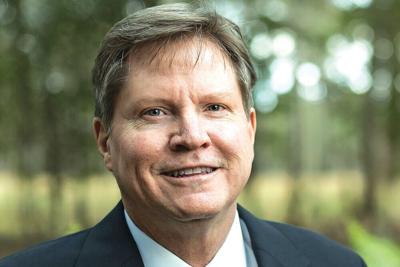



Florida environmental advocate Chuck O’Neal is suing the state Fish and Wildlife Conservation Commission.
An opponent of legalized Florida Black Bear hunting is suing the state Fish and Wildlife Conservation Commission, alleging that the agency and several of its employees unlawfully obtained his personal driver’s license records.
Orange County resident Chuck O’Neal, who co-founded the nonprofit group Speak Up Wekiva, filed the federal lawsuit November 16 in the Northern District of Florida. The complaint accuses the commission and several of its investigators of pulling driver’s license data – as well as the driving records of about 50 other environmental advocates – who have criticized the agency’s policies.
The lawsuit alleges the commission’s decision to access his records through the Florida Driver and Vehicle Information Database (DAVID) was illegal because the database is intended for use by law enforcement or in conjunction with criminal investigations.
“FWCC, pursuant to agency policy and practice, utilized … (DAVID) to access plaintiff’s legally protected personal information 28 times in 2023 and 2024, including information regarding his addresses, vehicle registration, photos, signature and driver’s license transactions,” the lawsuit says.
The complaint alleges that the state agency has violated the federal Driver’s Privacy Act and also violated the Florida Public Records Act by failing to respond in a timely fashion for records requests about the data search.
A commission spokesperson told the Florida Record in an email that, “The FWC has not been served with a lawsuit; therefore, we have no comment.”
In July, the commission released a statement in response to media reports about its use of DAVID to gain information on its critics.
“... The DAVID inquiry was conducted for public safety purposes,” the statement said. “We believe that multiple DAVID inquiries were conducted in conjunction with recurring commission events and public safety planning that are consistent with legitimate law enforcement practices. Assessing credible threats to the people who attend our meetings and work in our facilities is a legitimate and lawful function of law enforcement, and we take every threat seriously.”
The commission also included redacted examples of what it called serious threats made against agency employees as a result of the commission’s work, including doxing incidents and social media statements about shooting those involved in FWC decisions.
But the lawsuit indicated that the commission has acknowledged that no criminal investigation of O’Neal was ever undertaken and that unredacted copies of the social media posts released by the commission prove that none of them was made by an individual targeted in the commission’s DAVID searches.
DAVID searches for access to an individual’s driver’s license photo, Social Security number, motor vehicle records, address, telephone number and medical data.
O’Neal told the Record in an email that the totality of recent commission actions points to violations of his free-speech rights.
“I believe the 28 times my DAVID records were accessed coupled with Flock surveillance of my movements at an FWC meeting in Miami, the press release falsely alleging threats by us to FWC personnel, reduction of FWC Commission meetings down to four times per year, elimination of public comments on items not on the meeting agenda and exclusion of our ability to comment during public online seminars – all combined represent a consistent pattern of denial of the First Amendment rights of those in opposition to FWC’s decision to permit an annual Florida Black Bear hunt,” he said.
In July, the Florida chapter of the Sierra Club criticized the commission’s investigations of FWC critics, saying that people should not face intimidation for expressing their views and urging reforms in the process of appointing commissioners.

