


Florida State Capitol
TALLAHASSEE – A bill that would regulate third-party litigation financing activities has been passed the Florida Senate Judiciary Committee.
During a January 27 committee hearing, Senate Bill 1396 was approved on an 8-2 and will be reported favorably following about 25 minutes of debate. The bill is supposed to be heard by the Senate Rules Committee before moving to the Senate floor.
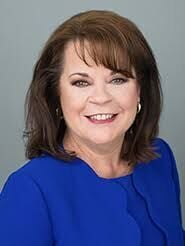
Burton
Committee Vice Chairwoman Colleen Burton (R-Winter Haven) is the primary sponsor of the bill, which would create the “Litigation Investment Safeguards and Transparency Act” to regulate litigation financing activities and to require disclosure if a foreign investor is involved.
“I divided into two main sections,” she told the committee. “One carefully regulates the litigation financing activities for all litigation financing, and the second section regards litigation financing with foreign entities that are involved.
“So, if we look at the regulation, the bill directs – and this is a consumer protection part of it – states that the (third-party financiers) cannot contract or receive a share of the proceeds that exceeds the share collectively recovered by the plaintiffs.”
Burton also explained that the bill clearly defines whether a foreign entity meets certain thresholds that require disclosure to the court.
“The actual details of the contract are not disclosed,” Burton said. “But that protects interests here in the United States from potential, undo interference by foreign entities in our court process … in our legal processes.”
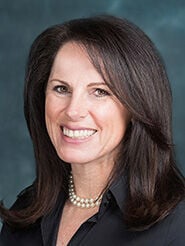
Polsky
Sen. Tina Scott Polsky (D-Boca Raton) asked Burton if the bill would require disclosure only for litigation financing agreements that include foreign entities. She also asked Burton if the entire agreement has to be disclosed.
“They are required to disclose if there is a foreign entity and who they are, whether they’re a wealth fund or a principal or foreign person,” Burton said. “If there is litigation financing without foreign entities … they just need to inform the court that there is litigation financing.
“They do not have to disclose the entire agreement. They just have to disclose the foreign entity, but they don't have to disclose the details of the agreement.”
Polsky asked Burton what the point of the bill was then.
“There have been major class action lawsuits … where foreign entities have been the primary under of the litigation and financing,” Burton said. “There’s national security concerns around that because cause sometimes they get more involved in a case than one would want them to get involved in a case.
“So, it’s just a matter of just clarity, really, and information.”
“So, if it’s just for information, then what's the point?” Polsky asked. “Can the judge do anything about it or the other side? I don’t understand what the point of it is if it’s just telling them that it exists.”
“The point is greater awareness in our state of potential interference, of foreign parties in litigation here in our state,” Burton replied.
Bob Schulte with the Monson Law Firm spoke on behalf of the Florida Justice Reform Institute in favor of the bill. He noted how his law firm uncovered what it calls litigation harvesting financing in Louisiana with hurricane insurance claims.
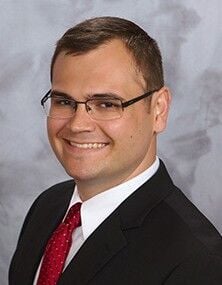
Schulte
“Outside capital is used to mass solicit legal claims, convert them to litigation inventory and pursue litigation strategies that are optimized for the portfolio’s value versus individual client outcomes,” Schulte said. “Clients benefit when their attorney can make the decisions based on the client’s interests in the client’s case.
“Subsequent court filings, after the involved Louisiana law firms collapsed, revealed approximately $30 million in outside litigation financing from investment funds. The law firm represented in a federal bankruptcy disclosure that had its advertising and referrals not been stopped, they expected 50,000 claims in Louisiana and similar size litigation portfolios in Texas, Colorado and Florida.”
Schulte noted SB1396 does not ban neither litigation financing nor contingency fees.
“It provides transparency, allowing courts to see who is funding the cases in their dockets and confirm that the decisions are being made by the litigants and not undisclosed, potentially foreign financial interests,” he said. “What our firm fought in Louisiana is what we don’t want to see in Florida.”
Schulte said transparency is important.
“As long as things are happening in the dark, it’s difficult to identify the scope of litigation financing in Florida,” he said. “This would help the state of Florida and the courts identify the scope of litigation financing and how it may be influencing their dockets.
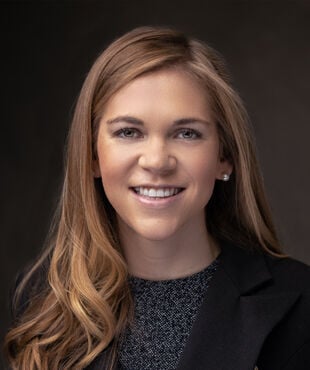
Geiser
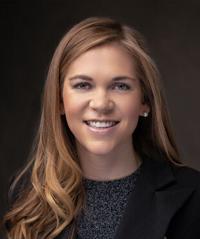
Caroline Geiser of Shook Hardy and Bacon spoke on behalf of the American Tort Reform Association, also in support of the bill.
“SB 1396 does not seek to ban third-party litigation funding,” she told the committee. “It seeks to put in modest guardrails to safeguard Florida’s civil justice system and to protect potentially injured parties.”
Geiser, who practices in Atlanta, said Georgia recently passed “robust” legislation about third-party litigation funding that “goes much further and is much more stringent” than Florida’s proposal.
Under Georgia law, third-party litigation funding has to register with the state’s Department of Banking and Finance. And the terms of the litigation funding agreements are discoverable in litigation. But like the Florida bill, funders cannot recover more of any settlement or jury verdict than the plaintiffs recover collectively.
“Georgia is part of a growing tide of nearly a dozen states that have put guardrails of various degrees in place on third-party litigation funding,” Geiser said. “Having guardrails in place for third-party litigation, funding here in Florida, as there are in these other states, is critical because this is a fast growing $10 billion industry.
“It’s not just domestic investment involved, not just private equity here in the U.S., but Chinese investors have also gotten in on the third-party litigation funding.”
She said the bill would prevent these funders from “controlling critical strategic decisions” that are supposed to be left to the plaintiff themselves with the advice and counsel of their licensed attorney.
“The bill does require the foreign funders to be identified, which helps with national security concerns of potential adversaries of the state and the nation getting involved with litigation funding,” she said. “Left unchecked and undisclosed, third-party litigation funders may influence the choice of an attorney, litigation decisions and even whether a case should settle or go to trial.
“But Florida’s rules governing ethical attorney conduct don’t permit that. Those are client decisions to be made under the advice of an attorney. And this creates an ethical rub between lawyers, fiduciary obligations to their clients and the third-party funders who do not have any fiduciary duties to the clients. They are simply beholden to their desire to get a return on investment.”

Feijoo
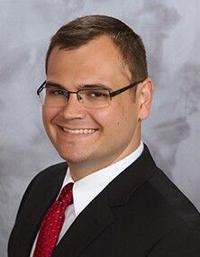
George Feijoo with Floridian Partners spoke on behalf of the U.S. Chamber Institute for Legal Reform, also in support of the bill.
He said this “simple” and “great” bill is about protecting plaintiffs.
“It’s about plaintiffs remaining in control of their cases,” Feijoo said. “There’s a piece in there that says funders shouldn’t take more than plaintiffs, right? This is about compensating the actual injured party, not using our courts for profit like a casino.
“But this is also not about getting rid of litigation funding where it’s needed. This is also not about smaller dollar claims.”
He used one case as an example. Sysco Corp. used about $140 million from Burford Capital to finance its lawsuits against poultry, pork and beef producers alleging price-fixing. When Sysco tried to settle the cases, Burford claimed the settlements were too low and violated their funding agreement. The companies reached a settlement, but the case often is used to highlight the secretive nature of the litigation funding industry.
“This is also not David versus Goliath where David doesn't have the funds to go up to big corporation,” Feijoo said. “Sysco is the world’s largest food distributor. They are Goliath. They were the plaintiffs that used Burford Capitol, the largest funder, as a second shadowy Goliath behind them to sue smaller meat producers, to sue a bunch of little Davids, OK?
“David didn't even know he was going up against another Goliath behind there. So that’s where it’s important for that disclosure of who are we really up against.”
Feijoo also noted a December study from the Perryman Group that says a typical American household pays about $600 more annually because of third-party litigation funding.
He also pointed to the 2023 tort reforms in Florida that have provided more affordability and transparency.
“There are no laws on books against these litigation funders right now,” Feijoo said. “No laws. They’re unregulated right now. They’re in the shadows. They love to stay in the shadows, and this is a small step forward to figuring out what is going on and to hopefully speak to further policy making into the future.”
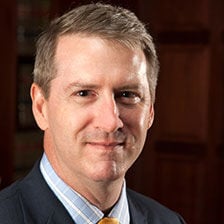
Cotterall
Bill Cotterall, general counsel for the Florida Justice Association, spoke in opposition of the bill, noting defendant third-party financing is not addressed by the proposal.
“Defendants that finance their litigation, none of these provisions apply to them,” Cotterall said. “So, the prohibitions, for example, for interfering with settlement discussions, or the prohibitions on interfering with litigation strategy, or determining who the expert witnesses are, do not apply to the defendants under this bill.”
Even if the amount and the details of the funding contract may not be disclosable, Cotterall said it still creates a strategic litigation advantage to defendants.
“When they know that there’s litigation financing involved, that shows an economic posture, if you will,” he said. “There is no requirement for the defendants to make that same disclosure.”