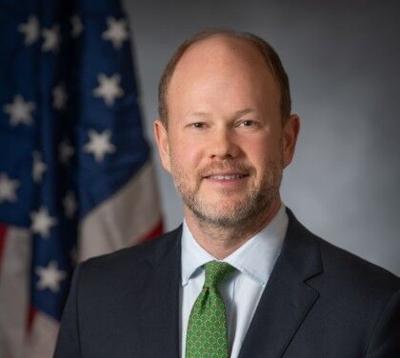


Feldman
WASHINGTON – The Trump administration has reversed a Biden-era policy that counted the value of a child’s life as double that of an adult’s.
The Consumer Product Safety Commission this week struck down a regulatory policy reached in 2024, when former President Joe Biden’s CPSC received a handful of public comments from economists and a trade association for toys that opposed how it valued a “statistical life” when it weighed the safety of a product sold in America.
One researcher on whose work the CPSC relied was critical of the policy, and President Donald Trump’s acting chairman called it “heavy-handed” and based on a flawed approach.
““We are restoring sound science, common sense, and accountability,” Peter Feldman said. “American consumers and businesses need to trust that CPSC’s regulatory proposals are legally defensible, based on real data, and accurately reflect costs and benefits.”
A statistical life will now be valued equally across all age groups, adjusted for inflation and economic factors. Feldman said the rest of the federal government uses this approach, and the CPSC is now in line with that.
Value per Statistical Life is weighed in cost-benefit analyses and represents a consumer’s willingness to pay for a small reduction of their risk of fatality. Under Biden, there was a big difference in the value of the life of someone under 18 vs. someone who just turned 18.
Feldman fought the adjustment to VSL as a commissioner on the CPSC. He and Douglas Dziak issued a joint statement in April 2024 that called Biden’s policy “economically questionable and legally risky,” warning rules that are struck own in court offer no consumer protection.
It does not appear there was ever a legal challenge, though a federal appeals court in D.C. did strike a 2022 CPSC safety standard on cords on window coverings that could strangle children as based on flawed cost-benefit analysis. That standard went further than a voluntary standard that had already led to a reduction in injuries.
In opposing the VSL adjustment, The Toy Association - a trade group of more than 800 manufacturers, importers, designers, retailers, inventors and safety-testing labs that also spoke out against Trump’s tariff policy – said the value of a child’s life is “incalculable,” but a regulatory approach needed to be consistent and supported by facts.
“If a standardized VSL is applied in an analysis, then it, by definition, represents the value for every individual in the population,” The Toy Association wrote.
“The Commission’s proposal that a ‘child’… has a VSL double that of an ‘adult’… is a fallacy and represents an artificial exaggeration of a calculated risk analysis value.”
Biden’s CPSC had cited research that suggested a higher willingness to pay for risk reduction in a child’s fatality risk than an adult’s, pointing at investments made in the baby-proofing industry and safety caps on medication.
One of those studies was conducted by Lisa Robinson of the Harvard T.H. Chan School of Public Health, a researcher who had worked on VSL figures for several federal agencies. She eventually submitted comments criticizing the CPSC’s approach.
Her study had found the value of reducing risks to children is likely larger but the “magnitude of this difference is uncertain.” She also wrote in it that “more research is needed.”
“(T)he CPSC approach assumes that the value of reducing mortality risks immediately drops substantially as an individual reaches age 18,” her comments to the CPSC said.
“The reviews upon which CPSC bases its approach note that the extent with which the ratio of child‐to‐adult values varies depending on the age of the child is uncertain. However, it seems unrealistic to assume that values do not change as a child grows from birth to age 18, suddenly halve on the child’s 18th birthday, then remain constant until the end of life.”