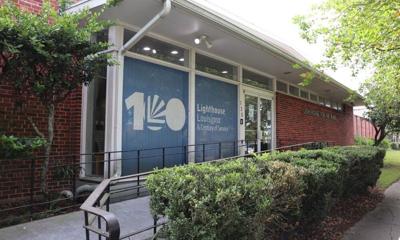


Lighthouse Louisiana
BATON ROUGE, La. – A blind man is suing his employer, a Louisiana not-for-profit that helps people with disabilities, alleging it wrongly terminated his full-time remote work accommodation.
Plaintiff Travis Smith of Walker, Louisiana, filed his lawsuit earlier this month in U.S. District Court for the Middle District of Louisiana.
The named defendant is The Lighthouse for the Blind in New Orleans Inc., doing business as Lighthouse Louisiana.
The 501(c)(3) not-for-profit organization is located in New Orleans and Baton Rouge. According to its website, it “provides people with disabilities an opportunity to succeed.”
Smith, who is legally blind, has worked for Lighthouse since February 2013. He is currently employed as a customer service manager. He has been a full-time remote work employee since April 2023, after facing a barrier to physically accessing the Lighthouse workplace, he claims.
His job duties are performed through email, Internet-based systems, Zoom, Microsoft Teams, and telephone. His position does not require face-to-face meetings with management, co-employees, or customers, he claims.
However, in September 2025, Lighthouse CEO Dee Budgewater informed Smith in a Zoom meeting that his full-time remote work arrangement would be revoked due to a forthcoming organization policy.
“During that meeting, Defendant, through Dee Budgewater made clear that it did not intend to continue approving remote work and that Plaintiff would be expected to report in person five days per week,” the lawsuit states.
In his 15-page complaint, Smith contends Lighthouse’s failure to provide a reasonable accommodation constitutes unlawful discrimination in violation of the Americans with Disabilities Act.
“Working remotely allows Plaintiff to perform his job on equal footing with non-disabled employees by eliminating disability-related barriers that arise in the physical office environment,” the complaint states.
“In his home office, Plaintiff is able to use his assistive technology, software, equipment, and workspace configuration in a stable and familiar setting, without the added burdens created by commuting, navigating an in-person office environment, and depending on others for physical access to the workplace.”
Following the September meeting, Smith contends he made “repeated written attempts” to obtain clarification and confirmation about whether he would be allowed to continue working remotely. He followed up in writing on Nov. 12, 2025, Nov. 24, 2025, and Dec. 9, 2025.
On Dec. 9, 2025, Budgewater responded that Lighthouse was officially changing its remote work policy, that the policy would apply organization-wide, and that it would become effective Jan. 15, 2026.
Soon after, Smith, through his legal counsel, requested in writing that Lighthouse continue his full-time remote work arrangement as a reasonable accommodation under the ADA and asked Lighthouse to engage in a collaborative dialogue.
“Defendant did not meaningfully respond to that request and did not promptly engage in the interactive process,” the lawsuit states.
On Dec. 22, 2025, Lighthouse adopted and signed a formal remote work policy.
On Jan. 15, 2026, Smith’s supervisor communicated in writing Lighthouse’s intent to enforce the policy, effective immediately, against Smith. That same day, Smith responded he would continue to work remotely as a reasonable accommodation for his blindness.
It wasn’t until March 17, 2026 that Lighthouse formally proposed any alternative accommodations, he alleges.
“The alternatives proposed by Defendant included a vague suggestion of a flexible work schedule tied to whatever transportation options Plaintiff might secure and permitting Plaintiff to work remotely one day per week,” the lawsuit states.
“Those proposed alternatives do not eliminate the barriers (which exist every day of the week) created by Plaintiff’s disability and do not permit Plaintiff to perform his position on equal terms.”
Smith argues Lighthouse’s decision was not the result of a neutral evaluation of his ability to perform his job remotely.
“As reflected in the September 29, 2025, discussion following Plaintiff’s meeting with Dee Budgewater and Paul Bernard, Defendant’s decision-makers further characterized Plaintiff as ‘using his blindness as a crutch’ and made clear that they were unwilling to treat Plaintiff differently from other employees, notwithstanding his disability-related limitations,” the filing states.
Smith seeks permanent injunctive relief requiring Lighthouse provide him with an effective reasonable accommodation, including continued full-time remote work or such other accommodation. He also seeks compensatory damages and attorneys’ fees.
Jones Fussell LLP in Covington, Louisiana, is representing Smith in the lawsuit.