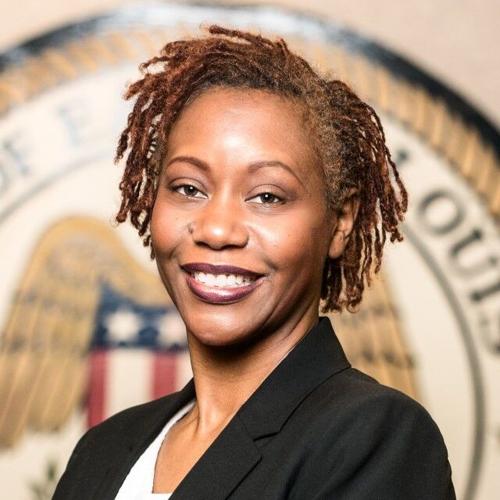




East St. Louis Mayor Emeka Jackson-Hicks
EAST ST. LOUIS — A federal judge has shut down a bid by the city of East St. Louis to force Monsanto to pay it potentially hundreds of millions or even billions of dollars over alleged longstanding PCB ground pollution on properties owned by the city or located within its borders.
U.S. District Judge David W. Dugan delivered the ruling in Southern Illinois District Court on Feb. 27.
In the ruling, Dugan agreed East St. Louis had waited too long to file the lawsuit, saying the evidence in record in the case shows the city had known, perhaps for decades, of the likelihood of the contamination, yet had chosen not to act sue Monsanto, or even fully explore the extent of the alleged pollution, until 2021, when it hired private lawyers and demanded Monsanto pay the city up to $2.7 billion.
And the judge further swatted aside the city's attempt to argue the lawsuit was on behalf of the entire city, and not just a potentially massive cash grab on behalf of itself and potentially other land owners who could use the money to remediate the allegedly contaminated sites and redevelop them at a profit.
The judge noted the city of East St. Louis has not acted to clean up the alleged contamination, nor has it made any concrete plans to do so.
The judge further noted the city failed to produce any evidence showing the alleged ongoing contamination "create a measurable risk to public health" in the community, or even on the sites themselves.
He noted no federal or state agency has required any kind of clean up on the allegedly contaminated sites.
So, the judge said he believed the city was acting in the case mostly in a "private" capacity, to address its rights as a property owner, rather than in any overarching public interest to somehow protect the entire community.
"It stands to reason from these circumstances that the rights asserted in relation to the subject properties are of a private nature that belong to the Plaintiff (city of East St. Louis), and inures to its commercial or municipal benefit, or another small and distinct subsection of the community rather than to the general public," Dugan wrote. "Put another way, the Court cannot conclude under these speculative circumstances that the general public would benefit from Plaintiffs' action and lose from its inaction."
The case landed in court in 2021, when East St. Louis hired trial lawyers on a contingency basis to press its claims under its city ordinances against Monsanto for allegedly causing a public nuisance and threatening public health and safety in the community.
The city has been represented by attorneys from the firms of Chatham & Baricevic, of Belleville; The Driscoll Firm, of St. Louis and San Juan, Puerto Rico; Sanders Phillips Grossman, of Garden City, New York; and Smouse & Mason, of Annapolis, Maryland.
The lawsuit was initially filed in St. Clair County Circuit Court.

Illinois Southern District Judge David Dugan
The lawsuit centered on claims Monsanto had allegedly endangered the public health by allegedly leaving behind sites contaminated with industrial chemicals known as PCBs, or polychlorinated biphenyls. PCBs are considered by public health officials to be toxic and longlasting in the environment. The compounds can allegedly increase the risk of cancer and a host of other illnesses in people exposed to them in sufficient quantities.
PCBs were used in a wide range of industrial and commercial products, including light bulbs, electrical systems, televisions, appliances, engine and lubricating oils, and other applications, thanks to their high heat tolerance and insulating properties.
The East St. Louis contamination allegedly originated in Monsanto's former plant in Sauget, where Monsanto manufactured PCBs from 1936 until 1977, with modifications, as public health officials and scientists became aware of the potential exposure risks through those decades.
The plant closed in 1977, two years before PCBs were outlawed by the federal government in 1979.
However, through the intervening decades, environmental and public health regulators have investigated the extent of contamination left behind. According to court documents, those investigations allegedly involved communications between the U.S. Environmental Protection Agency and city officials in East St. Louis, including at various times since 2000.
However, according to court documents, it was not until 2020 that the city allegedly sought to do anything about it.
According to a counterclaim filed by Monsanto, at that time, city attorneys recommended the city attempt to use its city ordinances to slam Monsanto's corporate successors with potentially billions of dollars in fines over the alleged contamination, even though the ordinances do not spell out any particular pollution levels and the prosecution would not be based on any particular EPA standards.
Then, the city attorneys recommended hiring trial lawyers to press their big money ticket claims in court.
Monsanto responded to the St. Clair court filing by removing the case to federal court.
Contested proceedings continued through the ensuing years. Among other actions, Monsanto filed its counterclaim in 2023, asserting the city's lawsuit was unconstitutional.
In late 2025, Monsanto asked the judge to end the action, seeking summary judgment, or a ruling based on the evidence and legal arguments presented to that point, without a trial.
In that request, Monsanto asserted the city of East St. Louis was essentially behaving as a private plaintiff, and not as the caretaker of its community. They noted, for instance, that the city owned only 100 of 273 properties at issue, and the rest were owned either by private landowners or St. Clair County.
They further noted the city had attempted to enter into a deal with St. Clair County to transfer at least some of those properties into city hands on the cheap, in a potential bid to strengthen East St. Louis' case.
But regardless, they argued the city had waited years too long to file its PCB lawsuit, as the city had known for decades of the contamination and had taken no action until it filed suit in 2021.
The city of East St. Louis, however, said the judge should still allow the lawsuit to move forward. They argued the judge should apply a legal doctrine known as nullum tempus, which can be used to allow cities and other governments to sue on the public behalf without the time restrictions imposed by statutes of limitations that would otherwise be applied to private plaintiffs.
Dugan sided with Monsanto on those questions, agreeing the evidence showed the city had not acted to protect its community against alleged pollution before and was not doing so now.
The judge granted summary judgment to Monsanto, effectively ending the case, barring a likely appeal.
In a statement following the ruling, Monsanto said it was "pleased with the Court's ruling ... finding that plaintiffs' claims are time barred."