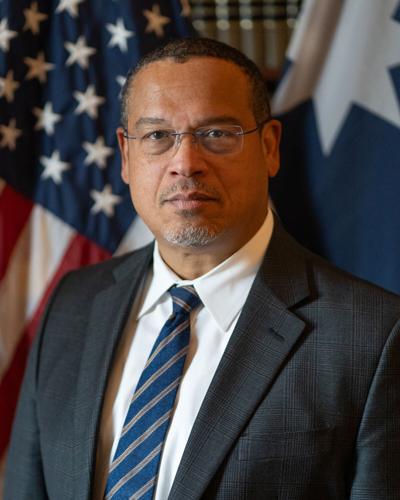


Minnesota Attorney General Keith Ellison
SAINT PAUL, Minn. – A federal judge won’t block Minnesota’s “nudification” law that opens artificial intelligence companies to penalties when users create sexualized images of people without their consent.
Judge Donovan Frank on Sept. 4 refused to grant the preliminary injunction requested by xAI, the company behind Grok Imagine. xAI argued the law, passed this year, violates the First Amendment, but Frank ruled x.AI couldn’t show irreparable harm if the law is allowed to remain in effect.
The statute imposes a penalty of up to $500,000 per violation, but xAI has already disabled its nudification tool in the state, Frank wrote.
“Even if penalties were assessed… those financial penalties could be recouped in the event that the law is eventually invalidated,” he added.
xAI sued in July, calling Minnesota’s law “clumsy.” It claimed the definition of “intimate part” is too broad and borrowed from a criminal statute that was drafted for nonconsensual touching. It covers the breasts of both men and women, in addition to the inner thigh and buttocks.
AI companies could then be liable for pictures of men without shirts or people in swimsuits, xAI complained. State attorney general Keith Ellison defended the law in court, pointing to the state’s compelling interest in protecting the public from AI-generated sexual images.
In at least two other courts, private firms have filed class action lawsuits on behalf of minors depicted in AI-generated sexual images.
The first lawsuit was filed on behalf of three Tennessee girls and styled as a class action to represent others with similar experiences. It faults Grok’s “spicy mode,” on which xAI should have known sexualized deepfake images of minors would be created.
One plaintiff received a message from an anonymous Instagram account in December about pictures of her that were being disseminated on Discord. Among the photos was a topless depiction that had used her yearbook photo.
Judge Frank never reached xAI’s First Amendment concerns after finding it didn’t have standing to allege them. Ellison had argued they belonged to Grok users anyway and not xAI.
“It is evident, and xAI does not dispute, that the State has an interest in curbing the generation of those images,” Frank wrote.
“The State’s choice to prohibit the provision of AI tools to users who create such images is a direct response to the unique harms stemming from the new technology and the State’s conclusion that curtailing user violations after harmful images are circulated is not enough.”
xAI has filed its notice of intent to appeal the ruling.