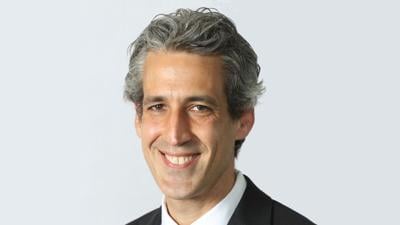



Evanston Mayor Daniel Biss
CHICAGO — The Justice Department will be allowed to press ahead with its effort to add the weight of the federal government to a court fight challenging the city of Evanston's race-based "reparations" program paying millions of dollars in taxpayer money to black current and former residents and their descendants.
On Oct. 16, U.S. District Judge John F. Kness granted the Justice Department's motion to intervene in the case.
The Justice Department followed that approval with their complaint in intervention, formally asking the court to order an end to Evanston's "racially discriminatory program."
While the Justice Department agreed governments, like Evanston, can seek to remedy "specific, identified instances of past discrimination," that is not what they city is doing in this case. Rather, the federal filing asserts, Evanston is all but simply doling out grants to black current and former residents of Evanston, and their descendants, solely on the basis of race.
"Applicants are not required to allege that they are, or their ancestors were, victims of racial discrimination," the intervention complaint said. "The initial resolution creating the City’s program makes clear the City’s purpose is to increase, in general, the quality of housing, the homeownership rate, and the intergenerational equity of 'Black/African American Evanston residents,' regardless of their individual experiences in Evanston or that of their ancestors.
"... Evanston has chosen to distribute substantial benefits to persons solely because of their race or the race of their ancestors. It has not taken any steps to tailor those benefits to the harms those persons may have suffered," which the federal complaint asserts violates the U.S. Constitution's Equal Protection Clause and the federal Fair Housing Act.
The judge's ruling doesn't explain the reasoning for his decision to allow the federal government to intervene, saying only his ruling was based on "reasons stated on the record" during a hearing on Oct. 15. Kness said he would explain his reasoning in a written opinion to follow.
The ruling came nearly four months since the Justice Department under President Donald Trump had requested permission to intervene in the case, and about seven months since Kness rejected Evanston's attempt to end the lawsuit.
The original lawsuit was filed in May 2024 by a group of white former Evanston residents and their descendants. They are represented in the case by attorneys with the Washington, D.C.-based conservative public policy advocacy organization, Judicial Watch.
The lawsuit specifically took aim at a policy established by the north suburban city in 2021, allegedly to make up for decades of alleged race-based housing decisions and other alleged racist mistreatment at the hands of city officials.
Known as the Evanston Local Reparations Restorative Housing Program, the city originally stated it would dedicate $10 million to pay up $25,000 to black current and former Evanston residents and their families for down payments on home purchases or to put towards repairs and renovations to existing homes.
City officials at the time said the program was intended to help black and African-American residents purchase and maintain homes in Evanston and build "intergenerational wealth" and "equity."
The city committed an additional $10 million to the program in 2022, and in 2023 revised the rules to allow for direct cash payments to black Evanston residents and their descendants, and potentially others who assert they have suffered discrimination in Evanston.
At the time the lawsuit was filed, the city had approved payments of $25,000 each to 141 people identified as "ancestors," meaning they are black, live in Evanston and were at least 18 years old during the period from 1919 to 1969. In all, the city had spent more than $6.3 million, as of the date the lawsuit was filed.
According to published reports, Evanston has steadily approved payments through the program to 40-45 current and former residents since 2021. More than 250 people have been awarded grants through the program since its inception, reports have said.
The lawsuit, however, said the program amounts to blatant and unconstitutional racial discrimination by the city government.
The lawsuit specifically accuses the city government of violating the constitutional rights of non-black Evanston residents to equal protection under the law, as guaranteed by the U.S. Constitution's 14th Amendment.
The lawsuit further noted the city has not taken any steps to actually compel potential recipients of the "reparations" grants to show they, their parents or grandparents actually suffered discrimination because of actions taken by the city government. Instead, the lawsuit said, the city is merely paying money to anyone who is black and whose family lived in the city from 1919-1969. The lawsuit says such a program, which uses race as a "proxy" to stand in for actual discrimination claims, is unconstitutional.
In their intervening complaint, the Justice Department agreed, asserting the city's program violates the rights of non-black Evanston residents, particularly those who also lived in racially segregated neighborhoods and may have suffered harm from past discrimination, yet are now barred from any of the funds from the program, based solely on race.
The Justice Department further notes the city of Evanston forced the federal government into court by refusing to cooperate with a federal investigation of the city's program.
The city had opposed the Justice Department's entry into the case, asserting the Justice Department had waited too long to intervene, jumping in after two years of litigation at a time it believed "advantageous" to complicate the ability of the city to defend its program.
The city asserted the Justice Department's entry at this point in the litigation is essentially unfair to Evanston, now forcing it to defend the city's program against two opponents on two fronts.
The city asserted the "strategic timing" of the intervention complicates Evanston's efforts to "resolve the case" by demonstrating the original plaintiffs' claims should be time-barred.
Further, the city had argued the Justice Department's entry into the case needlessly complicates the case by introducing a new claim under the Fair Housing Act.
The Justice Department is seeking a court order blocking Evanston from continuing to administer the program and directing the city to pay civil penalties and award money "to each person aggrieved by the City's discriminatory conduct."
The federal lawsuit is led by Northern Illinois District U.S. Attorney Andrew Boutros; Assistant Attorney General, Civil Rights Division, Harmeet K. Dhillon; and Timothy J. Moran, deputy chief of the Housing and Civil Enforcement Section of the Justice Department's Civil Rights Division.
Evanston has been represented by attorney Wade A. Thomson and others with the firm of Jenner & Block, of Chicago, and attorneys from Evanston's city Department of Law.