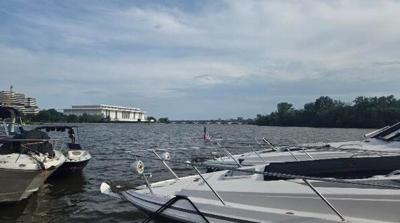

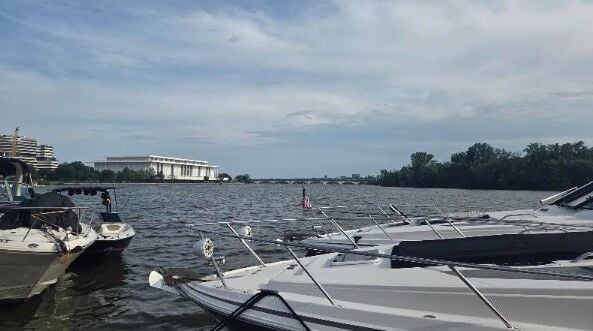
The Potomac River in Georgetown
GREENBELT, Md. – DC Water is asking a federal judge to throw out the class action lawsuit filed against it in the aftermath of a January spill that released 240 million gallons of raw sewage into the Potomac River.
The named plaintiffs don’t live or work anywhere near once-affected areas, the District of Columbia Water and Sewer Authority says in a motion to dismiss filed Monday in Maryland federal court. The spill caught the attention of media, the Department of Justice and plaintiff lawyers like the noted class action firm Hagens Berman, which filed suit in March.
But the complaint fails for several reasons, DC Water is arguing. Chief among them are the locations of the named plaintiff, as DC Water points out plaintiff Jack Miller lives upstream from the point of the release.
Two plaintiffs have their yachts moored 10 miles upstream, one plaintiff’s marina is more than 30 miles upstream and another marina-owner is located more than 65 miles downstream. Two charter fishing areas that sued are also located upstream from the spill site, DC Water says.
“It is axiomatic that sewage flows downhill and downstream, so Miller has not pled any logical basis to explain how his property or well could be contaminated by sewage released two miles downhill from his home directly into the Potomac River,” the motion says.
“Furthermore, while Miller alleges that he has incurred costs testing his well, he does not allege any health advisory caused him to do so or that his well was ever actually contaminated.”
A sewer line known as the Potomac Interceptor failed when a 72-inch hole caused by corrosion opened near the Clara Barton Parkway on Jan. 19. Workers used the C&O canal to stop even more sewage from reaching the Potomac, but it wasn’t until Feb. 8 that the last overflow reached the Potomac River.
The Potomac was already deemed unsafe to swim in, as D.C. had banned purposeful contact in 1971. The Virginia Department of Health recommended avoiding activities like swimming and kayaking on Feb. 13, but regulators lifted similar advisories on March 5.
Nine days later, repairs on the Potomac Interceptor were complete. The Environmental Protection Agency announced May 6 there were no longer any water quality impacts that could be attributed to the spill.
In addition to claiming the class action plaintiffs lack standing because they could not show that they were harmed, DC Water says it is protected by governmental immunity from the case. It had undertaken a rehabilitation project that included inspection of the 54-mile interceptor from 2011-2015 and led to $625 million to repair corrosion in the most vulnerable sections.
It had inspected the section that failed again in 2017, 2021 and twice in 2024 and recently obtained a National Park Service permit to spend $9.6 million on a section deemed more vulnerable from the spot that collapsed.
Thus, DC Water says, it is afforded immunity because it had the authority to use repair funds where they were deemed needed most.
“Moreover, Plaintiffs disavow any challenge to DC Water’s decisions on how to sequence and prioritize the Potomac Interceptor rehabilitation project,” the motion says. “Instead, Plaintiffs characterize their claims as a challenge to how DC Water managed ‘foreseeable risks created by the pipe segments it chose to leave in service while awaiting rehabilitation.’
“The two decisions by DC Water are one and the same – a decision to prioritize the repair of one section of pipe necessarily means other sections will remain in service and await rehabilitation.”
The case brought by the Department of Justice alleges DC Water’s mitigation efforts “were sorely lacking.” It’s the same argument made by the Maryland Department of the Environment in Montgomery County Circuit Court on April 20, and DC Water and the DOJ said in May they were working on a settlement and requested a stay on that lawsuit that will last until Aug. 3.