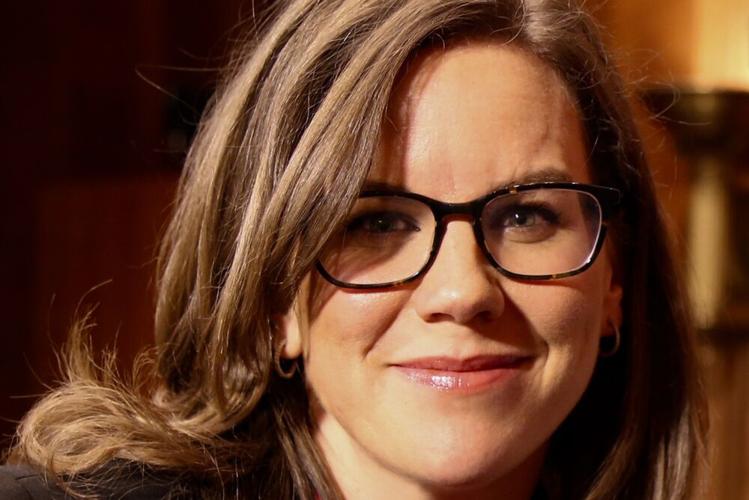


Judge Britt C. Grant authored the opinion upholding the injunction against key provisions of the “Stop WOKE Act.”
A federal appeals court has affirmed that restrictions in Florida’s “Stop WOKE Act” barring certain viewpoints relating to race and gender in college and university classrooms violate the First Amendment and principles of academic freedom.
On July 7, the 11th Circuit Court of Appeals upheld a preliminary injunction against the 2022 law ordered by a federal district court, which characterized the statute as “positively dystopian.” The appeals court’s decision was in response to two parallel lawsuits, one by the ACLU of Florida and Legal Defense Fund and the other by the Foundation for Individual Rights and Expression (FIRE).
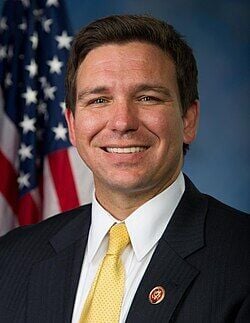
DeSantis
The Florida law attempted to disallow instruction in Florida public colleges and universities of eight concepts relating to race and sex, including the idea that a person's character or status as privileged or subjugated is inherently linked to the person’s race, gender, national origin or color.
The state’s rationale for the speech restrictions was that because professors’ salaries are supported by public tax dollars, the government has every right to control their classroom speech, the appeals court said in its decision.
“Florida’s salary-for-speech rule is a breathtaking assertion of power to ban unpopular ideas from public discourse in the very places the state’s own statutes recognize as centers of inquiry – classrooms where students are trusted to puzzle through ideas that are good and bad, easy and hard, ideally getting ever closer to the truth,” Judge Britt C. Grant wrote for the majority.
In a statement provided to the Florida Record, Gov. Ron DeSantis reiterated the state’s interest in monitoring classroom speech.
“State universities are funded by taxpayers and directed by elected officials and their appointees,” DeSantis said. “The state has both a right and a responsibility to ensure instruction at these universities is consistent with the underlying mission and to exclude indoctrination and ideological agendas.”
He added that the state had a right to bar certain concepts, such as critical race theory (CRT) and diversity, equity and inclusion (DEI).
“The Constitution does not block us from fighting back against these ideological fads and from ensuring that our institutions stand on a solid intellectual foundation,” DeSantis said. “This is a clear and unfortunate example of judicial overreach.”
Attorneys who represented plaintiffs in the ACLU and FIRE cases expressed satisfaction with the appeals court decision.
“This ruling sets a strong precedent that higher education cannot be limited to the whims of politicians,” Leah Watson, senior staff attorney with the ACLU’s Racial Justice Program, said in a prepared statement. “All students and educators deserve to have a free and open exchange about ideas without government control. Students can’t fight racial discrimination that they don’t see; training and instruction is key to empowering future leaders to pursue racial justice.”
Since the enactment of the Stop WOKE Act, more than 30 states have either introduced or passed measures aimed at “higher education censorship,” according to the ACLU.
Greg Greubel, FIRE’s senior attorney, said the court’s ruling means that college classrooms in Florida will remain places where controversial topics can be debated openly.
“(The) ruling makes clear something we’ve known for a long time: Governments cannot censor their way to freedom,” Greubel said.
Judge Barbara Lagoa dissented from the 11th Circuit’s majority decision, indicating that the state has the authority to control the discussion of certain racial issues in public university classrooms.
“We need not agree or disagree with Florida that the viewpoints at issue here constitute racial discrimination; we need only acknowledge that the state is allowed to decide what is endorsed by its professors in its own classrooms,” Lagoa said.