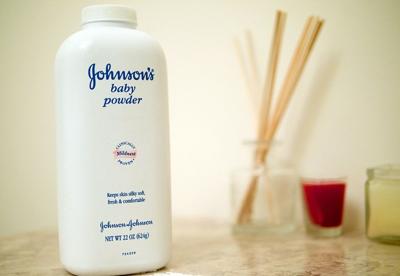


Johnson & Johnson Baby Powder no longer contains talc powder.
TRENTON, N.J. - Medical experts crucial to lawsuits claiming talcum powder causes deadly ovarian cancer changed their opinions repeatedly during a court hearing and one had to be admonished by the judge not to consult a Google artificial intelligence engine, Johnson & Johnson complained in an attempt to have the experts disqualified.
The three experts plaintiffs needed to link talcum powder use to the cancer diagnoses of lead plaintiffs in federal multidistrict litigation all flip-flopped on central questions including whether other conditions such as obesity and smoking can cause ovarian cancer and if talc, which allegedly contains asbestos, multiplies the risk of cancer or merely adds to the risk.
Dr. Daniel Cramer consulted Google AI while he was on the stand to get the definition of “synergy,” leading retired U.S. District Judge Freda Wolfson to snap: “Don’t read from AI, please.”
Judge Wolfson is conducting the hearings to decide whether to revise her opinion that the judge in charge of the talc MDL should allow most of the plaintiff experts to testify to jurors. She was forced to take a second look after the federal rules of civil procedure were revised to make clear judges must serve as gatekeepers to keep unsupported science out of the courtroom.
Johnson & Johnson says the plaintiff experts have no basis for claiming women contracted cancer because of talc exposure, especially since talc particles would have to migrate up through the reproductive tract to get to the ovaries. Most of the evidence supporting the plaintiff opinions comes from case-control studies, in which researchers ask subjects who have already been diagnosed with a disease to say whether they used products suspected of causing it. Critics say such studies are prone to “recall bias” where subjects “remember” using the product they think made them sick.
At the hearing last week, Judge Wolfson heard from Dr. Daniel Clarke-Pearson, Dr. Judith Wolf and Dr. Cramer, who examined the medical reports of bellwether plaintiffs and concluded all of them got cancer from talc exposure. Under cross-examination, however, all three changed their opinions in significant ways, J&J said in a letter to the judge.
Dr. Clark-Pearson, for example, conceded there was no way to conclude talc caused the mutations required for tumors to form, yet maintained her opinion it caused the cancer in the plaintiffs who are paying him. Dr. Cramer changed his opinion about the nature of another plaintiff’s cancer when defense attorneys pointed out the standard international guide says his earlier diagnosis would mean the cancer started in her uterus, not her ovaries. Plaintiff lawyers do not claim talc causes uterine cancer.
Dr. Judith Wolf first testified talc can multiply the risk of cancer when combined with other risk factors, but later backpedaled to say the factors were added, not multiplied. She later agreed any risk factor could cause cancer but still ruled out the other risk factors in the plaintiffs’ medical reports as a cause of their cancers.
Asked the same question about synergy being additive or multiplicative, Dr. Cramer appeared to be looking at something in front of him.
“What is it that you're using that's in front of you right now?” Judge Wolfson asked.
“I have in front of me the definition from Google AI,” Dr. Cramer responded. When he read out the definition again later, the judge told him “don’t read from AI, please.”
Plaintiff attorney Michelle A. Parfitt, in a letter to the judge, didn’t address J&J’s complaints but said the company shouldn’t have put its comments on the public docket.
“Defendants’ brazen actions are in direct contravention of the court ‘s processes governing these proceedings,” Parfitt wrote. The plaintiff attorneys are “deeply concerned and troubled by defendants’ actions, and they should not be condoned by the court,” she said.
Johnson & Johnson faces some 67,000 lawsuits in the federal MDL and many more in state courts.