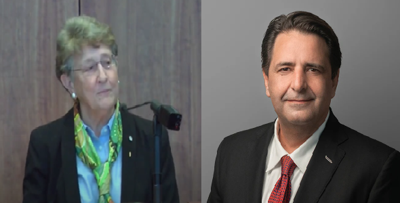



Jean Toal, left, and Peter Protopapas
COLUMBIA, S.C. - South Carolina’s highest court gave the green light to a former chief justice’s pursuit of a U.K. company she believes has committed “moral fraud” by refusing to answer to asbestos claims.
The South Carolina Supreme Court largely approved Judge Jean H. Toal’s order assigning local personal injury attorney Peter Protopapas over Cape Intermediate Holdings, a U.K. firm whose corporate predecessor once mined asbestos in South Africa.
Rejecting arguments Judge Toal had no jurisdiction over Cape and that Protopapas is interfering in the company’s operations – claims a U.K. court endorsed by slapping a global injunction on Protopapas – justices on the South Carolina court said Judge Toal “met the spirit of our instructions.” Judge Toal was the first female chief justice of the South Carolina Supreme Court and was assigned to oversee the state’s consolidated asbestos docket in 2017.
Cape’s corporate parent, Altrad Group, has refused to appear in South Carolina court since neither it nor Cape ever conducted business in the state. Protopapas has sued Altrad and other companies, including the DeBeers mining conglomerate, in Cape’s name, saying they were “alter egos” liable for paying asbestos claims made by South Carolina plaintiff lawyers against Cape.
Altrad argued successfully before the U.K. Court of High Justice that Judge Toal and Protopapas had no business interfering in Cape’s operations. That court fined Protopapas $1.3 million and issued a global injunction against him acting in Cape’s name. Protopapas refused to appear in the U.K. court to answer Cape’s claims, just as Cape has refused to appear in Judge Toal’s court.
In the opinion by Justice D. Garrison Hill, the court expressed deference to Judge Toal and displeasure bordering on contempt toward Altrad and Cape. The court seemed to acknowledge Judge Toal had exceeded her authority by appointing Protopapas receiver over Cape before the company had any judgments against it but said it will only enforce that rule in future cases.
The court rejected arguments the plaintiff who supposedly requested Protopapas take over as receiver had no power to do so since he’d closed the estate of the person in whose name the asbestos lawsuit had been brought. No matter, the Supreme Court said, it was just a “miscommunication” between his trial lawyers and the lawyers who closed the estate.
The court expressed a little more deference toward the U.K. court, saying judges there must have misunderstood Altrad’s arguments.
The English Court “did what it believed English law required it to do,” the South Carolina court said. “We do not quite follow how a receiver–an officer of the court of a sovereign nation–can be subject to fines, costs, or imprisonment for carrying out the duties that court has authorized him to undertake, and for which the law may offer him immunity and other protection, but that is a matter, perhaps, for another day.”
The decision allows Protopapas to continue filing demands for information about any insurance Cape has and to sue companies he believes are alter egos of Cape. The decision contrasts with a 2025 ruling by the Third Circuit Court of Appeals rejecting an attempt by Protopapas to prevent another company involved in talc litigation from filing for bankruptcy in New Jersey.
Protopapas, a prominent personal-injury lawyer, has not responded to repeated requests for comment from Legal Newsline. As receiver, he gets to keep a third of any money he collects from the companies he oversees and places the rest in private funds in Delaware designed to compensate asbestos plaintiffs and their lawyers.