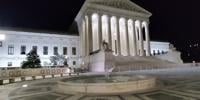




California State Capitol Dome at Sunset in Sacramento
SACRAMENTO — Businesses in California may be spared a potential avalanche of new lawsuits, which critics say would have cost the state economy hundreds of billions of dollars in coming years, after top Democratic supporters of new legislation begrudgingly agreed to remove one of the most controversial provisions from a still-controversial proposal to rewrite California's antitrust law.
On Aug. 13, the California State Senate Appropriations Committee agreed to advance the legislation, known as Assembly Bill 1776, to the full state Senate for a final vote.
However, in advancing the bill, Appropriations Committee Chair Sabrina Cervantes, D-Riverside, said the measure was only being advanced subject to an amendment that would remove the so-called "right of private action" from the bill and limit enforcement solely to "public prosecutions" initiated by the state.
A law with a "right of private action" generally empowers trial lawyers to enforce the law using private lawsuits, filed on behalf of individuals, groups or organizations, against businesses or others who they claim may have violated the law.
In this case, business groups had warned for months that the the "right of private action" included in AB 1776 would have unleashed a torrent of lawsuits against businesses of all sizes and types, potentially dealing a staggering blow to the Golden State's economy, and particularly harming its vaunted reputation as an incubator for technological innovation and tech sector startup businesses.
Called the COMPETE Act by its supporters, AB 1776 has already passed the California State Assembly, despite strong and growing opposition to the measure from a broad coalition of California companies, employers, trade associations and economists, among others.
Should it become law, AB 1776 would greatly expand the ability of state regulators to pursue antitrust actions against businesses under California's state antitrust law known as the Cartwright Act.
Currently, the Cartwright Act permits antitrust lawsuits only in cases in which two or more companies or people work together to restrict economic competition.
However, the new law would change the definition of antitrust conduct to include so-called single firm conduct.
But AB1776 would go much further. The legislation would explicitly decouple California state antitrust law from its federal counterpart, the Sherman Act, and require courts to all but reject more than 100 years of U.S. legal precedent governing how to apply antitrust law.
The legislation specifically notes that "interpretations of federal antitrust laws are at most instructive..."
The new legislation allows lawsuits against companies accused of so-called "restraint of trade."
AB 1776 includes a section identifying categories of conduct that “may constitute evidence” of anticompetitive conduct, but none of which the law says are required to demonstrate a violation of the Cartwright Act.
The categories that "may constitute evidence" include claims that a defendant business “has or might achieve a market share or has market power” at or above levels required to find a violation of the Sherman Act.
Business advocates have warned even those changes, if enacted, would create significant legal uncertainty for companies operating in California — not just those based in the state — threatening to unleash a new variety of antitrust actions in court for supposed monopolistic actions against companies with market shares as low as 20-30 percent, not only those operating as traditionally defined monopolies that dominate a particular market.
Further, the legislation specifically calls for the use of subjective "qualitative evidence," not just quantifiable facts and data to demonstrate if a business had violated the state's rules for business competition.
And it directs courts to "liberally interpret" the statutes, signaling companies may find their defense options significantly limited.
The legislation means those bringing antitrust actions in California will no longer need to meet current standards for antitrust claims, including defining a relevant market when relying on direct evidence of market power or measuring market shares when relying on indirect evidence of market power.
However, despite those concerns, critics of the law particularly pointed to the threat posed by the inclusion of the right of private action. The California Chamber of Commerce particularly has warned that the proposed law would slam businesses with a stream of new "frivolous lawsuits," while leaving it to the state's famously plaintiff-friendly courts to sort out the new rules of the game as they go.
In an Aug. 7 report, the Computer and Communications Industry Association, which represents some of the largest tech companies in the world, estimated lawsuits under AB 1776 would play a large role in costing the California state economy $670 billion by 2037, and cost the state of California nearly $9 billion in lost tax dollars, should the measure become law.
"... The costs from increased litigation are likely to be enormous, and California senators will have to consider whether the costs exceed the benefits," the CCIA said in its Aug. 7 analysis.
"There has been no official cost-benefit analysis, and no supporters have even bothered to quantify the bill’s supposed benefits."
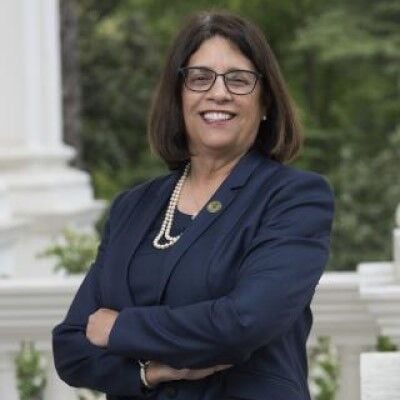
California State Assembly Majority Leader Cecelia Aguiar-Curry, D-Winters
The legislation has drawn backing from much of California's Democratic progressive establishment, notably including labor unions, so-called consumer advocates, trial lawyers and left-wing activist and anti-corporate business groups.
The measure was introduced by Assembly Majority Leader Cecelia Aguiar-Curry, D-Winters.
She and other supporters have claimed the measure is needed to address economic consolidation and to restrain large corporate interests.
However, faced with such projections, the legislation appeared to draw opposition from a group of California Democrats in the state Senate, notably including Senate Judiciary Chair Tom Umberg, D-Orange County.
During a hearing on the legislation in the Judiciary Committee on June 30, Umberg openly worried about the the threats posed to California's economy by private lawsuits under a revised Cartwright Act.
"... We want to make sure that we are not stifling competition by virtue of the threat of lawsuits," Umberg said during the hearing.
And State Sen. Angelique Ashby, D-Sacramento, said at the same hearing: "One of my concerns with this bill is that I don't want to create a new form of litigation against businesses that is litigation for the sake of litigation..."
Aguiar-Curry resisted attempts to strip the private lawsuit authorization from the law, joining with supporters who said removing the provision would amount to "gutting" the bill.
But opposition in the state Senate was apparently substantial enough to put AB 1776 at risk of failing altogether, because at the last moment, Aguiar-Curry relented and agreed to amend the legislation to remove the right of private action.
In a statement published following the Appropriations Committee hearing and vote, Aguiar-Curry said she was "disappointed the private right of action was gutted," but was willing to make the concession to advance the legislation toward passage.
"We've been trying to modernize our antitrust laws for decades, and I worry we'll be waiting 10 or 20 years before there's another opportunity to give Californians the level of protection they would have had under a PRA (private right of action)," Aguiar-Curry said.
On the other side, the CalChamber said it welcomed the changes, but haven't yet changed their position on AB 1776.
"We believe the amendments taken on Thursday are a positive step, a reflection of many conversations about the bill's devastating impact on California businesses and the state's economy," said CalChamber spokesman John Myers.
He said the CalChamber's "team and attorneys" are "carefully" reviewing the legislation "and their overall impact."