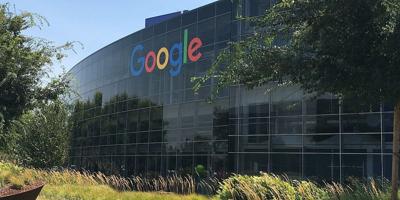



Google headquarters
SAN JOSE - Google has agreed to pay $68 million to power down a class action lawsuit accusing the tech giant of allegedly enabling its Google Assistant-powered devices of secretly recording people's conversations in their homes and other locations.
According to a settlement motion filed in San Jose federal court by plaintiffs' lawyers on Jan. 23, the settlement could include as many as 60 million people, each of whom could receive payouts of $18 to $56 per device.
The lawyers who led the class action could be in line to receive $22 million in legal fees under the deal, according to the filed settlement explainers.
The deal is subject to approval by the federal judge presiding over the case. The judge has not yet ruled on the motion for approval.
Should the judge sign off on the deal, it could bring an end to litigation that has been ongoing since plaintiffs first filed suit in 2019.
Plaintiffs have been represented in the action by attorneys Mark N. Todzo and Eric S. Somers, of the Lexington Law Group, of San Francisco; Vincent Briganti, Christian Levis and Ian Sloss, of Lowey Dannenberg P.C., of White Plains, New York; and Joseph P. Guglielmo and Erin Green Comite, of the firm of Scott + Scott Attorneys At Law, of New York.
In the lawsuit, plaintiffs accused Google and its parent company, Alphabet, of allegedly violating California privacy law and the state's unfair competition law, among other counts.
They alleged Google unlawfully and intentionally recorded individuals' confidential communications without their consent since May 2016 on devices that use Google Assistant.
Devices covered by the claims in the lawsuit included those sold as Google Home smart speakers, as well as some Android-powered devices and other third-party devices on which Google Assistant was installed, including displays, smartphones, laptops and tablets.
The lawsuit was spurred by a story first reported by a Belgian news outlet asserting voice recognition devices powered by the Google Assistant artificial intelligence was recording "millions of individuals," including children, without consent. The report asserted the devices activated their voice recording system without first being prompted by a so-called "hot word" - in this case, either the terms "Hey, Google" or "OK, Google" spoken by a human user - or by a human user pressing a button to activate the device's "listening mode."
The lawsuit claimed the alleged illicitly recorded audio was then transmitted to Google for analysis.
Several of the claims survived attempts by Google over the ensuing six years to dismiss or cut down the action.
As recently as February 2025, Google had moved for summary judgment in the case, or a decision from the judge effectively ruling in their favor without advancing the case to trial.
U.S. District Judge Beth Labson Freeman never ruled on that motion. Instead, she terminated the motion when the parties indicated last summer that they were in settlement talks.
Those talks ultimately resulted in the apparent $68 million deal.
According to the settlement motion, the classes of plaintiffs who could receive a payout from the deal could include anyone who "purchased a Google-Made Device" since May 2016, or anyone who used "Google Assistant and members of their households ... whose communications were recorded or otherwise obtained by Google Assistant" without using a "hot word" or otherwise activating the device to listen.
The so-called "Purchaser Class" members could get $18 to $56 each, while people included in the so-called "Privacy Class" would receive $2 to $10 each.
The attorneys have not yet filed a formal motion for attorneys' fees, but indicated they believed they could request about 32% of the settlement. That could amount to at least $22 million in fees, plus an additional $1.6 million in expenses.