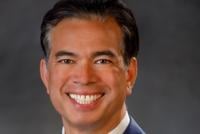



San Francisco City Attorney David Chiu
SAN FRANCISCO – San Francisco and its private lawyers won’t recover the money they spent keeping their ambitious lawsuit against the food industry in state court.
After a federal judge ruled the City’s case belonged in San Francisco Superior Court, where it was first filed, City Attorney David Chiu’s office asked to be compensated more than $83,000 from defendants like Kraft Heinz, Coca-Cola and General Mills. They are alleged to have pushed ultra-processed foods on the public and caused health problems like diabetes.
The first such case, filed in Philadelphia, has been thrown out of federal court as much too vague. That ruling has been appealed by Morgan & Morgan, which is also representing San Francisco.
It and other lawyers apparently overlooked an important step in the fight to get their fees back in the San Francisco case. Federal judge Jon Tigar wrote Wednesday that they were required to “meet and confer” with lawyers for the defendants to resolve all fee disputes before filing a motion.
“Plaintiff’s counsel’s declaration in support of the motion for fees states only that counsel met and conferred before the case was removed [to federal court] about the appropriateness of removal, and that in a series of emails memorializing that conversation, Plaintiff’s counsel twice stated their intention to move for fees after obtaining remand,” Tigar wrote.
“The declaration does not state that the parties ever discussed the substance of Plaintiff’s fees motion, in person or by telephone, to try to resolve any disputes related to the fees motion. Nor does it state that Plaintiff’s counsel made good faith attempts to arrange a meet and confer.”
Tigar denied the motion without prejudice, so San Francisco’s lawyers could seemingly try again. They are currently fighting dismissal motions in state court that argue with the assertion UPFs, which do not have a federal definition, can be a “public nuisance” under California law.
“[T]he complaint does not come close to alleging facts that would justify this Court overhauling the majority of the country’s food supply by judicial fiat,” defendants wrote in July. “And the fact that San Francisco’s complaint was largely copied from a previously dismissed personal-injury complaint confirms how far afield this case is from a legitimate public-nuisance action.”
Morgan & Morgan partner Mike Morgan has said companies were “prioritizing profits over the health and safety” of customers. A 149-page complaint in the Philadelphia case, the result of a year’s work at the firm, said tobacco companies Phillip Morris and RJ Reynolds bought major food companies in the 1980s and hoped to use the addiction playbook they’d used with cigarettes.
The case likens companies like Kraft Heinz and Coca-Cola to Big Tobacco but ultimately failed because it listed 179 products without specifying which caused plaintiff Bryce Martinez’s type 2 diabetes and non-alcoholic fatty liver disease – diagnoses he received at 16 years old.
There are a few other UPF cases in other states, as U.S. Health Secretary Robert F. Kennedy, Jr., formerly of counsel at Morgan & Morgan, says a federal definition of UPFs is coming, part of the Make America Healthy Again initiative. He has called them a “poison,” but public comments on his plan noted the difficulty of determining what exactly a UPF is.
“Not all processed foods are created equal, and some are shown to be beneficial to health,” the California Dairy Council wrote.
“Many processed foods – like frozen vegetables, canned beans or pasteurized milk – retain their nutritional value during processing and are essential for food safety, convenience and accessibility.”
Dozens of other plaintiff firms created UPF pages on their websites after the Martinez lawsuit and offered free consultations for clients willing to hire them on contingency fees. Plaintiff attorneys hope the theory sticks and leads to a massive payoff, much like the tobacco litigation of the 1990s.