



Johnson
AUSTIN, TEXAS — Following the 2026 midterm election results, legal observers from across the spectrum should prepare for a new political reality to spill over into the country's courtrooms, as key Democratic pick-ups in the races for attorneys general have likely redrawn the lines among states on key constitutional and legal questions.
For decades, the states of California and Texas have found themselves at odds not only politically, but legally, as the states have clashed in court over a host of politically contested questions, prominently including California's bid to combine certain special regulatory privileges with its outsized economic heft to impose its policy preferences far beyond its borders.
Those court fights have included topics ranging from energy policy, vehicle emissions standards, agricultural regulations and much more.
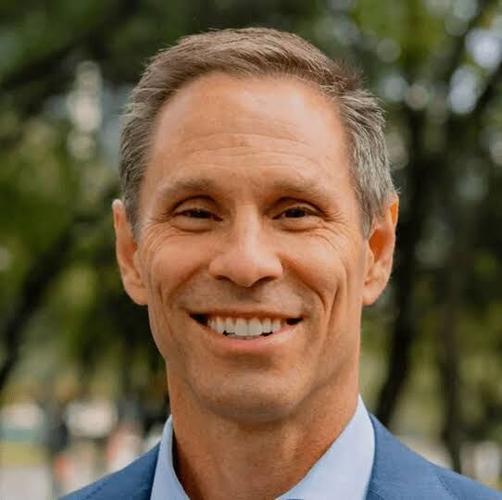
But after Texas voters selected Democrat Nathan Johnson as the state's new chief legal officer, that may be about to change.
And that shift may be poised to extend to other states formerly dominated by Republicans, including Ohio, Iowa and Kansas, where voters appear to have handed Democrats control of their states' attorney general offices.
The campaigns of Johnson in Texas; Nathan Willems in Iowa; and John Kulewicz in Ohio did not respond to requests from Legal Newsline for comment on their potential plans.
But if past is prologue, the longstanding policy goals of those states, as expressed in myriad legal briefs and other court filings, are likely to suddenly place those states into alignment with former interstate constitutional rivals, including progressive pacesetters like California, Illinois and New York.
Peter Bisbee, founder and president of First Principles and former executive director of the Republican Attorneys General Association, said it should come as no surprise that the partisan realignment could be mirrored in the courtroom, as well.
He noted the Democratic and Republican state attorneys general each have their own respective partisan organizations that they often use to collaborate on litigation and on questions of policy and constitutional law.
"That's how the AG world works," Bisbee said. "They are all one big group.
"So you will see Texas and California aligned on a host of issues, and you should expect to see that for all of the other recently flipped states."
Some of those flips may include positions previously staked out in court fights over California's perceived abuse of its so-called Clean Air Act waiver.
Since 1967, California has enjoyed special privileges under the Clean Air Act. For the past five decades, Congress has allowed the EPA to grant California a "waiver," allowing the state to set vehicle emissions standards that exceed those set by federal law and EPA regulations, ostensibly to allow the state to reduce smog caused by large numbers of gas-powered vehicles operating in the Golden State's unique climatic conditions.

Iowa Attorney General-Elect Nathan Willems
However, in recent years, California Democrats have moved far beyond those standards, moving ahead with standards that would impose stringent regulations on automobiles and eventually force all cars to be "zero emission" by 2035, essentially outlawing traditional internal combustion-powered vehicles.
While the emissions rules would nominally apply only to vehicles sold in California, critics have long noted that California's standing as the largest and most economically powerful state in the U.S. essentially allows the state to force automakers to change their designs to meet the state's stringent standards.
So, while California's rules may only have force of law inside the Golden State, economic realities would translate California’s rules into a reality of sharply decreased vehicle choices throughout the rest of the country, at best, if not an outright elimination of most kinds of gas-powered vehicles in much of the country.
That prospect has sparked a multi-front court fight spanning years, as carmakers, oil companies and Republicans in Washington, D.C., and elsewhere have sought to limit the potential reach of the Golden State Democrats' policy preferences elsewhere in the U.S.
Texas, under AG Paxton, notably led litigation in 2022, along with 15 other states, asking federal courts to block the efforts by then-President Joe Biden to give California the go-ahead to move forward with its "Clean Cars" program.
Texas has also backed efforts by other Republican attorneys general to limit California's abilities to impose regulations on plastic packaging production.
And Texas joined a brief filed by the states of Alabama and West Virginia asking the Supreme Court to pull the plug on lawsuits against oil and gas producers over so-called climate change. California and other traditionally Democrat-led states took the opposite side on the question, backing the ability of Boulder, Colorado, and other cities and local governments to use such litigation to each demand potentially billions of dollars from energy companies.
The states of Iowa, Ohio and Kansas also joined that brief.
In other litigation, Iowa, Ohio and Kansas also joined in an ultimately unsuccessful bid to halt California's efforts to impose its regulations on the nation's pork producers. Texas did not join in that effort that reached the U.S. Supreme Court.
And Iowa and Kansas under their Republican AGs also joined litigation challenging California's perceived attempts to again extend its control over the American economy, challenging the Golden State's so-called "Advanced Clean Fleets" regulations, to force the transition of America's trucking fleets away from diesel and toward electric motors.
The California rule imposes the electric conversion mandates on all trucking companies that operate in California, no matter where they may be based.
On the flip side of the equation, California has also routinely either led or joined lawsuits against the Trump administration over the president's attempts to use executive power to achieve his administration's preferred policy goals related to immigration, public fraud and election security, among others.
And California has routinely joined its name to court briefs seeking to subordinate or restrict parents' rights to direct the upbringing of their children on matters related to gender, sexuality and religion, and to advance gun control laws.
In statements before and after Nov. 3, Johnson particularly said Texans should expect him to file or join legal challenges to the Trump administration.
In post-election interviews, however, Johnson said he intended that the Texas AG office would refocus on what he believes to be core state duties and "accountability," rather than serving as "MAGA's own private law firm." MAGA refers to the "Make America Great Again" slogan used by the campaigns of President Trump.
In Iowa, Willems had criticized incumbent Iowa AG Brenna Bird for engaging in too many "political lawsuits" and national political fights. Willems said he was "not running for attorney general because I want to sue the government every 10 minutes."
That was a sentiment echoed during the campaign in Kansas by Mann. There, Mann campaigned on redirecting the Kansas AG's office toward what he believed to be state priorities.
In Ohio, Kulewicz also had attempted to distance himself from lawsuits against the White House, pointedly criticizing his Democratic primary opponent for calling for prosecuting and holding Trump "accountable." Kulewicz said such priorities would reduce the state AG's office to a "political game."
Following the 2026 elections, Republicans are expected to control 22 state attorneys general offices.
However, with the flips from red to blue in Texas and Ohio, in particular, Republicans are left with control of the attorney general office in only two of America's most populous states, Florida and Pennsylvania.
However, Bisbee said those shifts will not change the calculus much for Republican attorneys general in challenging policies, laws or regulations they may see as unconstitutional, or in backing other private challengers in court.
Bisbee noted that in the most recent challenges to California's potential overreach, the litigation has been led by the attorneys general of Nebraska and West Virginia.
"It's the quality of the individual AGs that are often more indicative as to what gets done," said Bisbee. "There might be a couple states that drop from the list of plaintiffs, but things will keep moving forward."