





California State Capitol, Sacramento
SACRAMENTO — Despite pronounced and growing concerns over its potential to unleash a torrent of new lawsuits in California courts and stifle innovation in a state famous for innovation and entrepreneurship, California Democratic lawmakers are continuing to advance sweeping and controversial changes to the state's antitrust law.
Just before the Fourth of July holiday, the California state Senate Judiciary Committee voted 9-2 to recommend approval of the so-called COMPETE Act, formally known as Assembly Bill 1776.
The measure will next move to the Senate's Appropriations Committee for another hearing.
The Judiciary Committee's vote, however, was accompanied by calls from some lawmakers, including Democrats on the committee, for more changes to the legislation to address concerns that the legislation will harm, rather than help, California's economy, by creating yet another avenue for trial lawyers to slam businesses with yet more lawsuits in California's notoriously plaintiff-friendly courts.
Those concerns were shared by Judiciary Committee Chair Sen. Tom Umberg, D-Orange County.
"... We want to make sure that we are not stifling competition by virtue of the threat of lawsuits," Umberg said during the June 30 hearing.
State Sen. Angelique Ashby, D-Sacramento, echoed those concerns during the hearing.
"One of my concerns with this bill is that I don't want to create a new form of litigation against businesses that is litigation for the sake of litigation...," Ashby said.
The legislation has steadily advanced through the California state legislature in recent months, despite outspoken and growing opposition from what bill opponents have called an "unprecedented" coalition of business groups and others. Opponents have warned the legislation would deal a severe blow to California's economy and its historic reputation as a cradle of innovation, as well as to the rule of law.

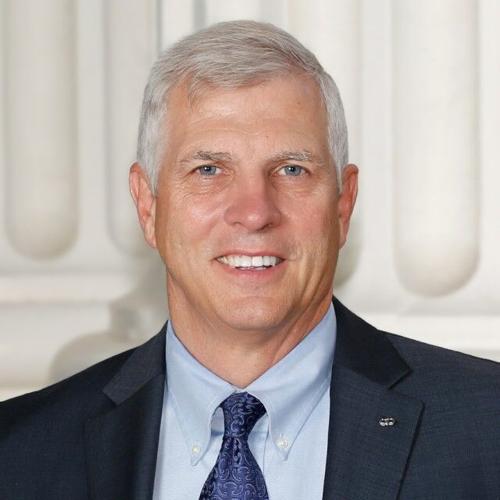
California State Sen. Tom Umberg, D-Orange County
Democrats in the California State Assembly approved AB 1776 in late May on a party line vote, advancing the measure to the state Senate, where Democrats also enjoy a supermajority.
Should it become law, AB 1776 would greatly expand the ability of both state regulators and trial lawyers to pursue antitrust actions against businesses under California's state antitrust law known as the Cartwright Act.
Currently, the Cartwright Act permits antitrust lawsuits only in cases in which two or more companies or people work together to restrict economic competition.
However, the new law would change the definition of antitrust conduct to include so-called single firm conduct.
But AB1776 would go much further still. The legislation would explicitly decouple California state antitrust law from its federal counterpart, the Sherman Act, and require courts to all but reject more than 100 years of U.S. legal precedent governing how to apply antitrust law.
The legislation specifically notes that "interpretations of federal antitrust laws are at most instructive..."
The current version of AB 1776 would also allow lawsuits against companies accused of so-called "restraint of trade."
AB1776 includes a section identifying categories of conduct that “may constitute evidence” of anticompetitive conduct, but none of which the law says are required to demonstrate a violation of the Cartwright Act.
The categories that "may constitute evidence" include claims that a defendant business “has or might achieve a market share or has market power” at or above levels required to find a violation of the Sherman Act.
These changes would create massive legal uncertainty for companies operating in California — not just those based in California — and potentially massively drive up litigation costs by significantly lowering the standards of evidence needed to maintain a Cartwright Act violation claim.
The new law, for instance, would allow state regulators and trial lawyers to bring antitrust actions in court for supposed monopolistic actions against companies with market shares as low as 20-30 percent, not only those operating as traditionally defined monopolies that dominate a particular market.
Further, the legislation specifically calls for the use of subjective "qualitative evidence," not just quantifiable facts and data to demonstrate if a business had violated the state's rules for business competition.
The legislation means either the state or private plaintiffs may no longer need to meet current standards for antitrust claims, including defining a relevant market when relying on direct evidence of market power or measuring market shares when relying on indirect evidence of market power.
The legislation has drawn backing from much of California's Democratic progressive establishment, notably including labor unions, so-called consumer advocates, trial lawyers and left-wing activist and anti-corporate business groups.
The measure was introduced by Assembly Majority Leader Cecilia Aguiar-Curry, D-Winters.
She and other supporters have claimed the measure is needed to address economic consolidation and to restrain large corporate interests.
During the June 30 hearing, for instance, Aguiar-Curry and others related tales of communities in which pharmacies and supermarkets have closed, leaving those communities with far fewer choices and higher prices, among other challenges.
"At the end of the day, this bill is about protecting competition, so the California economy works for everyone," Aguiar-Curry said in remarks delivered during the hearing.
"It's about making sure the success comes from building the best product, offering the best service, and competing on the merits. It's about making sure that no company, no matter how large, can use its power to shut out others and limit opportunity."
However, business groups have consistently warned the legislation would achieve the opposite results, primarily as a result of the combination of a law that makes it far easier to go after companies for alleged anticompetitive actions, and then throws open the courthouse doors to anyone to file such a lawsuit through a so-called "right of private action."
While nearly every state in the U.S. includes a right of private action in their antitrust laws, those laws are almost uniformly in line with the more exacting standards established under federal law and U.S. Supreme Court precedent governing when companies can be sued for alleged anticompetitive behavior.
The opposition, for the most part, has been most visibly led by the California Chamber of Commerce.
"CalChamber has not opposed this bill because it creates stricter standards," said Eric Enson, an attorney with the firm of Crowell & Moring, who represents the Chamber. "We have opposed this bill because it has no standards."
When coupled with the right of private action, Enson said, the law "would allow private plaintiff's lawyers to bring claims in new and untested ways and courts.
"... We need to give our businesses time to adapt to these new standards without the threat of massive damages awards from private plaintiffs."
Those concerns were echoed during the hearing by Nadir Mahmood, president of San Francisco-based biomedical tech firm, Nkarta. According to its website, Nkarta researches and develops new treatments for autoimmune diseases.
During his comments, Mahmood shared the story of his father's recovery from cancer, aided by new technological advances in robotic surgery and other oncological treatments.
"He is now healthy and back to living his life because someone took the risk to innovate," Mahmood said.
But Mahmood said the threat of antitrust lawsuits under AB 1776, as it currently is written, would imperil such advances from companies who would be concerned about being sued, should they prove to be too successful, as some may see it.
And while supporters of the legislation say they are including "guardrails" to protect startups and other small and mid-sized companies from such potentially ruinous lawsuits, Mahmood said that interpretation would be challenged in court.
"Legal uncertainty does not wait for a ruling," Mahmood said. "It chills investment before a lawsuit is ever filed."
In response to some of the concerns raised by business groups, Umberg and other Senate Democrats appear to have won assurances from Aguiar-Curry for certain changes to the law.
Among those, Aguiar-Curry committed to removing language that would allow actions based on a suspicion that a business has engaged in an "unreasonable restraint of trade;" adding language that would specifically declare that businesses have a right to "obtain and maintain market power or monopoly power through the superiority of its products, services and business acumen;" and adding language that would require plaintiffs to prove that defendants have used anticompetitive practices to amass "substantial market power."
Aguiar-Curry pledged to make those changes before the legislation is next discussed at the Appropriations Committee.
Aguiar-Curry, however, was much less receptive to the idea of removing the right of private action from the proposed law.
While she said she and others don't want businesses to be targeted by "frivolous lawsuits," Aguiar-Curry said stripping out the right of private action would be part of a "larger discussion."
While business groups welcomed the proposed changes to the law, Enson and others said the right of private action would remain a major sticking point, given the threat of lawsuits, despite the assertions of Aguiar-Curry and other supporters that they would include measures to prevent a tsunami of new lawsuits.
Umberg, notably, said he would prefer for any new California antitrust standards to first be applied exclusively by the California Attorney General and the California Department of Justice, rather than simply turned over to trial lawyers to test new theories of liability and evidentiary standards in court through private lawsuits.
That belief was supported by the Chamber and other business advocates, as Enson noted that removing a right of private action from the legislation would essentially create an "exemption" for small and medium-sized businesses, who would be unlikely to be targeted by a state action from the Attorney General.
"The right of private action really opens up small and medium-sized businesses to lawsuits by competitors, entities that have lost the competitive race, as well as other businesses and partners ... who are unhappy with the single firm conduct of a particular firm," Enson said.
Supporters of the legislation responded by asserting the law would allow small businesses with less than 100 employees and less than $10 million a year in income to avoid lawsuits under the law.
But, echoing Nkarta's Mahmood, supporters said the threat of lawsuits, alone, for a small or mid-sized company could be enough to "stifle" growth and innovation.