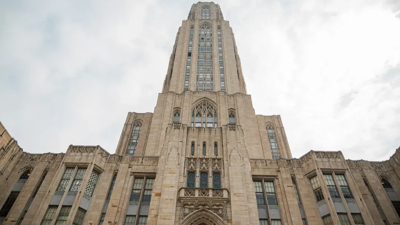


The Cathedral of Learning at the University of Pittsburgh.
PITTSBURGH - A University of Pittsburgh cardiologist can sue the university, two colleagues and the American Heart Association for retaliating against him after he criticized affirmative-action programs in an article one superior publicly derided as “incredibly offensive and racist,” the Third Circuit Court of Appeals has ruled.
Dr. Norman Wang sued Drs. Samir Saba and Kathryn Berlacher, the school and others after they mounted a public and internal campaign to remove him from his post over a peer-reviewed article Wang published in the Journal of the American Heart Association in March 2020. The 17-page article cited data and scholarly sources to conclude medical schools may be violating the law by lowering admissions standards for minority students.
“Long-term academic solutions and excellence should not be sacrificed for short-term demographic optics,” Wang wrote.
The article didn’t generate much interest at first but “all that changed in the summer of 2020,” the Third Circuit said July 7, as colleagues began circulating critical emails that eventually reached Saba and Berlacher, Wang’s superiors, as well as top school officials.
“Within a week of the first complaint about his article, Wang was demoted, his article was retracted, and he went viral on Twitter for being a dishonest racist,” the court said in an opinion by Judge Stephanos Bibos. The court reversed the dismissal of Wang’s case and allowed it to proceed on defamation and retaliation claims.
Wang’s troubles began on July 29, 2020, when a doctor emailed the president of the Physicians Services Division to complain about the article, the president forwarded it to the dean, and the dean said in an e-mail the article was “pseudo-scholarly” and “incredibly offensive and racist.”
Another email reached Berlacher, who forwarded it to Dr. Samir Saba, Dr. Wang’s superior at the hospital and the medical school. Berlacher acknowledged she “can’t argue with the facts,” but said the article is “clearly offensive and racist.” Dr. Saba agreed and said Wang “cannot continue” in his leadership role. Two days later, Berlacher and Saba fired Wang from his program directorship.
“Once Wang had been fired, the next question was whether to rebut Wang’s article or just smear it,” the Third Circuit said. Wang’s colleagues chose the latter, starting a social media campaign to discredit Wang and his article. Berlacher tweeted the article is “scientifically invalid and racist,” while doctors on Facebook called for Wang to be removed from training with a “#RetractRacists” hashtag.
On Aug. 4, 2020, Berlacher and Saba emailed Wang that “any educational environment in which you partake is inherently unsafe, increasing our learners’ risk for undue bias and harm” and banned him from any teaching role. The doctors also urged the American Heart Association to retract his article, which the association did two days later, citing “inaccuracies, misstatements and selective misreading of source materials.” The association didn’t cite any examples.
Then came a “backlash to the backlash,” the court said, with the university’s tenure and academic freedom committee urging the school to reinstate Wang. The U.S. Education Department investigated whether the “campaign of denunciation” violated Title VI.
A district court dismissed Wang’s case, ruling he’d failed to meet the tough standards for libel and slander of a public figure under the landmark U.S. Supreme Court decision N.Y. Times v. Sullivan. The Third Circuit reversed, however, saying there was a question of fact over whether the defendants had adequately researched their criticism of Wang before denouncing his work as inaccurate and calling him a racist. The speed with which Berlacher and Saba launched their campaign against Wang “suggests a reckless rush,” the court said.
“It would have been fine just to say that Wang’s article was wrong, harmful, even dangerous,” the court said. “Those are normal academic opinions. But these statements went much further, alleging misquotations, misstatements, and outright falsehoods. Wang’s academic integrity is central to his career.”
Judge Patty Shwartz dissented, saying “whether `normal’ or not, courts should be cautious when weighing in on academic debates because doing so chills scientific progress and the rigorous discourse required to bring it about.”