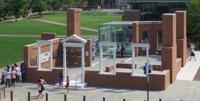


The President’s House
PHILADELPHIA – Philadelphia is suing the federal government over the removal of displays at the President’s House – a site intended to inform visitors of the history of slaves forced to work for George Washington.
President Donald Trump’s March executive order told the Department of the Interior to make sure national parks do not “contain descriptions, depictions, or other content that inappropriately disparage Americans past or living (including persons living in colonial times).”
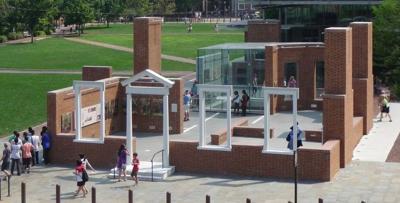
But that contrasts with the mission of the President’s House. Washington and John Adams once lived at a house on the site, and Philadelphia and the federal government agreed in 2006 to design a somewhat-restored version that tells the stories of those who were enslaved there.
The City’s lawsuit, filed last week in federal court, says artwork and informational displays that reference slavery were removed this month by the National Park Service. Philadelphia, it says, has an equal right to the design of the house and has spent $3.5 million on it.
“The City’s right to approve the exhibit’s final design, including the interpretative displays, would be meaningless if the NPS could at any time later change or remove the displays without the City’s approval,” the lawsuit says.
Admission is free to the house, located on the corner of 6th and Market streets. It is designated as a National Underground Railroad Network to Freedom site and tells the stories of slaves like Oney Judge, who escaped the house after Martha Washington told her she would be given to Washington’s granddaughter as a wedding gift.
The lawsuit claims the federal government violated the Administrative Procedures Act in making a final agency decision that is arbitrary and capricious.
“The agreements between Defendants and the City expressly call for explaining the lives of enslaved people living at President’s House,” the suit says.
“The interpretative displays relating to enslaved persons at President’s House are an integral part of the exhibit and removing them would be a material alteration to the exhibit.”
The suit also claims the NPS lacks the authority to removal the panels, as doing so contradicts Congress’ desire to preserve important historical sites of the Underground Railroad.