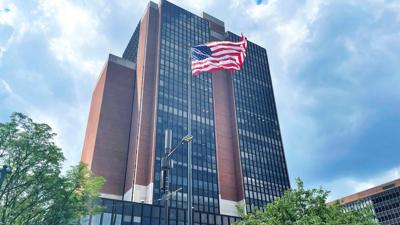



James A. Byrne U.S. Courthouse in Philadelphia
PHILADELPHIA – A federal court in Philadelphia won’t be the headquarters for lawsuits that blame video games for a variety of emotional problems facing kids.
There are 39 such lawsuits in 11 different federal courts, but the Judicial Panel on Multidistrict Litigation won’t consolidate them into one MDL in Philadelphia or Northern California, as had been proposed by plaintiffs lawyers.
“Informal coordination” is a better method than assigning all cases to one judge who might soon be overwhelmed by extra defendants and issues, the JPML said this month. The cases so far concern the makers of the games Roblox, Minecraft and Fortnite.
“Plaintiffs assert that these specific games work as ‘gateways’ to video game addiction,” the JPML wrote.
“But they do not allege that the minor plaintiffs in these actions only played Roblox, Fortnite and Minecraft, or even that these were the first games each minor plaintiff played – they merely assert that these three games are among the first games that children play.”
Citing problems caused when an MDL created last year eventually became one judge handling claims of an industry-wide conspiracy to turn children into video-game addicts, the JPML said there is a possibility other companies and products will be drawn into the emotional-problems litigation.
“While there are 39 related actions now pending, 29 of them are pending in just two courts, and there is some overlap among plaintiffs’ counsel,” it added.
The suits allege Epic Games, Roblox and Microsoft and its subsidiary Mojang used child-development experts and psychologists to manipulate kids’ brains to make them want to play compulsively.
“Defendants’ actions were extremely successful and generated billions of dollars in revenue at a significant cost – innumerable children suffering from video game addiction that manifests in physical, psychological and/or economic injuries that may include… self-harm, emotional lability, depression, anxiety, impaired academic performance, diminished social interactions and the need for medical and/or psychological treatment,” attorneys at Grant & Eisenhofer wrote.
Another case filed by two firms – Ketterer, Browne & Davani and Burg Simpson – in Philadelphia federal court says the more a minor plays a video game, the more he or she wants to play. That includes in-game purchases that give the defendants a financial incentive to create addicts.
Roblox, Fortnite and Minecraft “are among the first online video games children play and the catalyst to an addiction cycle and disordered relationship with video games,” the suit says.
Their plaintiff, who lives in Philadelphia, already has diminished social interactions and a lack of interest in other hobbies. When they aren’t allowed to play, they go through rage, anger and physical outbursts, the suit says.
The plaintiff, known as S.S.M., started playing Roblox and Minecraft at six years old and three years later took up Fortnite. They are now 16 years old.
The suit cites research that shows extensive gaming has a severe impact on a growing brain, particularly through an “intense dopamine release” similar to substance abuse or gambling.
Algorithms analyze each gamer to reach a “flow state” during which time they are “bombarded with solicitations to purchase additional in-game downloadable game content.”
In Los Angeles, a state court judge has consolidated cases against Apple, Google and Sony. There appears to be a dispute between plaintiffs and defendants as to whether the user agreement to play these games includes a valid arbitration clause.
In the other federal MDL, claims against Epic, Roblox, Microsoft and Mojang have all been dismissed or stayed pending arbitration.
It’s certainly not the only legal issue facing Roblox, which faces claims children are made susceptible to predators because of a lack of safety features. Multiple state attorneys general have sued the company, as have families and investors.