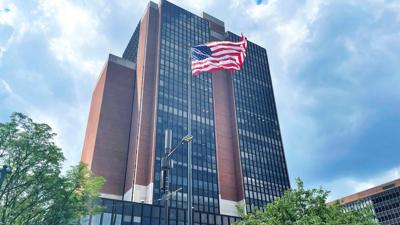



James A. Byrne U.S. Courthouse in Philadelphia
PHILADELPHIA – The University of Pennsylvania doesn’t have to give a federal agency a list of its all Jewish employees just yet, even though its appeal of a court decision that ordered it to do so “does not have a strong chance of prevailing.”
Philadelphia federal judge Jerry Pappert made that ruling Monday in UPenn’s fight with the Equal Employment Opportunity Commission, which is investigating claims of antisemitism at the school. Pappert has instructed UPenn to provide the list but is putting that order on hold while the university appeals to the U.S. Court of Appeals for the Third Circuit.
Pappert found UPenn “narrowly” showed it would face irreparable harm if the list is disclosed before the Third Circuit weighs in.
“Staying the Court’s order will not substantially injure the EEOC and a stay will allow the Third Circuit Court of Appeals to address in an orderly manner of great public importance,” Pappert wrote.
The EEOC charge cites public statements of antisemitism directed at Jewish faculty. Incidents include a swastika painted on an academic building, disturbing emails and pro-Hamas rallies. Then-UPenn president Elizabeth Magill and others stated publicly that Jewish employees had been the subject of antisemitism on campus following a Hamas attack on Israel in October 2023.
President Trump has issued an executive order that requires executive agencies to submit reports on antisemitism at colleges since October 2023, threatening that federal funding will stop for schools that allow “illegal protests.”
UPenn is now in the federal government’s crosshairs. A student group in 2024 called “Penn Against the Occupation” on social media criticized 29 faculty members who traveled to Israel. The subpoena seeks information about those members of the UPenn staff, identities of anyone who reported the post and the school’s investigation into the post.
Jewish students and a group called Students Against Antisemitism sued UPenn in 2023. Their complaint was dismissed in June 2025, and they appealed rather than take the option of filing an amended lawsuit to make more specific accusations.
The suit said UPenn refused to punish slurs and chants including “F--- the Jews” since 2023, when the latest conflict between Israel and Palestine began.
UPenn says it has received three antisemitism complaints out of 20,000 employees. It claimed some of the information sought by the EEOC is confidential and irrelevant.
The group Public Citizen claims the investigation is a case of President Trump pushing his conservative agenda on America’s schools, while the EEOC says it is simply looking into evidence of a hostile work environment.
Pappert refused to agree that the subpoena would prevent Jews from participating in events on campus and said a proposal to give them the contact information for the EEOC to reach out on their own is inadequate.
“The EEOC seeks to investigate the charge by contacting potential victims or witnesses of harassment and informing them of their rights,” Pappert wrote.
“Employees may refuse to participate in the investigation, but the EEOC needs the opportunity to talk to them directly to learn if they have evidence of discrimination.”