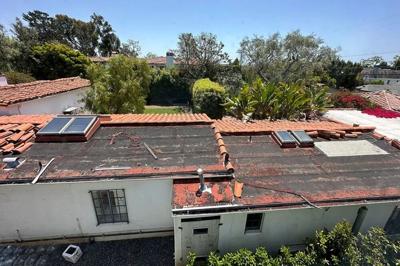



Marilyn Monroe’s former Los Angeles home, as it existed in mid-2026. Los Angeles has designated the home a historic property, complicating efforts to renovate the property.
LOS ANGELES — A federal court has dismissed a property-rights lawsuit challenging the city of Los Angeles’ designation of the home where Marilyn Monroe died in 1962 as a historic monument, but plaintiffs’ attorneys plan to resubmit their complaint.
Federal Judge Percy Anderson of the Central District of California issued his decision on May 6, rebutting some of the claims in the lawsuit filed by the current owners of the property. The owners paid $8.35 million for the real estate and went on to spend an additional $30,000 to get the demolition and grading permits they needed to redevelop the Brentwood site.
The Pacific Legal Foundation, which has joined the legal team representing the plaintiffs, called the city’s actions an abuse of power that violated the plaintiffs’ Fifth Amendment rights by effectively “taking” the property without just compensation.
“The city … filed a motion to dismiss in March,” J. David Breemer, a senior foundation attorney specializing in property rights, told the Southern California Record in an email. “The court recently granted that motion but gave the property owners permission to file a new amended complaint with more details, which we intend to do.”
The plaintiffs – Brinah Milstein, Roy Bank and Glory of the Snow 1031 Trust – say the city initially approved their redevelopment permits after their purchase of the property in 2023, only to revoke them and later designate the site a “historic cultural monument.” In turn, the property, which is on a narrow dead-end street, has become a tourist attraction, leading to trespass incidents and traffic congestion, according to the plaintiffs.
The lawsuit argues that the historical designation has placed so many encumbrances on the property that it is now essentially “worthless.” The city also turned down an offer by Milstein and Bank to personally pay for the relocation of the home where Monroe died so that it would be more accessible to the public, according to the lawsuit.
“Demolition or substantial alterations to the property can only now, post-’designation,’ be accomplished through (the) plaintiffs’ compliance with a multiyear legal process, including the preparation of an Environmental Impact Report pursuant to the California Environmental Quality Act, the city’s express permission to tear down or alter what the city just ostensibly ‘protected’ and years of likely litigation by any third party challenging any change to the property …” the complaint states.
But Judge Anderson said the allegation that the site was “worthless” as a result of the historical designation was not plausible.
“Plaintiffs do not allege that they have made any attempt to sell the property,” Anderson said in his opinion. “Nor do they allege that they have attempted to perform the repairs or maintenance needed to return the property to a habitable state, or that the city could or would prevent them from doing so.”
The owners were also aware of the property’s historical connection to Monroe’s life, the process involving the city’s Historic Cultural Monument (HCM) ordinance and the seller’s disclosure that the property could receive the designation in the future, the judge said.
Anderson rejected the idea that the owners are burdened to carry out the city’s historical designation policy at private expense.
“There are no facts alleged to suggest that the HCM designation authorizes the public to access the property, nor is there any indication that the designation prevents (the) plaintiffs from using the property as a single-family residential home as it had been used in the past,” he said.
Anderson set a deadline of May 26 for the plaintiffs to file an amended complaint to establish a viable takings claim.