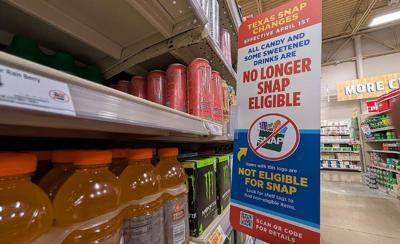


A sign regarding SNAP benefits in an H-E-B store in Texas.
WASHINGTON – Three Texas SNAP recipients are among the plaintiffs in a federal lawsuit seeking to overturn the U.S. Department of Agriculture’s approval of Texas’ ban on buying candy and sweetened drinks with food stamp benefits.
The proposed class action was filed November 18 in U.S. District Court for the District of Columbia. It names USDA and Agriculture Secretary Brooke Rollins, in her official capacity, as defendants. It also challenges similar waivers in 17 other states.
Under the complaint's account, the Texas Health and Human Services Commission asked USDA on June 26, 2025, to approve a demonstration project. USDA approved it August 4, 2025. The waiver lets Texas bar SNAP purchases of "sweetened drinks" and "candy," and it took effect April 1, 2026. The Supplemental Nutrition Assistance Program is the federal food aid program for low-income households.
The three Texas plaintiffs are Rhonda Salinas of Corpus Christi, Nichole Martin of Tyler and Jakob Nasakaitis of San Marcos.
Salinas, a mother of three, says she cannot afford to replace restricted items for her children from other funds. Martin works part time as a hospice caregiver. She says she can no longer buy sports drinks such as Gatorade and Powerade for long days in the heat. Nasakaitis, a Texas State University computer science student, says he can no longer buy the energy drinks he uses for school and an internship.
The three also say they struggle to tell which products qualify. Martin says she was once refused any beverage but water, which is broader than the Texas waiver. Nasakaitis says he was turned away when buying juice and muffins, which the waiver allows.
The plaintiffs argue USDA approved the waivers under the wrong law. They say 7 U.S.C. § 2026(b) allows only narrow pilot projects aimed at running SNAP more efficiently. In their view, projects meant to improve recipients' health can be approved only under § 2026(b)'s separate counterpart, § 2026(k), which has stricter evaluation rules.
They also say USDA reversed its 2018 position without explanation. That year, the complaint says, USDA rejected similar proposals from Maine and Nevada over costs, retailer burdens and unproven health benefits.
Texas is one of eight states where the complaint says USDA let the waiver take effect before publishing a Federal Register notice. The others are Arkansas, Florida, Idaho, Indiana, Louisiana, Oklahoma and Utah.
USDA's rules require notice at least 30 days before a project with a significant public impact begins. According to the complaint, USDA requested public comment on those waivers on September 15, 2026. The complaint says Salinas, Martin and Nasakaitis would have commented if they had had the chance.
The suit leans on a June ruling in a separate case, Aragon v. Rollins, in the same court. In that case, the complaint says, the court vacated five similar waivers. The plaintiffs say USDA has not reconsidered the remaining approvals.
The plaintiffs ask the court to certify two classes of SNAP recipients. They want the waiver approvals vacated and a permanent bar on enforcing them. The complaint also seeks to stop USDA from approving future waivers under § 2026(b). It seeks no damages but asks for attorneys' fees. The complaint says more than 11 million people in the 18 states received SNAP as of October 2026.
A South Carolina convenience store trade group is also a plaintiff. It says its members face high compliance costs and the risk of being removed from SNAP. The National Center for Law and Economic Justice and Shinder Cantor Lerner LLP represent the plaintiffs.
U.S. District Court for the District of Columbia case number 1:26-cv-04079