

DALLAS — The Fifth Court of Appeals has reversed a ruling denying a transportation company’s special appearance in an automobile collision lawsuit.
The lawsuit was brought by Loralin Hanks, who was severely injured when the car she was a passenger in collided with a tractor–trailer that was stopped, or moving slowly, on a dark interstate highway in Colorado.
Court records show Hanks filed the lawsuit on Aug. 18, 2023, and later amended her petition to include OnLine Transport System (OLTS), a company specializing in acquiring and coordinating logistics and transportation solutions across America.
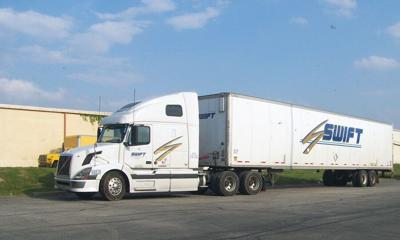
The trailer that was being hauled was owned by Swift Logistics, hauled by Texas-based Model 2 Transport, and loaded with boxes that were being shipped by FC Meyer Packaging by virtue of an agreement with Online Transport and OLTS.
Regarding personal jurisdiction, Hanks acknowledged that both Online Transport and OLTS are Indiana corporations and asserted they were both subject to jurisdiction in Texas because of their extensive, constant, and pervasive business contacts and operations in Texas.
Both Online Transport and OLTS separately filed special appearances and moved to dismiss Hanks’s claims against them for lack of personal jurisdiction, according to the Fifth Court’s opinion.
OLTS denied engaging in any purposeful, forum-directed activities relating to Hanks’s claims.
After conducting separate hearings on the special appearances of Online Transport and OLTS, the trial court granted that of Online Transport and dismissed Hanks’s claims against it, but it denied that of OLTS.
Justices concluded that because Hanks’ claims against OLTS do not arise from or relate to OLTS’s contacts with Texas, the trial court did not have personal jurisdiction over the company.
“The trial court has already ruled that Online Transport is not a Texas resident corporation and is not otherwise subject to personal jurisdiction in Texas, and Hanks has not appealed that ruling,” the opinion states. “Accordingly, if the trial court based its ruling on OLTS’s special appearance on an alter ego theory, it erred in doing so.”
Appeals case No. 05-26-00215-CV