
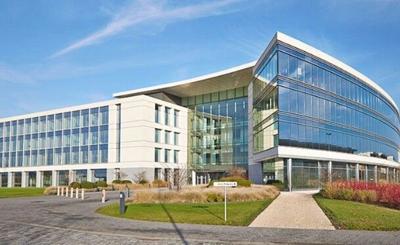


GlaxoSmithKline headquarters in Belgium
WILMINGTON, Del. – Plaintiff lawyers pursuing a questionable theory that Zantac can cause cancer won’t get extra time to bolster their case, leaving tens of thousands of lawsuits facing dismissal next year.
Though firms like Wisner Baum wanted to introduce three new experts in Delaware Superior Court after that state’s Supreme Court had found their original 10 unreliable, Judge Francis Jones, Jr. this month refused to essentially restart the case.
The exclusion of plaintiff experts in Delaware came three years after a Florida federal judge made the same ruling in a multidistrict litigation proceeding of about 50,000 lawsuits. Though there are other coordinated mass torts in some state courts, Jones’ decision affects some 75,000 plaintiffs.
“(T)his is not a situation where an expert deadline was not met,” Jones wrote in refusing to grant the plaintiffs’ motion to add new experts.
“This is also not a situation where the Plaintiff was not given a full and fair opportunity to present its case… Plaintiffs decided what evidence to present with a well-settled body of Delaware law on the topic, as well as a federal MDL decision that pointed out the flaws of Plaintiffs’ experts.
“They chose to proceed ahead as they did and cannot now be heard to complain that they should get a mulligan.”
The litigation against GlaxoSmithKline and others began after a Connecticut lab, Valisure, created headlines in 2019 when it claimed its testing showed Zantac and its generic equivalents contained ranitidine that changed to NDMA once ingested. Lawyers began spending on advertising for clients and cited the study in ensuing litigation, calling Valisure an "independent" lab.
Valisure had brought its findings in a citizen petition to the FDA, which ordered a short-lived recall. The FDA later said Valisure's methods were unreliable, saying the lab's "artificial stomach" was heated to 260 degrees and subjected to lethal levels of salt to create NDMA from Zantac.
Valisure detected no NDMA in the drug when testing it under normal human conditions. That didn't stop lawyers who, after the Florida ruling tossing their experts, moved on to courts in Delaware, California, Philadelphia and elsewhere.
GSK settled 80,000 cases for $2.2 billion while denying all claims against it. Plaintiff lawyers representing company investors sued the company over its Zantac disclosures, citing Valisure's study.
In the Delaware case, Jones wrote the defendants who have been spending money for years on the case would be prejudiced by the inclusion of new experts that would “essentially allow Plaintiffs to start over.”
Briefing in January will address which individual plaintiffs were relying on the experts rejected by the Supreme Court. Those who are will presumably have their cases dismissed.
Judge Vivian Medinilla had allowed the plaintiffs’ experts but was found to have used the wrong standard for expert testimony.
"The court concluded that the experts could base their conclusions on studies regarding the alleged disease-causing agent rather than the product at issue in the case, without establishing a reliable bridge between the product at issue and the scientific data regarding the toxic agent," Justice Abigail LeGrow wrote.
"In so holding, the trial court failed to require the experts to apply a reliable scientific methodology to reach their conclusion that the exposure to the toxic agent in the studies on which the experts relied was comparable to the exposure to the toxic agent caused by the product. That holding was inconsistent with Delaware law."
Valisure scored a payday by filing a False Claims Act lawsuit against GSK, winning a $67.5 million settlement from which it was to receive up to 30%.