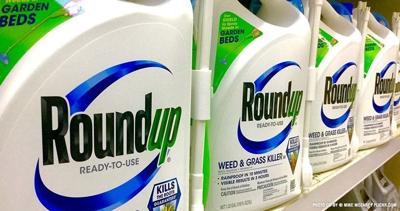



ST. LOUIS – A St. Louis judge has granted final approval to a Roundup class settlement that provides up to $7.25 billion to people who developed non-Hodgkin lymphoma, or may develop it, after exposure to Monsanto's weedkiller.
The judge rejected objections to the deal. Bayer, Monsanto's parent company, called the ruling "a decisive milestone."
Twenty-Second Judicial Circuit Judge Timothy Boyer signed the final order and judgment November 20. The order certifies a settlement-only class and two subclasses under Missouri Rule 52.08. It finds the agreement "fair, reasonable, and adequate" and dismisses the petition with prejudice.
"The Court's final approval is a decisive milestone in the company's strategy to mitigate the risks of both pending and future Roundup litigation," Bayer CEO Bill Anderson said in a statement.
"We are proud to represent people whose lives have been profoundly affected by Roundup exposure,” Motley Rice attorney Fidelma Fitzpatrick told The St. Louis Record. “This final approval of the class action settlement brings the thousands of people who have waited so long for justice an important measure of certainty and closure.
“Joe Rice would have been deeply proud of what was achieved.”
The class includes people exposed to Roundup products through their application who have been diagnosed with NHL (Subclass 1) or may be diagnosed in the future (Subclass 2). The judge wrote the class consists of "many tens of thousands" of people.
Monsanto already has paid $1 billion into the settlement fund. It will pay another $5.25 billion over 16 years. The agreement also requires Monsanto to pay up to $1 billion more in certain circumstances. These include valid, unpaid claims from occupational users, and a shortfall in payments to people who exit the claims program.
There is also a $1 billion security fund. Bayer said payments would be declining, capped annual amounts for up to 21 years, including money already paid.
Awards fall into nine tiers. The tiers depend on whether exposure was occupational or residential, the claimant's age at diagnosis and whether the lymphoma is aggressive or indolent. Tier averages range from $10,000 to $165,000. Individual awards can vary by 20 percent above or below a tier's average. The average program award cannot fall below $50,000. More than $400 million is set aside for claimants with special circumstances.
Future claimants may reject an award, leave the settlement and sue in the tort system. They may do so if they have not been paid within five years of becoming eligible, or if funds are insufficient. Anyone in Subclass 2 who has no NHL diagnosis when the 16th annual payment is due is released from the settlement and can bring claims in court, including for punitive damages.
The parties filed the petition and settlement agreement Feb. 17.
Boyer preliminarily approved the settlement March 4. Objectors included 136 identified class members, some people who sought exclusion and certain health plan payors and administrators. Two amicus briefs were also filed. The court heard from seven sets of objector and amici counsel at a Sept. 14 fairness hearing.
Objectors argued that the case resembled the asbestos settlement the U.S. Supreme Court rejected in Amchem Products Inc. v. Windsor. They also challenged the notice, the opt-out rules and the treatment of future claimants. They said the class definition was overbroad and that the deal was collusive.
Boyer found Amchem distinguishable. The settlement involves a single defendant, one product line, one course of conduct and one disease. He found that negotiations lasted more than 18 months and were overseen by mediator Fouad Kurdi, with the involvement of retired appellate judge Glenn Norton. The judge cited support from firms including Napoli Shkolnik and Nachawati Law Group. He noted that Napoli Shkolnik said 800 or 900 clients had revoked opt-outs after reassessing the deal.
The judge also pointed to the U.S. Supreme Court's June decision in Monsanto Co. v. Durnell. That ruling held that federal law preempts state tort claims requiring a pesticide label different from the EPA-approved one. He wrote that the ruling adds uncertainty for plaintiffs who would otherwise litigate. He added that Monsanto had won a majority of Roundup cases tried to verdict even before Durnell. The judge also cited a risk that Monsanto would seek bankruptcy protection absent a settlement. More than 30,000 Roundup cases are pending in Missouri courts, and about 200 plaintiffs have trial dates.
Some plaintiffs' attorneys have called the payouts too small. Attorney Gerson Smoger told the court in September that the settlement is "the scariest, worst future settlement that's ever been contemplated." Objecting counsel included Ashley Keller of Keller Postman and Robin Greenwald of Weitz & Luxenberg.
Boyer adopted most of Norton's recommendations on challenges to opt-out requests. He made an exception for three people whose late opt-outs he excused. Monsanto gets credits against its payments if 650 or more people opt out. The order lists valid opt-outs in an exhibit.
Bayer said it expects opt-outs to be "a very low percentage" of current and potential future claims. It said plaintiffs who litigate instead "will face the burdens of both establishing that they have viable claims post-Durnell and ultimately proving them to a judge and jury."
The final order leaves the amount of attorney fees to a separate ruling. Reuters reported that Boyer awarded $600 million in fees, most of the $675 million six firms sought. That is 8.28 percent of the settlement's value. Boyer appointed attorney Richard Arsenault as special master to oversee how the fees are divided.
Bayer said the approval order "is subject to appeal." It said any appeal would pause further Monsanto payments until appeals are exhausted. It said it would work with class counsel to defend any challenge.
"We are hopeful that there are no appeals – legal appeals will further delay justice for people who have been injured by Roundup," Fitzpatrick said.
Twenty-Second Judicial Circuit Court case number 2622-CC00325-01