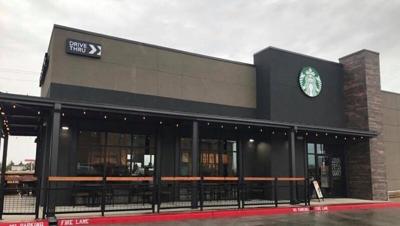


ST. LOUIS — The Missouri Court of Appeals for the Eastern District has dismissed an appeal filed by Starbucks Corporation challenging a lower court’s decision in a lawsuit brought by employees who said they were terminated after confronting armed robbers at a St. Louis store.
In an opinion filed March 3, a three-judge panel ruled that Starbucks failed to comply with required appellate briefing rules on two points of its appeal and that the court lacked jurisdiction to review the company’s remaining arguments.
As a result, the court dismissed the appeal and left in place the circuit court’s decision denying Starbucks’ motion to dismiss certain claims and compel arbitration.
The case stems from a lawsuit filed by Michael Harris and another employee who alleged they were working at a Starbucks location in St. Louis on Dec. 17, 2023, when two gunmen attempted to rob the store.
According to the petition described in the court’s opinion, the employees fought back and were able to subdue one of the gunmen with assistance from another individual. The second gunman fled but was later apprehended by police.
The employees alleged that Starbucks terminated their employment in January 2024 because of their conduct during the attempted robbery.
Their lawsuit included claims for wrongful termination, hostile work environment, retaliation, three counts of negligence and two counts of assault and battery against the gunmen involved in the attempted robbery.
Two of the negligence claims were directed at Starbucks, while another was brought against Union Square Enterprises LLC, which owns and leases the building where the store is located.
Starbucks responded by filing a combined motion seeking to dismiss the negligence claims under the exclusivity provision of Missouri’s Workers’ Compensation Law and asking the court to compel arbitration of the remaining claims based on mutual arbitration agreements the company said the employees had signed.
To support its motion, Starbucks submitted affidavits from its director of recruiting describing the company’s hiring and onboarding process.
According to the affidavits, applicants must create an online profile and complete onboarding tasks through an online system known as Taleo before beginning work.
The process requires new hires to log in using a unique username and password, accept a job offer, provide identifying information and complete various tasks, including electronically signing a mutual arbitration agreement.
The affidavits said the employees completed the arbitration agreement as part of the onboarding process and that confirmation emails were automatically sent to their personal email accounts with copies of the agreement attached.
The employees disputed that claim, asserting that their store manager completed the onboarding process for them, including logging in and clicking through the required tasks.
They said they were unaware of the arbitration agreement and did not sign it, though they acknowledged receiving emails thanking them for completing the agreement.
On June 25, 2025, St. Louis Circuit Court denied Starbucks’ motion in its entirety.
The court found Starbucks had not shown from the face of the petition that the workers’ compensation exclusivity provision applied or that the employees’ injuries arose out of and in the course of their employment.
The court also concluded Starbucks had presented “little to no evidence” showing that a valid arbitration agreement existed between the parties.
The circuit court noted that the agreement appeared unsigned and found there was no substantial evidence the employees had electronically signed it.
Based on that finding, the court determined Starbucks had not met its burden to prove the existence of a valid and enforceable arbitration agreement.
Starbucks appealed that ruling, raising four points. Two of the points argued the circuit court erred by refusing to compel arbitration of the employees’ claims, while the other two challenged the denial of the motion to dismiss the negligence claims.
The appellate court dismissed the first two points because Starbucks failed to substantially comply with Rule 84.04 of the Missouri Supreme Court Rules governing appellate briefing.
The court said the deficiencies in Starbucks’ arguments prevented meaningful review.
The court also dismissed the remaining two points for lack of jurisdiction, explaining that the denial of a motion to dismiss is not a final judgment and therefore cannot be reviewed on appeal at that stage of the case.
Missouri Court of Appeals, Eastern District case number: ED113748