

U.S. Supreme Court
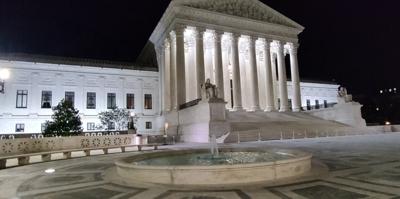
WASHINGTON — The U.S. Supreme Court has blocked Missouri from using a Republican-drawn congressional map in November’s election, suspending a federal judge’s order that had briefly required the state to use the new districts.
The unsigned Supreme Court order, issued without an explanation or noted dissents, puts Missouri on track to use the congressional map enacted after the 2020 census. The action is the second time in days the high court declined to allow the new map to govern the 2026 election.
The decision resolves, at least for now, a fast-moving dispute that produced conflicting orders from Missouri’s highest court and a federal judge. It also marks a setback for Republicans, who enacted the new map in 2025 with the expectation that it could help the party gain a seventh of Missouri’s eight U.S. House seats.
After today’s order, Missouri Secretary of State Denny Hoskins said his office was directing local election authorities to use the 2022 congressional map.
The state Supreme Court had considered holding Hoskins, a Republican, in contempt for defying its order blocking the GOP-backed maps. But Hoskins issued a statement Thursday after the scheduled contempt hearing saying he would comply with orders.
“Following the United States Supreme Court’s stay, the only governing court order in effect is from the Missouri Supreme Court,” he said in a statement. “In accordance with that order, my office is directing local election authorities to use the 2022 congressional map.”
The dispute centers on House Bill 1, the map passed by the Republican-controlled Legislature during a 2025 special session. Opponents gathered signatures for a referendum petition seeking to put the plan before voters.
The Missouri Supreme Court ruled unanimously September 3 the referendum petition was lawful, sufficient and timely, and that the Missouri Constitution permits voters to seek referendums on congressional redistricting legislation. The court concluded the new map never took effect because the petition was filed before the bill’s effective date.
“Because the referendum petition was legal, sufficient, and timely, HB 1 never took effect,” the state court said. It ordered that the congressional districts adopted in 2022 “remain in full force and effect” unless voters approve the new plan in the Nov. 3 election.
On Tuesday, U.S. Supreme Court Justice Brett Kavanaugh denied Hoskins’ initial emergency request to set aside that ruling. Later the same day, however, Chief U.S. District Judge Stephen Clark issued a temporary restraining order barring state election officials from using any map other than the one in HB 1, creating a clash between the federal and state orders.
Map opponents then returned to the U.S. Supreme Court, asking it to halt Clark’s order. Thursday’s ruling granted that request.
The state’s new map still will appear on the November 3 ballot as Proposition A, allowing voters to decide whether to approve or reject it. If voters approve the proposal, the map would take effect 30 days after the election. If they reject it, the 2022 plan remains in place.
The legal conflict also had prompted the Missouri Supreme Court to schedule a contempt hearing Thursday for Hoskins, a Republican, over whether he had complied with its earlier order. Before the U.S. Supreme Court acted, a federal judge allowed that hearing to proceed despite the competing federal directive.