
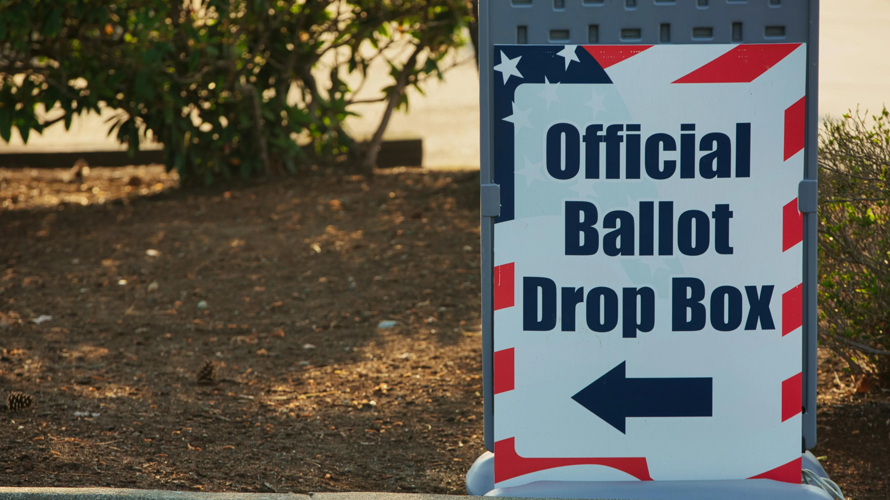



An “Official Ballot Drop Box” sign directs voters to a ballot drop location.
WASHINGTON, D.C. — The U.S. Supreme Court on Tuesday declined Missouri officials’ request to use new congressional districts backed by President Donald Trump in the November election, leaving in place a Missouri Supreme Court decision that returned the state to its prior congressional map unless voters approve the revised boundaries.
The decision is a setback for Missouri Republicans, who had hoped the new map would strengthen their prospects of adding a U.S. House seat as the party seeks to preserve its narrow House majority in the midterm elections.
The high court did not halt the state Supreme Court ruling that found the new districts had been suspended by a citizen referendum petition seeking a statewide vote.
Missouri’s new districts were used in the August primary, but the state Supreme Court ruled in September that the map could not be used in the general election.
The court held that the revised districts were effectively frozen in December, when opponents submitted petition signatures calling for a referendum. It ruled that the redistricting legislation never took effect and cannot take effect unless Missouri voters approve it.
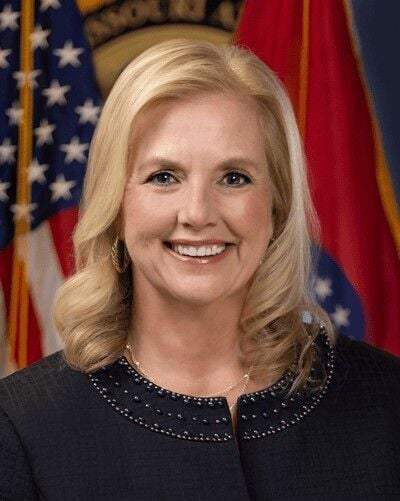
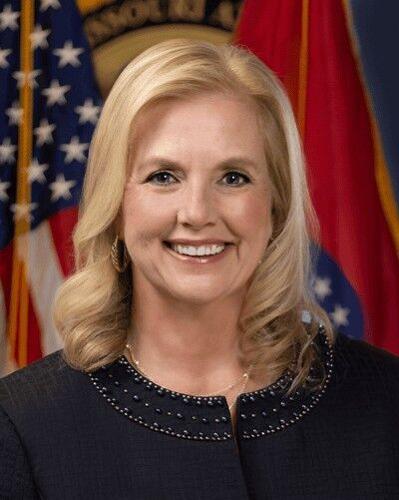
Hanaway
Republican Attorney General Catherine Hanaway had appealed the decision, arguing that changing congressional districts between the primary and general elections would violate federal rights and create confusion for voters.
Her office had asked the U.S. Supreme Court to immediately block the state court decision.
Missouri Secretary of State Denny Hoskins had rejected the referendum petition on the day of the primary, maintaining that the Missouri Constitution does not permit referendum petitions targeting congressional redistricting.
A lower court agreed with Hoskins, but the Missouri Supreme Court reversed that decision.
The state’s highest court concluded that the petition was legally sufficient and timely. Although the Missouri Constitution does not specifically mention referendum petitions for congressional redistricting laws, the court determined that its provision allowing referendums on “any act” of the Legislature includes legislation redrawing congressional districts.
Following the court order, Hoskins assigned the referendum proposal as Proposition A on the November ballot.
The map adopted after the 2020 census is to remain in place for the November general election unless voters approve the newer map.
Missouri’s congressional delegation currently includes six Republicans and two Democrats, elected under districts approved by Republican state officials in 2022.
At Trump’s urging, Gov. Mike Kehoe called the Legislature into a special session last year to redraw the state’s congressional boundaries before the midterms.
The revised map focused on the 5th Congressional District, represented by Democratic Rep. Emanuel Cleaver of Kansas City. It moved portions of Kansas City into two neighboring Republican-held districts and extended the remaining district east into rural Republican areas. Cleaver was unopposed in the Democratic primary, while Republican state Sen. Rick Brattin won the Republican primary in the reshaped district.
Brattin said the court decision would affect voters who participated in the primary under the revised boundaries and would now be assigned to different districts. Cleaver said opponents of the new map had prevailed after challenging the redistricting plan.
The dispute in Missouri is part of a broader, mid-decade fight over congressional redistricting. Congressional lines are generally redrawn after each census, but Trump’s effort to gain a midterm advantage prompted redistricting actions in more than a dozen states led by both Republicans and Democrats.
Republicans had hoped new House maps in eight states could produce as many as 16 additional seats, while Democrats said they could gain up to six seats from new districts in California and Utah.