
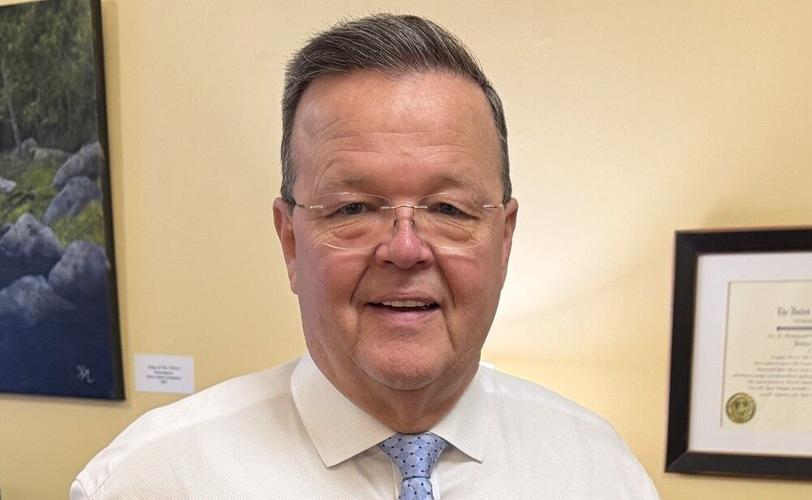



West Virginia Secretary of State Kris Warner
CHARLESTON – A federal judge has tossed the U.S. Department of Justice’s request for unredacted West Virginia voter registration.
On July 13, U.S. District Judge Thomas Johnston dismissed the DOJ case, saying the federal government didn’t provide a valid need or purpose for requesting the personal voter information such as names, birthdates, addresses and either the driver’s license numbers, the last four digits of Social Security numbers or unique Help America Vote Act identifier.

Johnston
Johnston also said the DOJ request lacked evidence of wrongdoing, adding the U.S. Attorney General can’t make such broad records requests on “fishing expeditions” that doesn’t involve protecting individual voting rights.
“From the outset, my office has maintained that West Virginia law prohibits the disclosure of sensitive personal information contained in the statewide voter registration system absent legal authority requiring its release,” West Virginia Secretary of State Kris Warner, the state’s top elections official, said after Monday’s ruling. “Today’s ruling confirms that our position was well-founded and consistent with both our statutory obligations and our responsibility to protect the personal information of West Virginia’s registered voters.”
Warner called Johnston’s decision “an important victory for the rule of law, voter privacy and the dedicated election officials across West Virginia who work every day to ensure the accuracy of our state’s voter registration system.”
“As the court noted, the Department of Justice’s ‘demand includes no indication that West Virginia is suspected to be noncompliant with the list maintenance requirements of (federal law), nor does it point to any anomalies in West Virginia’s voter registration data,’” Warner said.
Earlier this year, the DOJ sued West Virginia after Warner’s office denied former U.S. Attorney General Pam Bondi’s request for the personal voter information.
In asking the court to dismiss the case, Warner said his office has “cooperated as much as West Virginia law would allow him to, but he has explained that state law does not allow him to release the list without redactions.”
The DOJ has demanded such voter information from at least 47 states. Most states have refused to comply with the demand, and the DOJ sued 30 states as well as the District of Columbia. So far, the DOJ is 0-for-13 in those suits. Federal judges in several states also have dismissed the DOJ suits, including Arizona, California, Maine, Maryland, Massachusetts, Michigan, New Hampshire, New York, Oregon, Pennsylvania, Rhode Island and Wisconsin.
The DOJ sought the information because it said it needs to monitor state compliance with federal election laws, citing Title III of the 1960 Civil Rights Act (CRA), the National Voter Registration Act (NVRA) and the Help America Vote Act (HAVA).
“Because the demand letter did not include an adequate statement of its basis or purpose, as statutorily required, plaintiff has failed to state a claim,” Johnston wrote. “Given the lack of an adequate basis or purpose, one is left to wonder what the real purpose was for the Justice Department to go to the trouble of filing civil actions like this one all around the nation.
“Troubling though this question is, it is not before the court at this time.”
Last week, the DOJ reminded West Virginia and officials in other states they could face criminal prosecution if non-citizens vote in their elections.
Earlier this year, West Virginia lawmakers passed a resolution putting the issue of whether only United States citizens can vote in West Virginia elections in the hands of voters. It will appear as Amendment 1 on this fall’s general election ballot and will be called the Citizenship Requirement to Vote in West Virginia Elections Amendment.