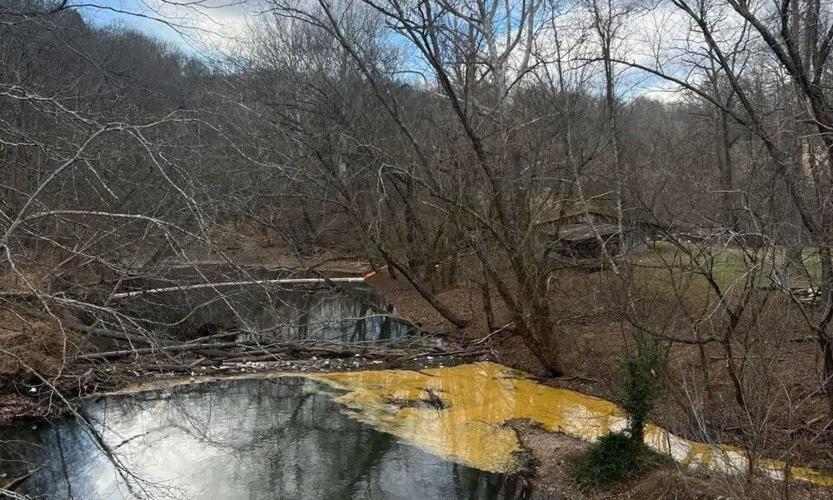






This photo showing contamination in Twelvepole Creek.
CHARLESTON – The first lawsuit over the Wayne water crisis has been filed.
Plaintiffs Jennifer Adkins, Glenna Maynard and Tonia White filed the potential class action February 5 in Kanawha Circuit Court against American Electric Power doing business as Appalachian Power as well as the Town of Wayne.
The complaint says the plaintiffs seek to recover damages for lost use of water following the January 16 contamination of Twelvepole Creek in Wayne County allegedly caused by vandalism at an AEP substation at a closed East Lynn coal mine.

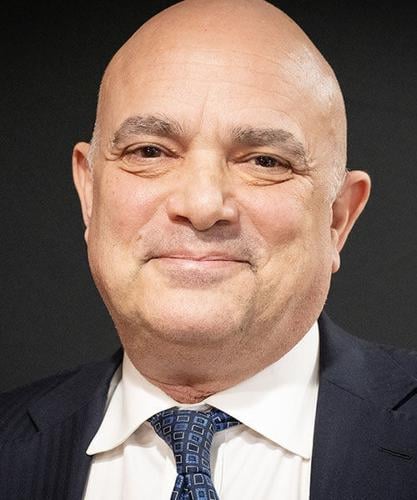
diTrapano
“Water is one of the most basic needs and to have this outage not only occur, but to continue for so many weeks affecting thousands is dangerous and catastrophic,” said L. Dante diTrapano, one of the attorneys representing the plaintiffs. “As alleged in the complaint, these defendants’ failures allowed this to happen and to subsist for now over a month.
“This is utterly unacceptable for our clients and the entire community. It leaves the community asking questions and has now been reported and alleged, these defendants’ failures directly led to this dire situation.”
About 2,400 homes in and around the town have been without water service for more than two weeks because of alleged vandalism at a substation that led to the leak of nearly 5,000 gallons of oil into Twelvepole Creek.
Wayne water customers have been under a “Do Not Consume” order since January 16. The state Department of Environmental Protection says vandalism at an AEP substation caused 4,900 gallons of transformer oil to leak into Twelvepole, which runs through Wayne before draining into the Ohio River. The state Department of Health says hydrocarbons have been found in the Wayne water system.
The Department of Health and town officials have been collecting samples, but freezing temperatures have hindered testing and have slowed cleanup efforts. And on February 2, the town issued a notice about a water main break – not that residents should use the water anyway.
As of February 5, the town began a flushing of the water lines.

Forbes
“It is staggering that the days and weeks have now turned into more than a month without useable water for this community,” attorney Jesse Forbes said. “There are thousands impacted. You are talking about children and elderly citizens in the freezing cold with no water.
“That is unacceptable and to have, as alleged, such lax security and other issues present in this situation that allowed this to so easily occur is shocking. We look forward to holding all responsible parties to account for this crisis and providing relief to the citizens and businesses in the area.”
In the complaint, the plaintiffs detail the timeline.
On January 13, it says the substation was vandalized. A Wayne County Sheriff deputy responded to the report and observed damaged fences and stolen copper wire at the substation, according to the complaint. The deputy or others at the scene also observed fluid leaking from a substation, but the complaint says they could not identify a cause for the leak. The DEP also was made aware of the leak the same day.
The plaintiffs also documented contaminated water that they observed, and other members of the community shared photos of similar sightings of contaminated water on Facebook and other social media sites.
They say AEP knew the location of the substation created a substantial risk of contaminating Wayne’s water supply if contaminants leaked into Twelvepole. They also say AEP leaving the substation unguarded and unsecured posed a foreseeable risk of theft and vandalism, which could cause water contamination.
AEP “had the ability to prevent this foreseeable harm, including but not limited to, hiring a security guard or erecting stronger or higher fences, walls, gates and locks,” the complaint states.
The plaintiffs also say the town knew its water service was vulnerable to contamination if it occurred at the East Lynn substation.
“At the very least, (Wayne) knew or should have known it would be forced to terminate water service through issuing a ‘Do Not Consume’ order if a contamination event were to occur at the East Lynn Substation,” the complaint states. “At the time of contamination, (the town) was in control of and maintained the water service system for all residents of Wayne.”
On January 15, Wayne Mayor Danny Grace put customers under a water warning as a precaution in response to the DEP’s confirmation of the oil leak. Residents were told not to use the water running into their homes.
“Two days later, and five days after the leak, the WVDEP confirmed that ‘approximately 4,900 gallons of what is believed to be a non-PCB fluid were released from the facility,’” the complaint states.
PCBs are man-made organic chemicals made from 1929 until they were banned in 1979, according to the U.S. Environmental Protection Agency.
A week after the leak, the Town of Wayne began the process of flushing its water system on January 20. Part of that process included continued testing of water samples. The DEP Also confirmed the town’s Do Not Consume order would remain in place during the flushing and testing process “expected to take seven to 10 days.”
“The WVDEP also acknowledged that while ‘testing has not identified petroleum-related impacts to the water system, (the state Department of Health) and the Town of Wayne are aware of reports of odors in residential water,’” the complaint states.
Seven days later, state officials and Wayne officials collected additional water samples for testing. Water customers were encouraged to continue to follow the Do Not Consume order, according to the complaint. Later the same day, the town announced a water main break and other leaks in the system had delayed “the next steps needed to clean the water.”
Grace said the Do Not Consume order could have been modified to allow for cleaning of clothes and dishes as well as for bathing if not for this setback.
As of February 4, the Do Not Consume order remained in place. The state Department of Health was set to begin flushing residential lines February 5.
“Still, plaintiffs and other residents were advised not to take any action with their residential water systems until receiving instructions from the town,” the complaint states. “
“For almost a month, plaintiffs have been unable to use the water service they pay the Town of Wayne to provide,” the complaint states. “Plaintiffs have been forced to obtain alternative sources for water for all personal and household purposes, at times at their own personal expense.
“Plaintiffs have been suffering and continue to suffer as a result. All Town of Wayne water and sewer customers were instructed not to use their water service, causing annoyance and inconvenience.”
The plaintiffs say they and other Wayne water customers have suffered economic loss and loss of use of property as well as suffered annoyance and inconvenience.
The plaintiffs accuse the Town of Wayne of breach of contract for not providing water service. They also accuse AEP of negligence, public nuisance and strict liability. They seek actual damages, statutory damages, punitive damages, court costs, attorney fees, pre- and post-judgment interests and any other relief. They also seek injunctive relief from Wayne prohibiting it from seeking a rate increase to pay for these damages.
“If any rate increase were to be allowed such action and cost the plaintiffs and others similarly situated would constitute a ‘double whammy’ in that plaintiffs and others would be paying at least twice for the wrongs caused by defendants here,” the complaint states.

Majestro
Attorney Anthony Majestro said the people affected by this situation have suffered long enough.
“Not only has this community suffered without water, they have been forced to spend money for out-of-pocket expenses and losses, in an already economically impacted area,” he said. “When water is impacted in this way and for this length of time it deprives an entire community of their ability to function and is dangerous for all involved.
“We will always seek justice when our clients and communities are affected in this way and when companies, as alleged here, ignore safety standards the civil justice system exists to correct those wrongs.”
The potential class includes all residents and businesses served by the Wayne water and sewer service.
The plaintiffs are being represented by Majestro and Graham B. Platz of Powell & Majestro in Charleston, by diTrapano, Alex McLaughlin and Dave Carriger of Calwell Luce diTrapano in Charleston and by Forbes and Jennifer N. Taylor of Forbes Law Offices in Charleston. The case has been assigned to Circuit Judge Richard Lindsay.
Majestro and diTrapano’s firms both were class counsel in the 2014 litigation following a chemical spill in Charleston left more than 300,000 residents without water. Forbes also represented parties in that litigation.
Also, diTrapano and Forbes served as class counsel in a 2017 case related to a large water main break in western Kanawha County affecting tens of thousands of residents and businesses. All three firms also are litigating a class action related to water and gas outages in Charleston’s West Side in November 2023.
At least two other law firms have said they are gathering information in preparation to file class action lawsuits as well.
Kanawha Circuit Court case number 26-C-168