


RICHMOND, Virginia – The U.S. Fourth Circuit Court of Appeals has reversed a lower court ruling, allowing West Virginia Medicaid to exclude coverage for gender-affirming surgeries.
In the March 11 ruling in Anderson v. Crouch, the appeals court said the state’s policy does not violate the Equal Protection Clause, the Affordable Care Act or the Medicaid Act.

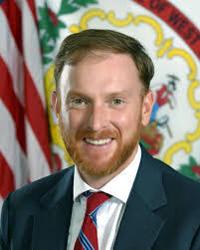
McCuskey
West Virginia Attorney General J.B. McCuskey calls the ruling a “major win for the state and its Medicaid program.”
“This is a big win for West Virginia taxpayers who pay the bill for Medicaid — a much needed and utilized program,” McCuskey said. “As good stewards of taxpayer dollars, the state should not be footing the bill for unproven, non-essential medical procedures.
“Simply put, the Constitution does not compel states to fund sex reassignment surgeries. Every dollar spent on these unproven procedures takes away funding that could be used to treat cancer, heart disease, and diabetes.
“I’m pleased the Fourth Circuit finally agrees that our policy does not discriminate and provides the best service for all the state’s Medicaid participants.”
The case is part of a national legal battle regarding whether states can exclude gender-affirming care from Medicaid and insurance coverage. It started as a challenge to West Virginia’s decision not to reimburse Medicaid beneficiaries for surgical procedures to treat gender dysphoria. The plaintiffs claimed the exclusion violated the Equal Protection Clause of the U.S. Constitution, the Affordable Care Actmnn and the Medicaid Act.
A federal district court sided with the plaintiffs and enjoined the state from enforcing its policy, and the Fourth Circuit initially affirmed that ruling.
But the U.S. Supreme Court vacated the decision and remanded the case back for reconsideration after its ruling in United States v. Skrmetti, which upheld states’ authority to make policy decisions about medical interventions.
On remand from the Supreme Court, the Fourth Circuit decided the case differently.
The court held that West Virginia’s policy excluding coverage for “sex change” surgeries does not facially classify individuals based on sex or transgender status and does not violate the Equal Protection Clause. Instead, the exclusion classifies based on medical diagnosis and applies evenhandedly to all Medicaid recipients.
The court also ruled West Virginia Medicaid had legitimate reasons for the exclusion, including concerns about cost, medical efficacy and the safety of the procedures.
The Fourth Circuit also said West Virginia’s Medicaid policy does not violate the Affordable Care Act and said West Virginia Medicaid’s coverage decisions are based on medical criteria rather than a patient’s gender identity. The court also said the plaintiffs could not enforce the Medicaid Act through litigation.
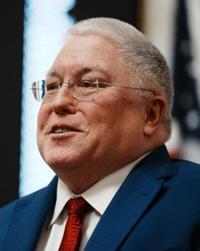
Morrisey
Gov. Patrick Morrisey, who was attorney general when the case originally was filed, also praised the ruling.
“As the former West Virginia Attorney General who spent years defending common-sense policies that protect women and ensure responsible use of taxpayer dollars, I’m grateful the court recognized West Virginia’s authority to set reasonable limits on taxpayer-funded healthcare,” Morrisey said. “States have a responsibility to manage public programs responsibly, and today’s ruling is an important victory for common sense and the taxpayers of West Virginia.
“Today’s ruling makes clear that states have the authority to set reasonable limits within taxpayer-funded healthcare programs,” Morrisey said. “That principle matters as we continue defending common-sense laws that guide our country, protect women’s sports, and preserve safe spaces.”
In its 2024 ruling, the U.S. Fourth Circuit Court of Appeals issued an 8-6 decision in favor of Shauntae Anderson, a transgender woman covered by West Virginia Medicaid who is seeking gender-affirming surgery. That followed a similar ruling in federal court by U.S. District Judge Robert C. “Chuck” Chambers.
West Virginia’s Bureau for Medical Services administers the state’s Medicaid Program and receives funding from the U.S. Department of Health and Huanm Services. West Virginia’s Medicaid program covers some gender-affirming care, including counseling, office visits, hormones and lab work but not gender-affirming surgery.
But Anderson’s attorneys note the state program partially or fully covers procedures such as mastectomies, breast-reduction surgery, chest reconstruction following a mastectomy, hysterectomies, removal or creation of the vagina and removal or creation of male reproductive organs.
Anderson began taking birth control pills for estrogen before going on Medicaid. Once on Medicaid, Anderson’s doctors recommended hormone replacement therapy, which she began in 2019.
Fourth Circuit Judge Julius Richardson from South Carolina wrote the opinion, and Judges Paul Niemeyer and Allison Jones Rushing, from Maryland and North Carolina respectively, joined him in the ruling. Deputy Solicitor General and Special Counsel Caleb David handled oral arguments for the state in December.
U.S. Court of Appeals for the Fourth Circuit case number 22-1927