

CHARLESTON — The West Virginia House of Delegates is asking the state Supreme Court to avoid treating unsuccessful legislative proposals as evidence of what lawmakers intended.
In an amicus brief filed in M. Alex Urban’s appeal, the House argues that bills can fail for many reasons unrelated to agreement or disagreement with their policy. It says the Intermediate Court of Appeals relied on unsuccessful legislative proposals when interpreting state laws concerning municipal authority, apiaries and agriculture.
The House asks the Supreme Court to decide the dispute without attributing affirmative intent to legislative inaction.
The House also filed a motion seeking permission to submit its brief after the filing deadline.
The motion, dated Oct. 9, says the House supports neither party and takes no position on affirmance or reversal, leaving the appellate rules without a single deadline tied to a party’s position. It asks the court to find good cause to accept the brief out of time.
“While the amicus brief does not explicitly endorse our legal position, we are grateful Speaker Hanshaw and the House of Delegates rebutted the Intermediate Court of Appeals' erroneous premise that failed legislative efforts are reliable indicia of current statutory meaning,” Robert Bolton, counsel for Urban, said to The West Virginia Record.
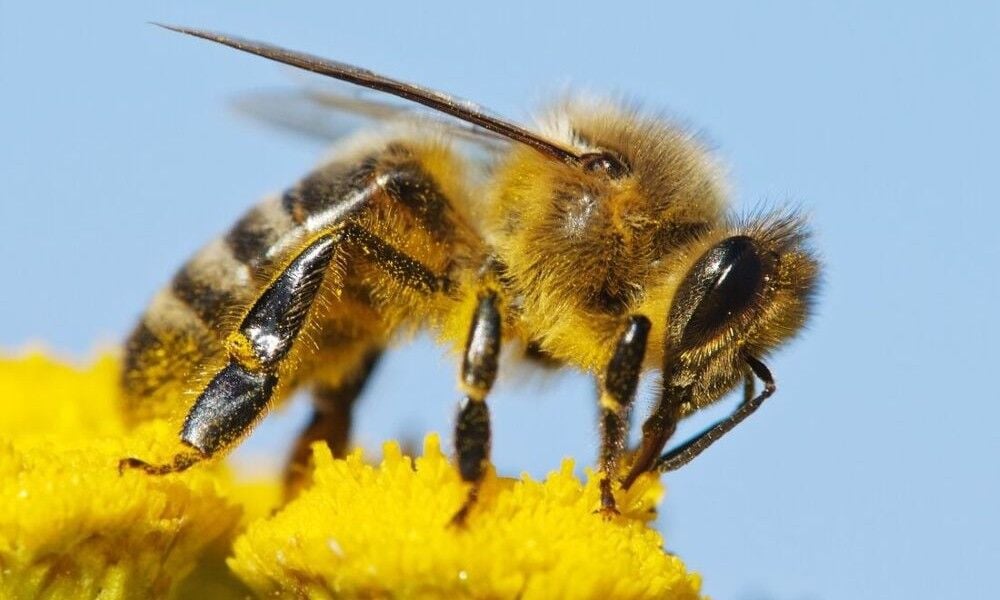
The case concerns Urban’s challenge to South Charleston’s restrictions on keeping bees within city limits. Urban sought permission in 2022 to keep two honeybee hives at his residence, but the city’s Property Board denied his application under the ordinance then in effect.
The Kanawha Circuit Court ruled for Urban in January 2025. The Intermediate Court of Appeals reversed in February 2026 and directed the circuit court to enter summary judgment for the city. Urban appealed to the state Supreme Court.
The House’s brief focuses on how courts interpret statutes, rather than on the merits of the beekeeping dispute.
It says its institutional interest is in having legislative intent determined from laws the Legislature enacted, not speculation about proposals that did not become law.
The brief says a bill may fail because it does not receive committee consideration, misses a procedural deadline, is displaced by other priorities, is considered unnecessary under existing law, or cannot gain agreement on provisions unrelated to the language later examined by a court.
The House contends that legislative inaction is not an affirmative act and does not reliably establish legislative intent.
It argues that attributing legal meaning to failed proposals could make routine omissions significant and alter the way legislators approach the lawmaking process.
The brief challenges the Intermediate Court of Appeals’ use of reasoning from State vs. Butler, a 2017 West Virginia Supreme Court decision.
The House asks the justices not to extend Butler’s “repeated-rejection” rationale to Urban’s case.
It argues that the court should not infer legislative intent from repeated unsuccessful proposals, particularly when those proposals came after the enactment of the statutes being interpreted.
The House also says the appeals court turned to legislative history after concluding that the statutory text was unambiguous.
Its brief argues that courts should not rely on legislative proposals that were never actually considered, and that unsuccessful measures can support competing explanations.
A later Legislature’s failure to pass a proposal, the House says, does not establish what an earlier Legislature intended when it enacted existing law.
The Intermediate Court of Appeals concluded that honeybees fall within the ordinary meaning of “animal” under West Virginia Code section 8-12-5(25), which gives municipalities authority concerning animals.
It also rejected Urban’s arguments that the West Virginia Apiary Act and Right to Farm Act displaced the city’s authority, finding no “positive repugnancy” between those laws and municipal power.
The House brief does not ask the Supreme Court to decide those statutory questions for either side.
It says the House takes no position on whether the city may regulate bees and no position on whether the judgment below should be affirmed or reversed. Its requested relief is limited to asking the court not to treat legislative inaction as evidence of legislative intent.
West Virginia Supreme Court case number: 26-224